
Amid High Exchange Rates, Retail Investors Turn to Net Selling... How to Buy U.S. Stocks Now?
Amid a rising dollar exchange rate and increased volatility, we have outlined how to time purchases and strategies for incremental currency exchange and fractio
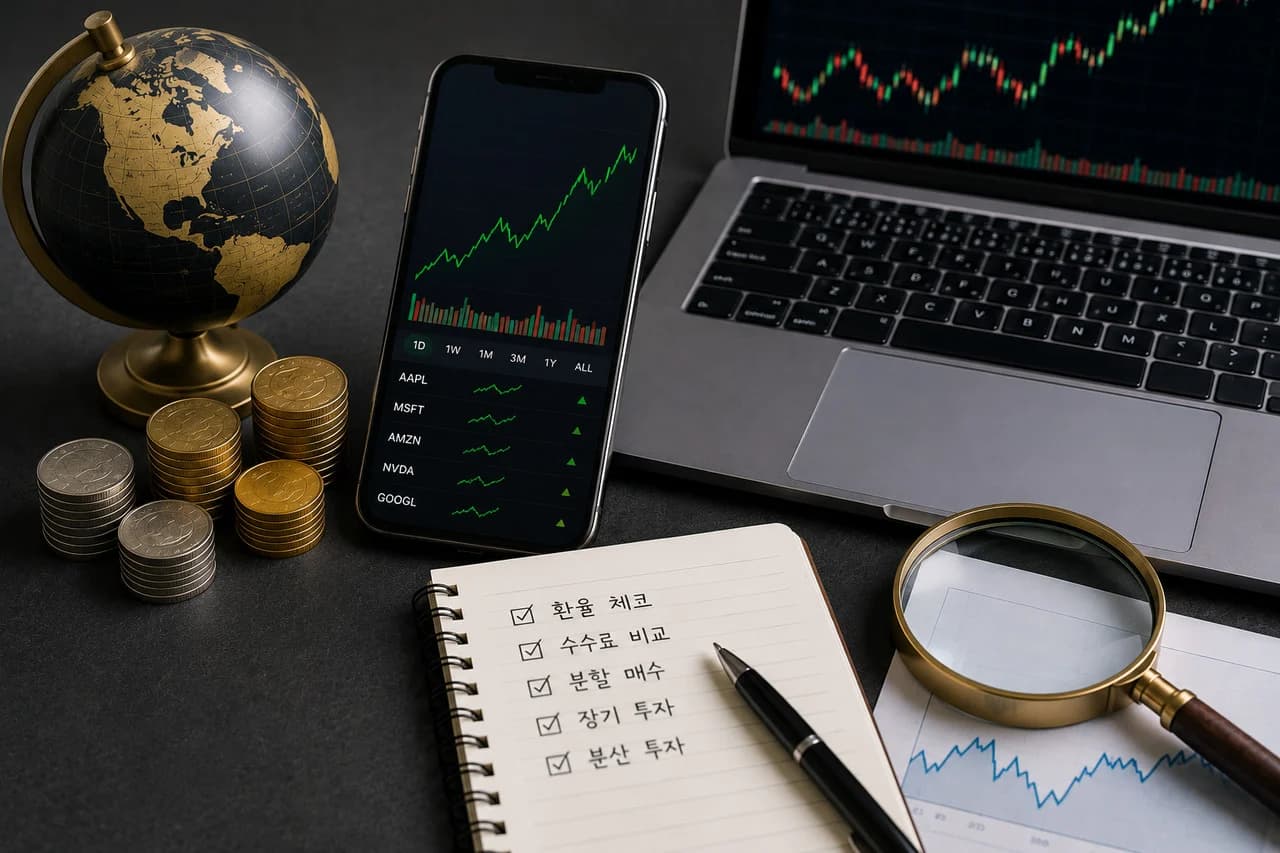
Amid a rising dollar exchange rate and increased volatility, we have outlined how to time purchases and strategies for incremental currency exchange and fractional share investing.
[CBC News] A notable shift has recently emerged in the trading patterns of domestic investors in U.S. stocks. So-called 'Seohak ants' — retail investors buying overseas stocks — who had been actively purchasing artificial intelligence (AI), big tech, and semiconductor stocks, have shifted to net selling as the won-dollar exchange rate remains at elevated levels. The previously sustained buying dominance has been broken, revealing a phase where sell volume has outpaced buy volume for the first time in several months.
The primary driver behind this is the burden of the exchange rate. When the exchange rate rises, the purchase cost converted into Korean won increases, reducing the number of shares that can be bought with the same amount of money. Coupled with geopolitical instability in the Middle East, exchange rate volatility has expanded, dampening the sentiment of investors considering new purchases. Until last year, the steep upward trend in overseas stock markets offset the exchange rate burden, but with the recent slowdown in upward momentum, the incentive to bear currency exchange costs for immediate purchases appears to have diminished.
■ Exchange Rate Emerges as a Key Variable... Simultaneous Consideration of Purchase Timing and Exchange Methods Needed
This phase is particularly significant for investors looking to reassess 'how to buy U.S. stocks.' Rather than the previous approach of buying directly at desired times without paying much attention to exchange rates, a strategy that jointly plans purchase timing and exchange methods is now required. Beyond stock selection, 'when and how much currency to exchange for purchases' determines actual returns.
The first thing to review is the currency exchange process. Investors should compare which is more advantageous between the method of automatically exchanging currency when ordering in Korean won through a securities app and the method of pre-exchanging dollars before making a purchase. During periods of significant exchange rate volatility, incremental currency exchange — exchanging funds in multiple installments rather than all at once to manage the average purchase exchange rate — can be a viable alternative.
■ Risk Diversification Through Fractional Share Purchases and Regular Incremental Investing
The diversification of purchase methods is also worth noting. Recently, services allowing the purchase of U.S. stocks in fractional units rather than whole shares have become widely available, making it possible to diversify investments in stocks of interest with small amounts without requiring large sums of capital. The greater the exchange rate burden, the more one can expect the strategy of regularly buying in set increments — rather than purchasing all at once — to simultaneously disperse the risks of both exchange rate and stock price fluctuations.
Ultimately, the shift to net selling by Seohak ants can be interpreted not as a disappearance of the appeal of U.S. stock investing itself, but as a signal that the weight of the exchange rate variable has grown accordingly. For investors preparing to invest in U.S. stocks, reviewing exchange rate trends, exchange timing, and incremental purchase strategies is just as important as stock selection in the current phase. Given that market conditions are constantly changing, this is a time that calls for prudence — watching both exchange rates and the market closely — rather than rushing into purchases.
[This article was written using AI. Readers are advised to independently verify the facts and latest information contained in the article, and the final responsibility for judgments and decisions made based on this information rests with the reader.]
CBC Globe publishes verified stories with editorial review, source checks, and tenant-specific publication standards.