
Naver Enters Smart Building at Japan's 'Tokyo Midtown Yaesu'... Full-Scale Physical AI Based on Robots and Digital Twin
While NAVER's stock price is showing strong momentum, Team NAVER's smart building technology export case is emerging as a key catalyst demonstrating the potenti
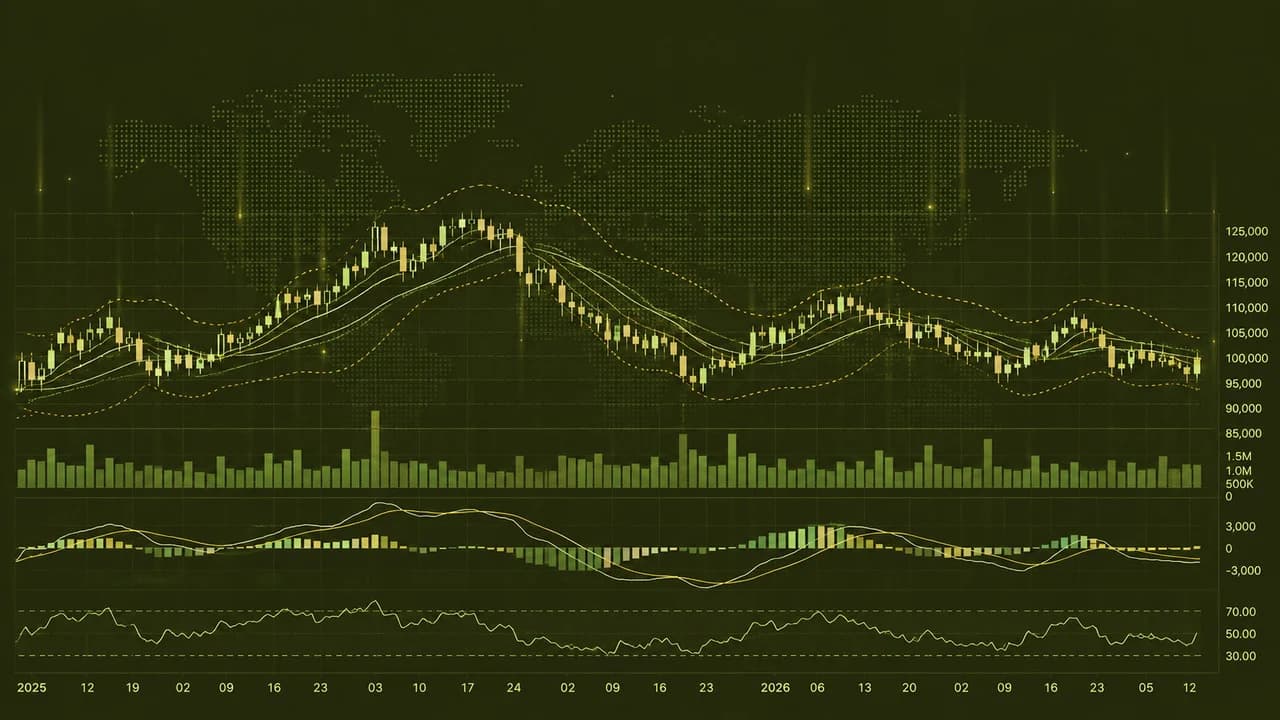
While NAVER's stock price is showing strong momentum, Team NAVER's smart building technology export case is emerging as a key catalyst demonstrating the potential for expansion of its 'Physical AI' business. This is interpreted as reflecting expectations that the scope of NAVER's business evaluation, previously centered on search, advertising, and commerce, could expand to include robot, digital twin, and cloud-based building operation technologies.
Stock Price Surge of 10.60% During Trading on the 27th On the 27th, NAVER's stock price on Nextrade (NXT) rose by 22,000 won from the previous day to trade at 229,500 won, recording a 10.60% increase. Starting at 221,000 won on this day, the stock price surged to as high as 255,000 won during the session before giving up some of its gains. The low for the day was 219,000 won, with trading volume recorded at 3,924,578 shares. Given that the stock price moved significantly in a short period, it is difficult to attribute the surge solely to a single business announcement. However, the fact that NAVER is applying its smart building technology—proven at its own headquarters—to a large-scale overseas complex can be evaluated as a positive case demonstrating the commercialization potential of its robot and digital twin technologies.
First Export of Smart Building Technology to Japan's 'Tokyo Midtown Yaesu' On the 23rd, Team NAVER announced that, together with NTT East Japan and Mitsui Fudosan, it would apply the smart building operation technology solutions from its second headquarters, '1784,' to 'Tokyo Midtown Yaesu,' a large-scale mixed-use building in Tokyo, Japan. This 45-story building, connected to Tokyo Station, houses commercial facilities including restaurants, as well as offices, a hotel, a bus terminal, and an elementary school, making its internal environment and movement flows highly complex. This project holds significant meaning as it is the first case of NAVER transplanting the smart building model operated at 1784 to an external building. In other words, NAVER has entered the phase of commercializing its technologies so that robot services can be operated stably not only in NAVER's dedicated headquarters but also in general mixed-use buildings.
Evolution into a Solution Business Combining Robot Control and Digital Twin Team NAVER will apply autonomous robots and a 'multi-robot control system' that integrates and manages multiple robots at Tokyo Midtown Yaesu. A digital twin that renders the building's internal space in a virtual environment, as well as vision-based positioning technology that uses camera imagery to determine robot locations, will also be supported. The core of the smart building business lies not in the robots themselves, but in the 'operational infrastructure' that enables robots to navigate smoothly and perform services within the building. This is because elevators, doors, and building management systems must be integrated with the robots, and multiple robots must be controlled simultaneously in order for them to be utilized in actual commercial facilities. NAVER has advanced its robot services based on data accumulated over approximately four years of operating 1784 in a real building environment where employees work on a regular basis. Through this expansion into Japan, NAVER has demonstrated that its robot business is expanding beyond simple hardware sales into a 'solution business' that combines a robot operating system, a control system, digital twin, and cloud infrastructure. Furthermore, it has opened up the possibility of expanding the scope of cooperation into the field of digital twin building management, which analyzes facility status, movement flows, and energy usage in real time by linking the equipment and spatial information of an actual building to a virtual environment.
Future Challenges: Need to Confirm Earnings Contribution and Additional Orders If the stability and operational efficiency of robot services are proven at Tokyo Midtown Yaesu, it could lay the groundwork for NAVER's smart building technology to spread to other offices, hotels, and commercial facilities in Japan, targeting overseas real estate developers and building operators. However, since specific contract amounts, the number of robots to be deployed, service launch dates, and the possibility of additional orders have not yet been disclosed, it is difficult to determine the earnings contribution at this stage. It will be necessary to continuously monitor whether the technology application cases translate into actual revenue and profit increases. Ultimately, the service launch schedule and operational performance of Tokyo Midtown Yaesu, as well as the winning of additional projects in Japan, are expected to act as major variables for NAVER's future stock price. Whether robot control and digital twin technologies go beyond a one-time implementation project and lead to continuous operational and management revenue will be a key criterion for evaluating the value of the Physical AI business.
[This article was written with AI assistance. It does not recommend the purchase or sale of any specific stock. Investors should verify company disclosures and business progress directly before making decisions.]
CBC Globe publishes verified stories with editorial review, source checks, and tenant-specific publication standards.
Related Articles

LG Innotek Shares Fall Despite Q2 'Earnings Surprise'...Second Half Direction Hinges on 'Performance and New Products'

What Is Today's Gold Price? July 27 Gold, Silver, and Platinum Prices Show 'Stable Gains'... Easing of U.S.-Iran Tensions Emerges as Key Variable
Doosan Enerbility Edges Lower While Defending 70,000-Won Level; Strong Q2 Earnings with 16% Operating Profit Growth Draw Attention