Silver Price at 11,350 Won on July 28... Interest Rate Variables Watched Amid Easing U.S.-Iran Tensions
On July 28, according to the Korea Gold Exchange, the buying price of silver (3.75g) was recorded at 11,350 won and the selling price at 10,650 won. Compared to
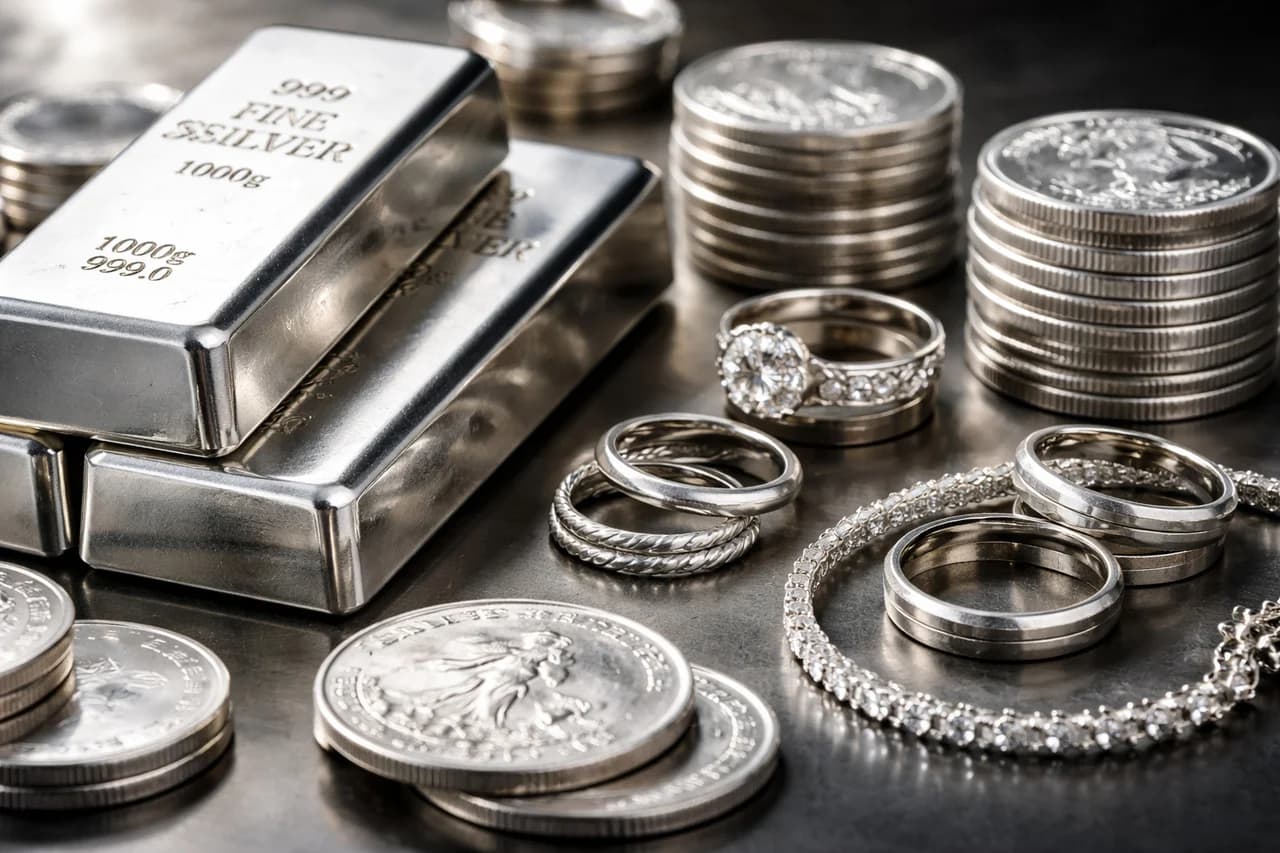
On July 28, according to the Korea Gold Exchange, the buying price of silver (3.75g) was recorded at 11,350 won and the selling price at 10,650 won. Compared to the previous trading day, the buying price rose by 350 won and the selling price by 200 won.
Concerns over an escalation of the Middle East conflict eased as the United States, under President Trump's directive, suspended airstrikes against Iran, and international oil prices dropped sharply within a single day. Typically, when geopolitical risks increase, precious metals such as gold and silver show strength driven by safe-haven demand. However, this time the trend was different.
As international oil prices surged due to heightened tensions, concerns spread that inflationary pressures could rise again. This led to forecasts that the U.S. Federal Reserve (Fed) might maintain its high-interest-rate stance for longer than expected. Expectations of rising interest rates act as a factor that lowers the investment appeal of precious metals, which do not pay interest, ultimately putting pressure on gold and silver prices.
The recent silver market has been searching for direction between interest rate outlook and industrial demand. On the 24th, international silver prices fell below $59 per ounce, retreating from a two-week high. At the time, international oil prices rose amid concerns over oil supply disruptions in the Gulf region, and as inflation concerns grew, expectations of a prolonged high-interest-rate environment gained momentum.
While the market expected the Fed to keep its benchmark rate unchanged at its next meeting, it maintained a cautious stance on the future policy path, and the European Central Bank (ECB) also did not rule out the possibility of additional tightening. The fact that rising interest rate expectations could reduce the investment appeal of non-yielding silver was also cited as a background for the price correction.
However, as signs of easing U.S.-Iran tensions helped international oil prices stabilize and the market alleviated some inflation concerns, international silver prices rebounded after the correction. Nevertheless, the market continued a cautious trend, closely watching the outcome of the Fed meeting and upcoming major U.S. economic indicators. International gold prices also briefly traded above the $4,100-per-ounce level, but gave up some of their gains as wait-and-see sentiment ahead of the Fed meeting and profit-taking selling coincided.
Silver has higher volatility than gold and a larger share of industrial demand, making it more sensitive not only to geopolitical variables but also to changes in international oil prices, interest rates, manufacturing conditions, and investor sentiment.
[This article was written with the assistance of AI. This article is for informational purposes only and does not recommend buying or selling silver.]
CBC Globe publishes verified stories with editorial review, source checks, and tenant-specific publication standards.
Related Articles
Hanwha Solutions Public Offering Subscription Closes… Integrated Competition Rate Reaches 43.08 to 1
![[Breaking] SK Hynix Plunges 13%... '1.5 Million-Nix' Inevitable, KOSPI Crashes 9.5%](/_next/image?url=https%3A%2F%2Fmedia.cbcglobe.com%2Ftenants%2Fcbc00000-0000-4000-8000-000000000001%2Fmedia%2Fcbc%2F2026%2F07%2F588754%2F5f28c33aa48a73e6%2Fvariants%2Fhero.webp&w=1920&q=75)
[Breaking] SK Hynix Plunges 13%... '1.5 Million-Nix' Inevitable, KOSPI Crashes 9.5%
![[Breaking] KOSDAQ Bio Stocks and Preferred Shares Hit Upper Limits Simultaneously…Spotlight on Inflow of Demand into 'Low-Float' Stocks](/_next/image?url=https%3A%2F%2Fmedia.cbcglobe.com%2Ftenants%2Fcbc00000-0000-4000-8000-000000000001%2Fmedia%2Fcbc%2F2026%2F06%2F579783%2F4e4da2bfb8f012b9%2Fvariants%2Fhero.webp&w=1920&q=75)
[Breaking] KOSDAQ Bio Stocks and Preferred Shares Hit Upper Limits Simultaneously…Spotlight on Inflow of Demand into 'Low-Float' Stocks
![[Breaking] Alteogen Falls Below 300,000 Won Level... Investment Sentiment Shrinks Amid Plummet in KOSPI and KOSDAQ](/_next/image?url=https%3A%2F%2Fmedia.cbcglobe.com%2Ftenants%2Fcbc00000-0000-4000-8000-000000000001%2Fmedia%2Fcbc%2F2026%2F06%2F580321%2F018d96012c23d9d5%2Fvariants%2Fhero.webp&w=1920&q=75)