Gold Price Trends?… War and Monetary Policy Among Variables in the '$4,000 Era'
**Domestic Gold Price Trends for August 3, 2026** According to Gold Price.com, as of August 3, 2026, the domestic price of pure gold (3.75g) was recorded at 813
Domestic Gold Price Trends for August 3, 2026
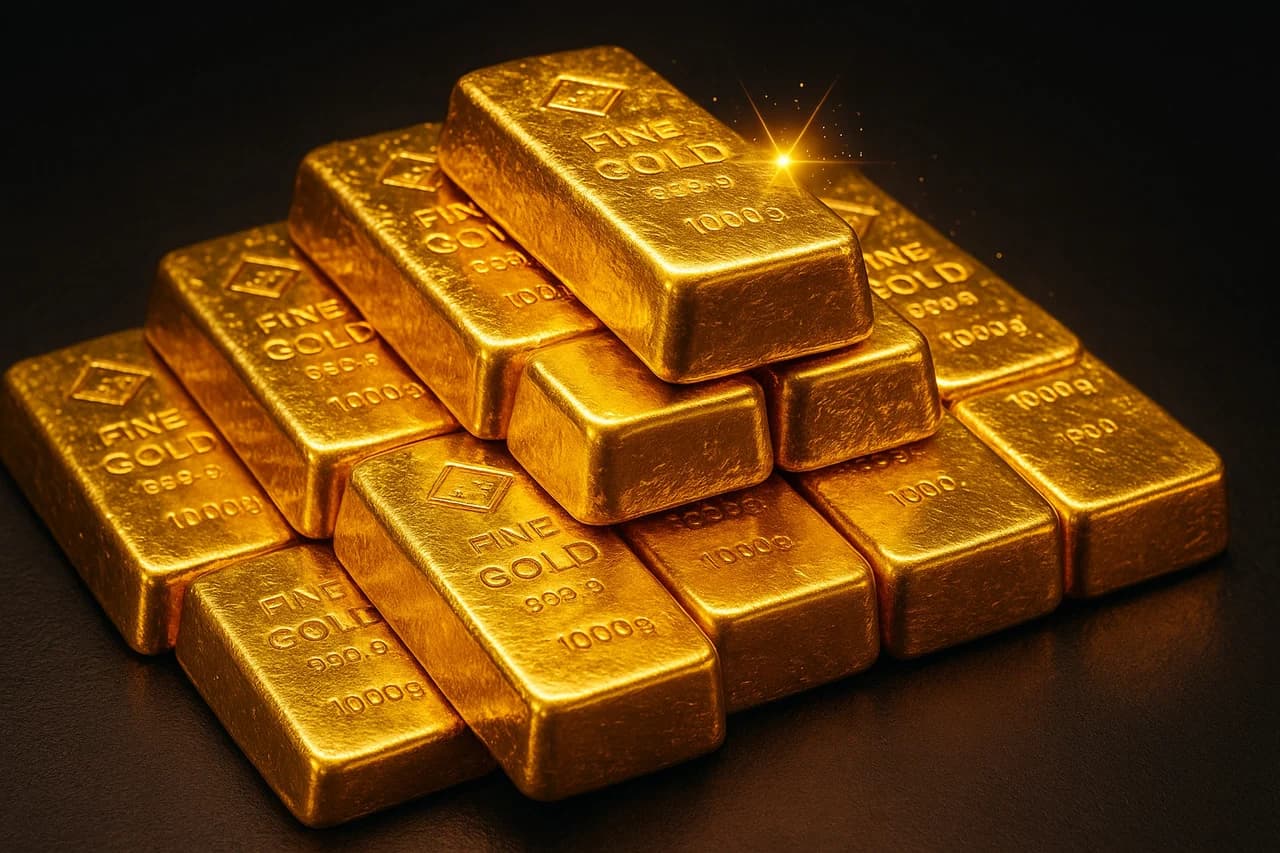
According to Gold Price.com, as of August 3, 2026, the domestic price of pure gold (3.75g) was recorded at 813,000 won for buying and 703,000 won for selling. The buying price fell by 4,000 won compared to the previous trading day, while the selling price remained flat.
- 18K Gold (3.75g) Selling Price: 518,000 won (unchanged from the previous trading day)
- 14K Gold (3.75g) Selling Price: 402,000 won (unchanged from the previous trading day)
- Platinum (3.75g): Buying 325,000 won / Selling 271,000 won (down 2,000 won each from the previous trading day)
- Silver (3.75g): Buying 10,750 won / Selling 10,250 won (flat from the previous trading day)
---
International Gold Market Digesting Two Variables Simultaneously
Recently, the international gold market has been simultaneously digesting two variables: the resumption of military conflict between the United States and Iran, and the U.S. Federal Reserve's (Fed) decision to freeze its benchmark interest rate.
In response to an Iranian attack on a U.S. military base stationed in Jordan, the U.S. military launched a massive airstrike targeting Islamic Revolutionary Guard Corps (IRGC) command facilities and missile and drone bases within Iran. Currently, the situation appears to have entered a lull following the cancellation of the airstrike on Iran by Trump.
However, it is difficult to explain this movement in gold prices simply as 'war safe-haven demand.' If tensions in the Middle East drive up international oil prices, inflationary pressures will intensify, increasing the likelihood that the Fed will maintain high interest rates for an extended period or implement additional rate hikes. While war provides safe-haven buying pressure for gold, it can simultaneously act as a conflicting factor that pressures gold prices through rising interest rates.
---
Fed Freezes Interest Rates… Market Says 'Future Direction Unclear'
On the 29th, the Fed decided to maintain its target range for the benchmark interest rate at 3.50–3.75% during the Federal Open Market Committee (FOMC) meeting. The vote result was 9 to 3.
While the interest rate freeze itself was an expected outcome, no clear signals emerged regarding the future direction of monetary policy, prompting the market to begin reassessing the possibilities of a rate hike versus a prolonged freeze.
Gold is a non-yielding asset. When real interest rates rise, the relative attractiveness of government bonds and bank deposits increases, weakening gold demand. Conversely, if expectations for interest rate hikes retreat or the value of the dollar falls, the opportunity cost of holding gold decreases.
The rebound in international gold prices following the Fed's freeze, as the dollar weakened and expectations for a September rate hike diminished, aligns with this structural dynamic. After recovering the $4,100 per ounce level on the 30th, the spot gold price moved in the $4,090 range on the morning of the 31st.
---
The Long-Term Trend of Gold Prices as Told by History
The long-term history of gold demonstrates that changes in the monetary system and real interest rates have dominated price directions for much longer than wars have.
- 1970s: The oil shock, double-digit inflation, and a decline in the dollar's purchasing power overlapped, pushing gold prices from $35 per ounce to break the $800 mark in 1980.
- 1980s: Intense U.S. monetary tightening led to rising real interest rates, prompting a long-term bearish turn in gold prices, resulting in an approximately 20-year correction trend lasting until 2001.
- Post-2008: Following the global financial crisis, major central banks implemented rate cuts and massive liquidity injections, bringing gold prices close to $1,900 per ounce in 2011 and surpassing the 1980 nominal peak.
---
2026 Gold Market: Decades of Change Compressed into Months
In the 2026 gold market, changes that previously took decades are being compressed into a matter of months. International gold prices surpassed $5,500 per ounce intraday in January of this year before falling below $4,000 by the end of June.
Volatility has expanded as geopolitical tensions, inflation outlooks, the value of the dollar, real interest rates, and exchange-traded fund (ETF) fund flows change directions in short cycles.
The polarization of investment demand is also distinct. According to the World Gold Council, gold ETFs experienced an outflow of 45 tons in the second quarter of this year. In contrast, net purchases by central banks worldwide reached 288.9 tons in the second quarter, a 62% increase compared to the same period last year. While private investors reacted sensitively to interest rates and price fluctuations, central banks continued their purchases as part of foreign reserve diversification and currency risk management.
The current phenomenon of both the stock market and gold prices rising simultaneously can be viewed in the same context. While the New York Stock Exchange reflects the earnings of major companies and a rebound in tech stocks, the gold market independently prices in uncertainties regarding the dollar's purchasing power, long-term inflation, and policy credibility. Stock buying represents expectations for corporate profits, while gold buying reflects anxiety regarding the monetary and financial environment; the two capital flows do not necessarily conflict.
---
Key Points to Monitor for Future Gold Price Variables
To determine the direction of gold prices, the following factors must be considered comprehensively:
1. Escalation of War: If the U.S.-Iran conflict stimulates international oil prices, demand for safe-haven assets may increase, but inflation and rate hike pressures will also rise simultaneously. 2. U.S. Economic Indicators: Trends in employment and inflation metrics. 3. Value of the Dollar and Real Interest Rates: Confirmed through Treasury Inflation-Protected Securities (TIPS). 4. September FOMC: The core focus will be whether the Fed prioritizes the risk of rising inflation or the possibility of an economic slowdown. 5. Continuation of Central Bank Gold Purchases and the Return of ETF Funds.
The 2026 gold market is evolving into a complex market where the dollar, interest rates, inflation, and confidence in monetary policy collide, rather than merely reflecting the fear of war.
---
[This article is by no means intended to solicit investment. The content provided may merely represent an opinion, so please do not use it as a reference or resource for investment. All investments are made at the individual's own discretion and selection, and the final responsibility lies with the investor. This publication assumes absolutely no responsibility.]
CBC Globe publishes verified stories with editorial review, source checks, and tenant-specific publication standards.
Related Articles

Woori Technology (032820) Surges to 9,970 Won Intraday... Will It Break Above 10,000 Won? 'Key Nuclear Power Stock for August'

Doosan Enerbility Shows Stable Trend Near Unchanged Level Amid Volatile Market... Attention Focused on August 4 Nuclear Power Stocks

Alteogen (196170) Rises 2.92% to Recover 310,000 Won Level... KOSDAQ Biotech Stocks Rally