ROBOTIS Expands FCC-Certified Product Lineup: From Actuators to Robot Hands and Humanoids
ROBOTIS is expanding the scope of its U.S. Federal Communications Commission (FCC) certification from its core smart actuators to robot hands and humanoids, lau
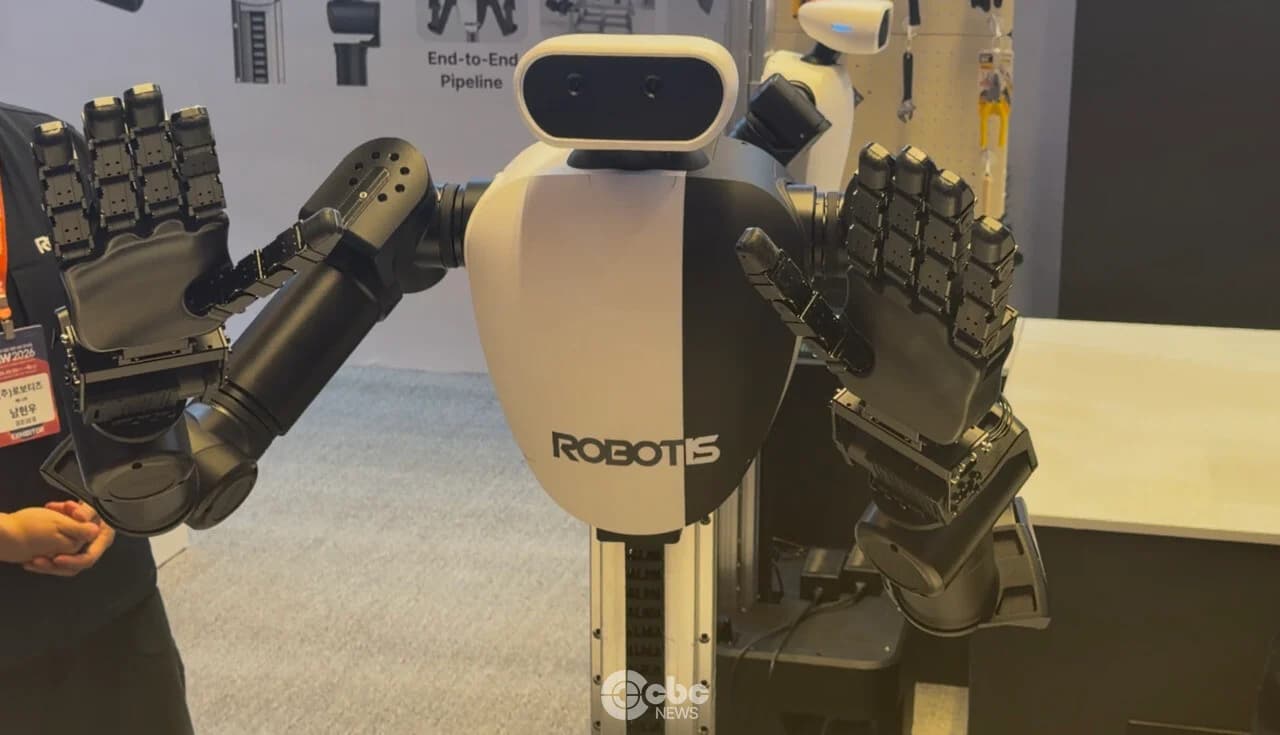
ROBOTIS is expanding the scope of its U.S. Federal Communications Commission (FCC) certification from its core smart actuators to robot hands and humanoids, launching a full-scale push into the North American market.
A Decade of Dynamixel FCC Certification Extended Through Product Diversification
According to Edaily, ROBOTIS has secured FCC certification for its flagship product 'Dynamixel' for over a decade, supplying products to the U.S. market. Recently, new actuator product lines and robot hands have also obtained FCC certification, while the humanoid platform is currently undergoing the certification process.
Dynamixel is a dedicated robot drive device that integrates a motor, reducer, controller, sensor, and communication functions into a single unit. ROBOTIS's official product manual describes it as 'a smart actuator that realizes the movement of robot joints and transmits operating conditions in real time.' Actuators are core components that control the position, speed, and force of joints in humanoids, collaborative robots, and robotic arms. For a robot to perform precise movements such as walking or grasping objects, the control performance and durability of the drive device are essential.
FCC certification is a process that verifies whether electromagnetic emissions from electronic products meet U.S. standards. While obtaining certification does not directly guarantee a product's performance or sales results, it is a fundamental and essential procedure required to distribute electronic equipment in the United States.
From Components to Finished Products... 'AI Sapiens' Unveiled
ROBOTIS is moving beyond its existing actator supply structure and expanding its business into finished products and robot platforms equipped with Dynamixel. According to Edaily, ROBOTIS unveiled the bipedal walking robot 'AI Sapiens,' which utilizes the 'Dynamixel-Q' actuator designed for humanoids, emphasizing that the core drive devices are designed and produced in-house.
However, it should be noted that the FCC certification for the humanoid platform is still in progress. The completion and timing of certification must be confirmed through subsequent announcements or official certification documents, and the ongoing process does not guarantee U.S. sales.
Need to Separate Performance Growth from One-Time Costs
When analyzing ROBOTIS's financial performance, it is necessary to distinguish between the intrinsic growth of the actuator business and the impact of one-time costs. According to the audit report submitted to the Korea Exchange (KRX), ROBOTIS's 2025 standalone revenue reached 34.7127 billion won, a 28.9% increase year-over-year. Operating profit recorded 5.1441 billion won, turning around from an operating loss in the previous year.
On the other hand, an operating loss occurred in the first quarter of 2026 due to the reflection of employee performance-based compensation expenses. According to Edaily, Q1 2026 revenue was 11.8413 billion won, up 15.8% year-over-year, but the operating loss was tallied at 11.8433 billion won. This was because 11.781 billion won in employee share-based compensation expenses was reflected in selling, general, and administrative (SG&A) expenses. A KRX filing confirmed that ROBOTIS disposed of 42,000 treasury shares for employee performance compensation, meaning the first-quarter operating loss should not be interpreted solely as a result of product sales or rising production costs.
Meanwhile, the company pursued fundraising to expand its production capacity and R&D infrastructure. According to a securities registration statement filed with the KRX, ROBOTIS decided on a paid-in capital increase through a general public offering of forfeited shares after a shareholder allotment in 2025. A total of 1,349,528 new common shares were issued, with an initial planned recruitment amount of approximately 100 billion won.
North American Market: A Challenge to Be Proven Through Business Performance
The core focus for ROBOTIS in the North American market should be actual business performance rather than the number of FCC-certified products. What matters is whether the certification of new actuators and robot hands leads to an expanded customer base and repeat orders, and whether the humanoid platform completes certification and is supplied as a commercial product.
If the product lineup expands from actuators to robot hands and humanoids, unit sales prices and market reach are likely to increase. However, increased investment costs required for finished product development, certification, and mass production facilities must also be considered, making it necessary to continuously verify whether future revenue growth is accompanied by improved profitability.
In conclusion, ROBOTIS is steadily expanding its products targeting the North American market based on Dynamixel. Going forward, the evaluation criteria will likely focus less on certification itself and more on the successful mass production of new products, customer acquisition, and the timing of when these achievements are reflected in financial performance.
[This article is for reference only for investment decisions and does not recommend the purchase or sale of any specific stock. The responsibility for stock investments lies with the investor. This article was written with AI assistance.]
CBC Globe publishes verified stories with editorial review, source checks, and tenant-specific publication standards.
Related Articles
![[Breaking] Nature Cell Grants 277,000 Stock Options to 92 Employees at Exercise Price of 24,820 Won Per Share](/_next/image?url=https%3A%2F%2Fmedia.cbcglobe.com%2Ftenants%2Fcbc00000-0000-4000-8000-000000000001%2Fmedia%2Fcbc%2F2026%2F07%2F587622%2F8e1f864f4ae0d6ac%2Fvariants%2Fhero.webp&w=1920&q=75)
[Breaking] Nature Cell Grants 277,000 Stock Options to 92 Employees at Exercise Price of 24,820 Won Per Share

Quantum Computing-Related Stocks Rally Across the Board... Finetek Surges 9.97%, ALT and Solid Climb Over 8%

Hyundai and Kia Post Record U.S. Sales in July... 5% Growth Driven by Hybrid Demand