
Democratic Party Urges Police Reform, Proposes Investigative Power Controls and Human Rights Investigation Body
A plan to integrate the Army, Navy, and Air Force academies into a single four-year 'National Armed Forces Academy' at Jaun-dae in Daejeon was unveiled last mon

A plan to integrate the Army, Navy, and Air Force academies into a single four-year 'National Armed Forces Academy' at Jaun-dae in Daejeon was unveiled last month through the Ministry of National Defense. This plan is also a presidential campaign pledge of President Lee Jae-myung.
President Lee pointed out that the Army Academy, which led or was involved in three military coups—the May 16 military coup, the December 12 military mutiny, and the December 3 emergency martial law—has never been held accountable, and made this a core principle of the integration policy.
Han Byung-do, acting leader and floor leader of the Democratic Party of Korea, cited the president's remarks at a National Assembly policy coordination meeting on the 6th. He emphasized that although three coups were carried out by a military centered on the Army Academy, the academy never took responsibility, and that the establishment of a National Armed Forces Academy is 'an irresistible trend of the times.' He stated that reforming the academy system is necessary to train elite officers capable across the integrated battlefield.
The acting leader also pointed out practical limitations. He cited issues with the existing separate academy system for each military branch, including a declining student-age population, a shortage of military manpower resources, and an increasing number of voluntary dropouts. He also noted that the boundaries between military branches are crumbling due to the characteristics of modern warfare, such as artificial intelligence, drones, cyber warfare, and space warfare.
Regarding President Lee's order during policy briefings with the Ministry of Justice and other agencies to prepare follow-up measures after the revision of the Criminal Procedure Act, acting leader Han identified effective control over police investigative powers and police reform as key tasks of the new criminal justice system. He stated that the police have lost public trust due to recent incidents such as the Jang Yoon-ki case, and urged that everyone from the leadership to frontline investigators must 'stake the fate of the organization on a complete transformation.'
As specific control mechanisms, Han proposed: the Public Prosecutors' Office's right to demand replacement of police investigative units; expansion of victims' right to file objections; introduction of a body to investigate human rights violations in police investigations; and exclusion of police officers from investigating cases involving their family members (recusal system). He stated that the Democratic Party will take all necessary steps to ensure the new criminal justice system launches without disruption on October 2 and settles in stably.
Regarding the Serious Crime Investigation Agency, which is scheduled to launch in the same month, Han stressed the importance of securing talent with extensive investigative experience and expertise. He asked the Ministry of the Interior and Safety to promptly establish a reasonable personnel and compensation system and working conditions to ensure that capable personnel can transition smoothly to the new agency.
Finally, acting leader Han stated that the party will closely consult with the government and actively support related institutional and budgetary measures regarding the establishment of the National Armed Forces Academy, emphasizing that 'institutionally establishing a military devoted solely to the nation and its people is the first step toward building a smart, strong military.'
CBC Globe publishes verified stories with editorial review, source checks, and tenant-specific publication standards.
Related Articles

"Welcome, Is It Your First Time in Korea?" Italian Michelin Chefs Marvel at 70-Year-Aged Soy Sauce Tea... "First Time in My Life"
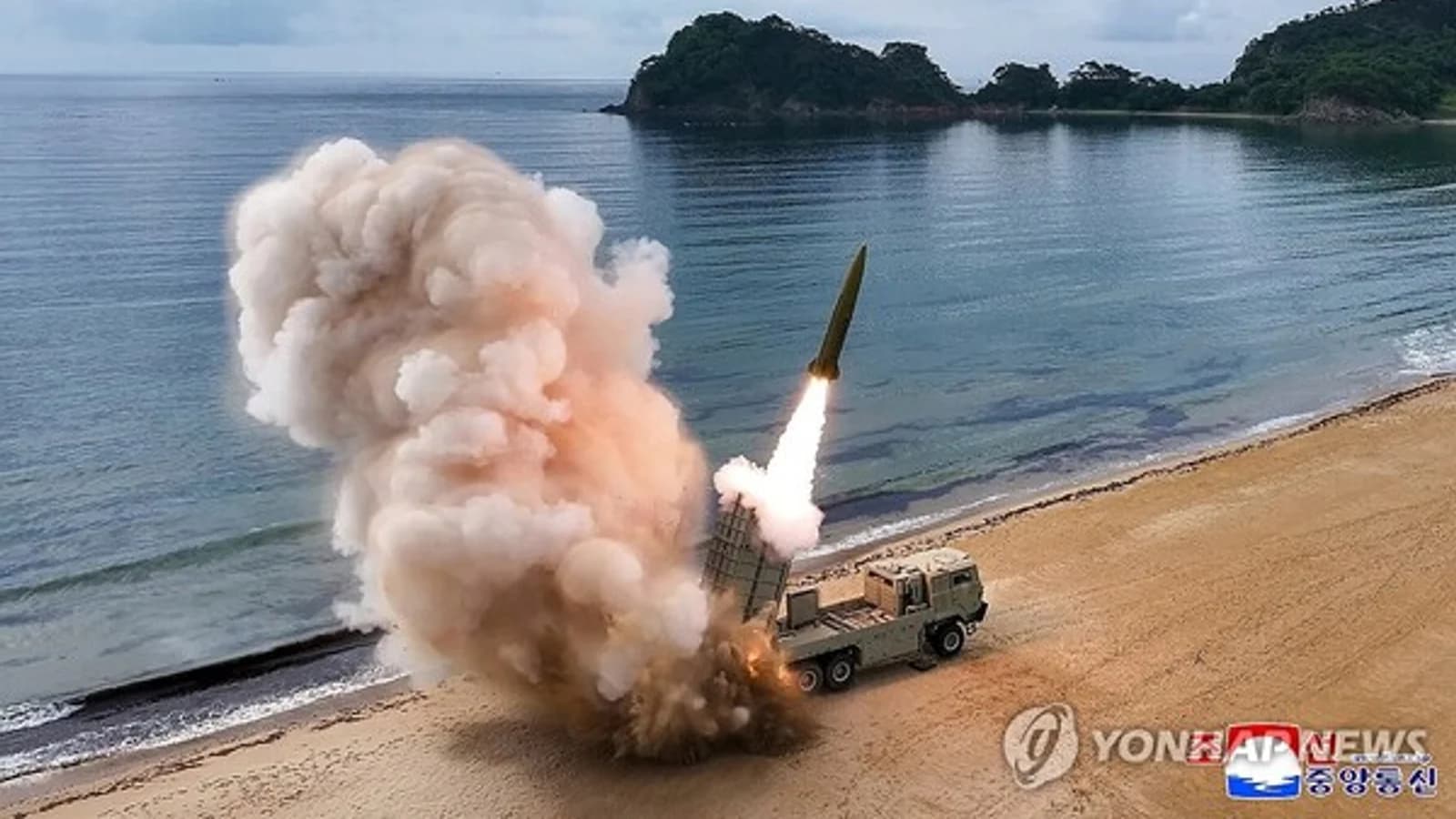
North Korea Launches Short-Range Ballistic Missile After 42 Days... National Security Office Convenes Emergency Security Meeting

How to Use the 2026 Comprehensive Real Estate Holding Tax (Household) Simple Calculator: Check Estimated Tax by Entering Official Price and Number of Houses