
Government Finalizes 'AI Basic Healthcare Strategy'... Full-Scale AI Adoption in Public Health Centers and Emergency Rooms Nationwide
The government has finalized an 'AI Basic Healthcare Strategy' that will introduce artificial intelligence (AI) technology in earnest across medical settings, i
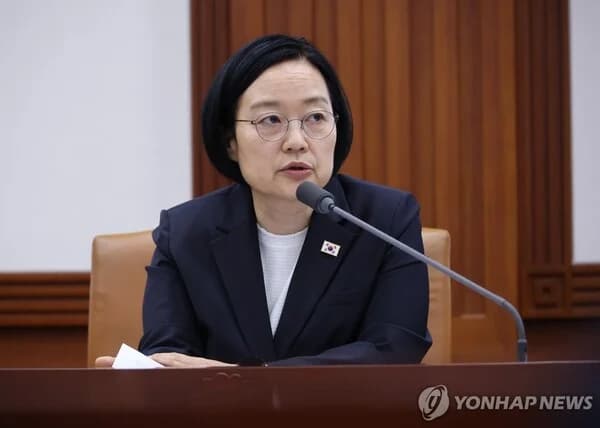
The government has finalized an 'AI Basic Healthcare Strategy' that will introduce artificial intelligence (AI) technology in earnest across medical settings, including public health centers, public hospitals, and emergency rooms. This comprehensive national plan aims to fill the widening gaps in regional, essential, and public healthcare caused by population decline and medical workforce shortages, allowing citizens to experience advanced medical services in their daily lives.
The strategy, jointly prepared by the Ministry of Health and Welfare, the National AI Strategy Committee, the Ministry of Science and ICT, and other relevant ministries, was reviewed and approved at the 12th National Policy Coordination Meeting held on the morning of the 6th at the Government Complex in Jongno-gu, Seoul. The plan focuses on building large-scale infrastructure, including the construction of a 'Public Healthcare AI Highway' connecting 72 responsible medical institutions nationwide, medical data linkage, and the expansion of AI-based new drug development platforms.
The vision of the strategy is 'AI Protecting Lives, Healthcare Innovation for All.' It includes 12 implementation tasks under three main strategies: △ tangible AI healthcare innovation experienced by citizens; △ establishing a nationwide medical AI digital foundation; and △ fostering a sustainable AI healthcare ecosystem.
Why 'Healthcare AI' Now
The government's decision to promote healthcare AI as a national strategy is driven by the diagnosis that the country is entering a super-aged society and facing rapid expansion of regional medical gaps. Due to a decline in public health doctors, 730 town and township public health sub-centers (59.5%) nationwide are expected to be without one by 2025. This number will rise to 1,083 (86.9%) by 2027. The government plans to actively utilize healthcare AI to compensate for these gaps in regional, essential, and public healthcare.
'AI Packages' to Be Distributed to Health Centers and Medically Underserved Areas
A 'Primary Healthcare AI Support Tool (Package)' will be distributed to public health centers, health sub-centers, and primary care institutions in medically underserved areas nationwide. By supporting the reading of medical images such as X-rays, automatic generation of medical records, and chronic disease management, AI will reduce the administrative burden on medical staff, allowing them to focus on patient care.
In island and mountainous areas, a pilot project for 'AI-based non-face-to-face home collaborative consultation' will also be pursued, where visiting nurses can collaborate with remote doctors using patient information analyzed by AI. Residents who have difficulty moving or visiting hospitals will be able to receive medical care at home.
AI Introduced to Emergency Healthcare... Pilot Operation in Daegu This Year
Changes are also anticipated in the field of emergency healthcare. The government plans to pilot an '(tentatively named) Integrated Emergency AI Platform,' which supports everything from ambulance transport to selecting the appropriate hospital, in Daegu in the second half of this year before gradually expanding it. Previously, ambulance crews had to contact multiple hospitals directly to check bed availability, but in the future, AI will recommend appropriate hospitals by analyzing each hospital's treatment capacity and emergency room conditions in real time. 'Smart Emergency Rooms' will also be developed to assist medical staff in patient triage and monitoring.
System for Sharing Medical Records and Images Between Hospitals to Be Established
The inconvenience of having to copy CT or MRI images onto CDs or repeat the same tests every time a patient moves to a different hospital will also be reduced. The government will establish a system for sharing medical records and images between hospitals, centered on the 'Personal Health Record (PHR).' In addition, a 'National AI Health Secretary' service will be provided to help patients easily understand medical terms in health checkup results and prescriptions.
'Public Healthcare AI Highway' Connecting 72 Institutions to Be Phased In
To transition public healthcare to AI, the government will establish a national GPU-based 'Public Healthcare AI Platform' and build a 'Public Healthcare AI Highway' connecting 72 responsible medical institutions nationwide. Pilot projects will begin at nine institutions in the second half of this year, expanding to 30 institutions by 2027 and all 72 institutions by 2029. The aging computer systems of local medical centers will also be transitioned to the cloud to lay the groundwork for AI utilization.
AI to Be Fully Utilized in New Drug Development and Advanced Medical Research
The government will establish a national GPU-based innovative new drug platform and a 'K-AI New Drug Platform' to support the development of treatments for rare and intractable diseases, and will also pursue the development of 'physical AI' technologies such as surgical robots. The national bio-big data will initially be opened to a scale of 120,000 people in the second half of this year, with plans to expand it to 700,000 by 2029 and one million by 2032.
Furthermore, the development of a 'Korean-style sovereign healthcare AI' utilizing domestic clinical data and proprietary AI models will begin in 2027. The policy aims to reduce dependence on foreign technology and secure independent AI technology tailored to the medical and clinical characteristics of Koreans.
Institutional Improvements and Global Cooperation to Proceed in Parallel
Institutional improvements will also be pursued in tandem with the spread of AI healthcare services. The government will establish an appropriate compensation system for AI-based healthcare services and formulate medical AI ethics and security guidelines to enhance safety. The enactment of a Digital Healthcare Act, expanded investment in research and development at regional national university hospitals, and the training of AI and bio-health professionals will also proceed in parallel.
In terms of global cooperation, the government will announce a '(tentatively named) AI Healthcare Seoul Declaration' at the 5th World Bio Summit in October and establish a WHO AI Hub in South Korea to promote the international spread of the 'AI Basic Healthcare Model.'
Minister of Health and Welfare Cho Kyoo-hong stated, "AI is a tool that fills the gaps in regional, essential, and public healthcare and protects the lives of citizens. We will implement this strategy without delay so that all citizens can tangibly experience AI healthcare innovation anywhere in the country."
CBC Globe publishes verified stories with editorial review, source checks, and tenant-specific publication standards.
Related Articles

Dawn Returns After 3 Years… New Single 'Too Much' Released Today (7th) at 1 PM

Kim Jae-joong Returns to Korea After 1 Year and 3 Months... Releases Dreamy Concept Photos and Mood Film for Single 'THE WAVE'

UNIS Sweeps Japanese Charts... Releases English Version of Title Track for Global Push