
Iran and Oman Agree on Strait of Hormuz Route Coordinates…Push for Temporary Toll-Free Operation
The Strait of Hormuz, a critical maritime route responsible for 20% of global oil and natural gas transportation, has been effectively paralyzed following Iran'
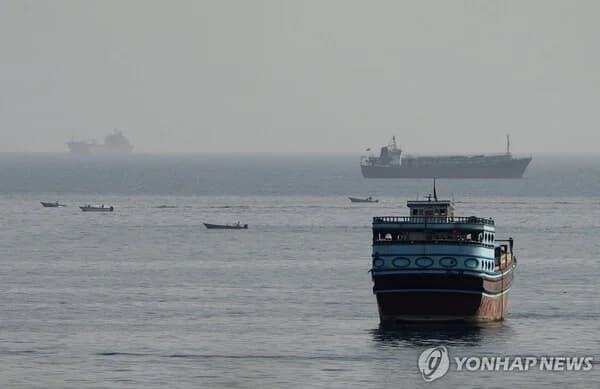
The Strait of Hormuz, a critical maritime route responsible for 20% of global oil and natural gas transportation, has been effectively paralyzed following Iran's recent blockade measures. However, discussions on reopening the strait are now showing progress.
Agreement on Route Coordinates Reached After Two Months of Negotiations
Iranian Foreign Ministry Spokesperson Esmaeil Baghaei stated on the 5th (local time) that Iran and Oman have been engaged in negotiations for two months aimed at securing a safe passage for commercial vessels. Technical, legal, security, and environmental aspects were thoroughly reviewed, according to the spokesperson. Baghaei added that an agreement has been reached on the geographic coordinates of the proposed route, and that a joint statement by both nations outlining key considerations and points of agreement is currently under review and in its finalization stage.
New Transit Route Model…Centered on Iranian Waters, Without Transit Fees
Iranian Deputy Foreign Minister Kazem Gharibabadi announced that a new model for managing the Strait of Hormuz transit route is being developed based on consultations with Oman. Under this model, most of the designated route passes through Iranian waters, with portions including Omani waters. Existing temporary routes will be closed, and the new route will be operated on a temporary basis for two to four months, with the possibility of extension to be discussed as needed. Under the bilateral agreement, vessels transiting the strait will first pass through Iranian waters and exit mostly through Omani waters. No transit fees will be imposed under this temporary agreement. Additionally, Iran plans to send vessels, including oil tankers, ahead of the strait's full reopening to check for threats such as naval mines.
Iran's Control Explicitly Stipulated…Opposite Direction Still Under Discussion
According to a senior Iranian official, the draft agreement explicitly stipulates Iran's control over vessels entering the Gulf through the strait. Iran's role regarding vessels traveling in the opposite direction remains under discussion. Reuters, citing local sources, reported that concessions granting some form of control over the Strait of Hormuz have already been made.
Instability Persists…Lack of Trust with the U.S. Also an Obstacle
Spokesperson Baghaei pointed out that destabilizing factors in the strait remain, including U.S. maritime blockades and aggressive, threatening actions targeting Iran's interests. He emphasized that the agreement between Iran and Oman alone cannot fully guarantee the safety of vessels, and that the lack of trust with the United States is also hindering progress in negotiations. Diplomatic circles expect that the agreement between Iran and Oman will positively contribute to the revival of the ceasefire Memorandum of Understanding (MOU) signed between the United States and Iran on the 17th of last month.
Trump Cites "Significant Progress"…Iran Perceives the Strait as a Negotiating Lever
U.S. President Trump stated on the 4th that there had been "significant progress," suggesting that an agreement could be reached by the 5th or 6th. However, there is also speculation that Iran may use the Strait of Hormuz as a negotiating lever to demand further concessions from the United States. Meanwhile, it has also been reported that the Iranian and Omani negotiating teams have reached an agreement on a draft document for reopening the strait, with only the final approval of Iran's Supreme Leader remaining.
Pakistan and Qatar Continue Mediation Efforts
Pakistan and Qatar have been serving as mediators between Iran and the United States. The Iranian Foreign Ministry stated that there are no plans to visit the two countries this weekend, but explained that it continues to maintain contact with them, exchanging views on easing regional tensions.
CBC Globe publishes verified stories with editorial review, source checks, and tenant-specific publication standards.
Related Articles

600 Billion Won Invested as Pohang AI Data Center Kicks Off in Earnest... 'Operations to Begin in First Half of 2028'

Lee Kang-in Set for First Match in Atletico Jersey... Named to 27-Man Squad for Coupang Play Series

13th Jeju Samdasoo Masters Opens... KLPGA Goes All Out on Safety Amid Heatwave Concerns