
Prosecution's Investigative Powers to Be Abolished in October... Discussions Intensify on Future of Joint Investigation Units and Legal Support Measures
With the abolition of prosecutors' direct and supplementary investigative powers set to take effect in October, discussions are intensifying over the future exi
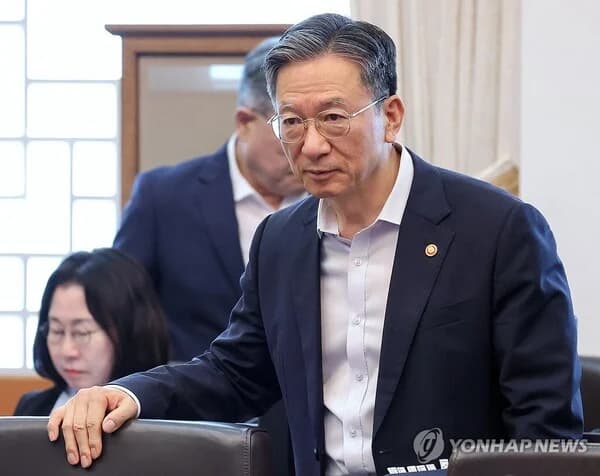
With the abolition of prosecutors' direct and supplementary investigative powers set to take effect in October, discussions are intensifying over the future existence and operational methods of joint investigation units, which have been jointly operated by the prosecution and the police. Currently, the prosecution operates nine joint investigation units in collaboration with the police, the Financial Services Commission, the Korea Fair Trade Commission, and the Korea Customs Service to respond to various crimes affecting everyday life, including drugs, voice phishing, and financial and securities crimes. However, concerns have been raised that with the amendment of the Criminal Procedure Act unifying investigative authority under the police and requiring prosecutors to focus on initiating and maintaining public prosecutions, the role and legal basis of the existing joint investigation units may become unclear.
Minister of Justice Jung Sung-ho stated on the 5th during a pre-briefing for the '2026 Second-Half Government Work Report' held at the Government Gwacheon Complex that he is "deeply contemplating" measures to maintain the joint investigation units. Minister Jung emphasized that while frontline investigations will be handled by the police, meticulous preparation is needed regarding how the Public Prosecutors' Office will provide legal judgments and advice. He added that this aspect must be carefully designed in the process of establishing investigation guidelines and related enforcement decrees.
Minister Jung also expressed concern that the specialized joint investigation capabilities built to respond to crimes affecting everyday life, such as drug offenses, could be sidelined. He pointed out that although international criminal organizations have been rounded up through the joint drug investigation unit, drug crimes continue to decline. He explained that combining the prosecution's crime analysis capabilities, international intelligence, and criminal justice cooperation functions with relevant agencies had been effective. He further mentioned the need for a separate specialized investigative agency equipped with both investigative and prosecutorial authority, similar to the United States Drug Enforcement Administration (DEA).
Regarding the future operation of the joint investigation units, Minister Jung stated that he had requested the National Assembly to establish foundational provisions allowing the prosecution to support joint investigations, but they were not reflected. His position is that institutional mechanisms are needed to ensure that the prosecution's investigative experience and expertise can be utilized in police investigations, even if direct investigative powers are eliminated. He reiterated that a system in which the Public Prosecutors' Office provides legal advice, even if frontline investigations are handled by the Serious Crime Investigation Agency or the police, must be reflected in the investigation guidelines and enforcement decrees.
Regarding changes to the organization and personnel of the Public Prosecutors' Office, which is set to launch on October 2, Minister Jung explained that even without conducting direct investigations, the number of prosecutors needed to analyze referred cases and maintain public prosecutions may actually increase. He stated that since public prosecutions must be maintained based solely on investigation records transferred from the primary investigative agency, the number of trial prosecutors must be further expanded.
Meanwhile, he noted that no separate measures have been prepared despite the statute of limitations for Public Official Election Act violations related to the June 3 local elections approaching on December 3. Minister Jung mentioned that the number of cases filed related to this election is higher than in the past, creating a significant burden in processing the accumulated cases. He also pointed out a contradiction between the special counsel bill for the June 3 local election ballot shortage incident, passed by the National Assembly, which grants investigative authority to dispatched prosecutors, and the intent of the amended Criminal Procedure Act, which abolishes prosecutors' direct investigative powers. He also expressed the view that after October, prosecutors from the Public Prosecutors' Office should no longer be dispatched to serve as special counsels.
Regarding the lowering of the age threshold for juvenile offenders, he conveyed that he would approach the matter cautiously, noting that even lowering the age by one year would not lead to a significant increase in the number of affected individuals. He indicated plans to continue discussions with the Ministry of Gender Equality and Family.
CBC Globe publishes verified stories with editorial review, source checks, and tenant-specific publication standards.
Related Articles

600 Billion Won Invested as Pohang AI Data Center Kicks Off in Earnest... 'Operations to Begin in First Half of 2028'

Lee Kang-in Set for First Match in Atletico Jersey... Named to 27-Man Squad for Coupang Play Series
13th Jeju Samdasoo Masters Opens... KLPGA Goes All Out on Safety Amid Heatwave Concerns