
Construction Industry Revenue and Profitability Both Decline... Marginal Companies Triple, Urgent Need for Structural Improvement
Over the past five years, both revenue and profitability of South Korea's construction industry have declined simultaneously, with the number of marginal companies—those unable to cover even interest expenses with operating income—surging nearly threefold. According to an analysis by the Constructi
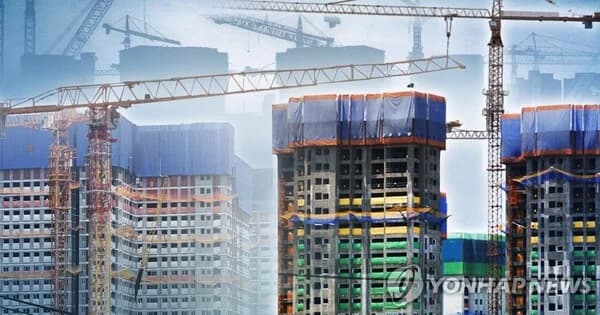
Over the past five years, both revenue and profitability of South Korea's construction industry have declined simultaneously, with the number of marginal companies—those unable to cover even interest expenses with operating income—surging nearly threefold.
According to an analysis by the Construction and Economy Research Institute of Korea (CERIK), major management indicators including profitability, stability, growth, and activity have deteriorated overall. The findings were based on an examination of financial statements from 2,004 companies, excluding 333 capital-impairment firms, out of 2,337 external-audit-subject companies with available financial data for the 2021–2025 period.
■ Revenue Turns to Negative Growth, Profitability and Growth Decline Together
The overall revenue growth rate of the construction industry reversed from 17.9% in 2022 to -4.5% in 2025, entering a phase of negative growth. The total asset growth rate also declined from 14.8% in 2021 to 5.8% in 2025.
Profitability indicators fell across the board. The operating profit margin dropped from 4.5% in 2021 to 3.4% in 2025, while the net profit margin decreased from 4.2% to 2.3%. Return on assets (ROA) fell from 5.2% to 3.6%, and return on equity (ROE) declined from 10.1% to 5.7%.
■ Marginal Companies Surge from 62 to 173... "Unable to Cover Interest Expenses"
The proportion of marginal companies—those with an interest coverage ratio below 1 for three consecutive years—nearly tripled from 4.5% (62 companies) in 2021 to 11.3% (173 companies) in 2025. These companies cannot cover even their interest expenses with operating income, making normal business operations difficult.
■ Distress Concentrated in Building Construction... Civil Engineering Relatively Stable
By sector, distress was concentrated in building construction. Within general construction, the net profit margin for the building sector plummeted from 5.0% to 1.0%, while the debt ratio rose from 204.8% to 256.3%. The share of marginal companies also jumped significantly from 3.6% to 12.1%.
In contrast, the civil engineering sector saw a gradual decline in its net profit margin from 4.3% in 2021 to 3.5% in 2025, while the debt ratio remained relatively stable, rising from 97.5% to 106.7%. The marginal company ratio increased from 2.8% to 8.3%, but the increase was smaller compared to building construction.
■ General Construction vs. Specialty Construction... General Construction Has Lower Revenue Growth, Specialty Construction Has More Marginal Companies
Comparing specialty and general construction, the revenue growth rate for general construction was -5.9%, lower than that of specialty construction (-3.1%). However, the proportion of marginal companies was higher in specialty construction at 12.4% compared to general construction at 10.4%. The operating profit margin fell from 5.0% to 3.6% for general construction and from 4.0% to 3.0% for specialty construction.
■ Non-Metropolitan Areas Hit Harder... Growing Liquidity Burden
By region, difficulties were more pronounced for non-metropolitan companies. The net profit margin of non-metropolitan companies stood at just 1.5% in 2025, and the proportion of marginal companies was 12.9%, higher than the metropolitan area figure of 9.8%. The construction receivables turnover ratio was also lower for non-metropolitan areas at 771.7% compared to 912.1% for metropolitan areas. The current ratio declined in both regions—from 244.9% to 216.0% in metropolitan areas and from 332.2% to 270.6% in non-metropolitan areas—indicating increased short-term liquidity burdens. CERIK noted that the influence of company size is partly reflected in the regional differences.
■ Deteriorating Financial Soundness... Deepening Cash Flow Pressure Structure
In terms of financial soundness, the debt ratio rose from 129.2% in 2021 to 161.8% in 2024 before declining slightly to 155.3% in 2025, though it remains at a high level. The current ratio also decreased from 282.6% in 2021 to 232.3% in 2024 before a slight rebound to 238.3% in 2025.
The total asset turnover ratio fell from 149.4% in 2022 to 114.7% in 2025, and the construction receivables turnover ratio dropped from the 900% range in 2021–2022 to the 800% range in 2023–2025, lengthening the collection period for unpaid construction receivables and trade receivables. This suggests that a structure in which revenue contraction and collection delays pressure cash flows and threaten financial soundness is deepening.
■ Root Cause Is Accumulation of Structural Risks... "Tailored Improvement Needed"
CERIK pointed to the accumulation of structural factors—rising construction costs, project delays and cancellations, and expanding unsold project financing (PF) risks—as the causes of deteriorating performance. Lee Ji-hye, a research fellow at CERIK, stated, "This is the result of long-term accumulation of problems inherent in business structures, contracting practices, and financing methods," emphasizing that "structural improvement tailored to the characteristics of each industry, region, and company size is necessary."
CERIK recommended that general construction requires PF project management, debt structure improvement, and prevention of risk transfer by project owners, while specialty construction needs strengthened liquidity measures centered on working capital and guarantees. Additionally, the institute identified timely payment and improved collection structures for construction payments as concurrent priorities.
CBC Globe publishes verified stories with editorial review, source checks, and tenant-specific publication standards.
Related Articles
President Lee Jae-myung Orders Comprehensive Review of ISA and Stock Price Suppression Prevention Act... Over 4,000 Opinions Flood Tax Revision Plan
Expansion of PF Public Guarantees and Easing of Loan Regulations Under Review... Jeonse Loan Exception Criteria for Non-Resident Single-Homeowners to Be Refined
Cause of Hong Kong Apartment Mega Fire Likely a 'Cigarette Butt'... Final Investigation Results of Tragedy That Killed 168