
Top 5 Banks' Overdraft Balances Exceed 43 Trillion Won... Delinquency Rate Surge Puts Elderly and Young on 'Emergency Alert'
**[Overdraft Delinquency Rate Surges... Clear Signs of Deterioration Among Elderly and Young Borrowers]** The overdraft balances of South Korea's top five commercial banks have reached their highest level in three years and eight months, since October 2022. In particular, the rate of increase in ov

[Overdraft Delinquency Rate Surges... Clear Signs of Deterioration Among Elderly and Young Borrowers]
The overdraft balances of South Korea's top five commercial banks have reached their highest level in three years and eight months, since October 2022. In particular, the rate of increase in overdue amounts is significantly outpacing the growth rate of overall balances, sounding growing alarms over potential household debt deterioration.
As of the end of June this year, the total overdraft balance at the five major banks stood at 43.3 trillion won, an 8.5% increase from the end of last year. In contrast, overdue amounts during the same period surged by 33.2%, jumping from 71.1 billion won to 94.7 billion won. As overdue amounts rose rapidly, the delinquency rate also climbed by 0.04 percentage points (p), from 0.18% to 0.22%.
By age group, signs of deterioration were most prominent among those in their 60s and older, as well as those in their 20s and younger. The delinquency rate for borrowers aged 60 and above was 0.37%, which is 0.15 percentage points higher than the overall average of 0.22%. Those in their 20s and younger also recorded a rate of 0.33%, exceeding the overall average by 0.11 percentage points. Meanwhile, those in their 30s (0.19%), 40s (0.19%), and 50s (0.21%) showed levels below or near the overall average.
Specifically, the overdraft balance for those aged 60 and above increased by 12.5%, from 400 billion won to 450 billion won, while overdue amounts grew by 23%, from 13.5 billion won to 16.6 billion won. For those in their 20s and younger, the balance remained unchanged at 100 billion won, but overdue amounts spiked by 32%, from 2.5 billion won to 3.3 billion won.
[Securities-Backed Loans Surge... Concerns Over Expanded Volatility in the Event of a Stock Price Decline]
The proportion of the elderly was also found to be overwhelming in securities-backed loans. As of the end of May this year, the loan balance collateralized by the top five stocks by market capitalization—Samsung Electronics, SK Hynix, SK Square, Samsung Electronics preferred shares, and Samsung Electro-Mechanics—handled by 10 domestic comprehensive financial investment firms stood at 2.9027 trillion won. This represents a 24.3% increase from the end of last year.
By age group, those aged 60 and above accounted for 1.8283 trillion won, or 63% of the total. This was followed by those in their 50s with 593.3 billion won (20.4%), those in their 40s with 338.5 billion won (11.4%), and those in their 30s with 95.6 billion won (3.3%). Those in their 20s accounted for a mere 16.2 billion won (0.6%), and those under 20 accounted for 5.7 billion won (0.2%).
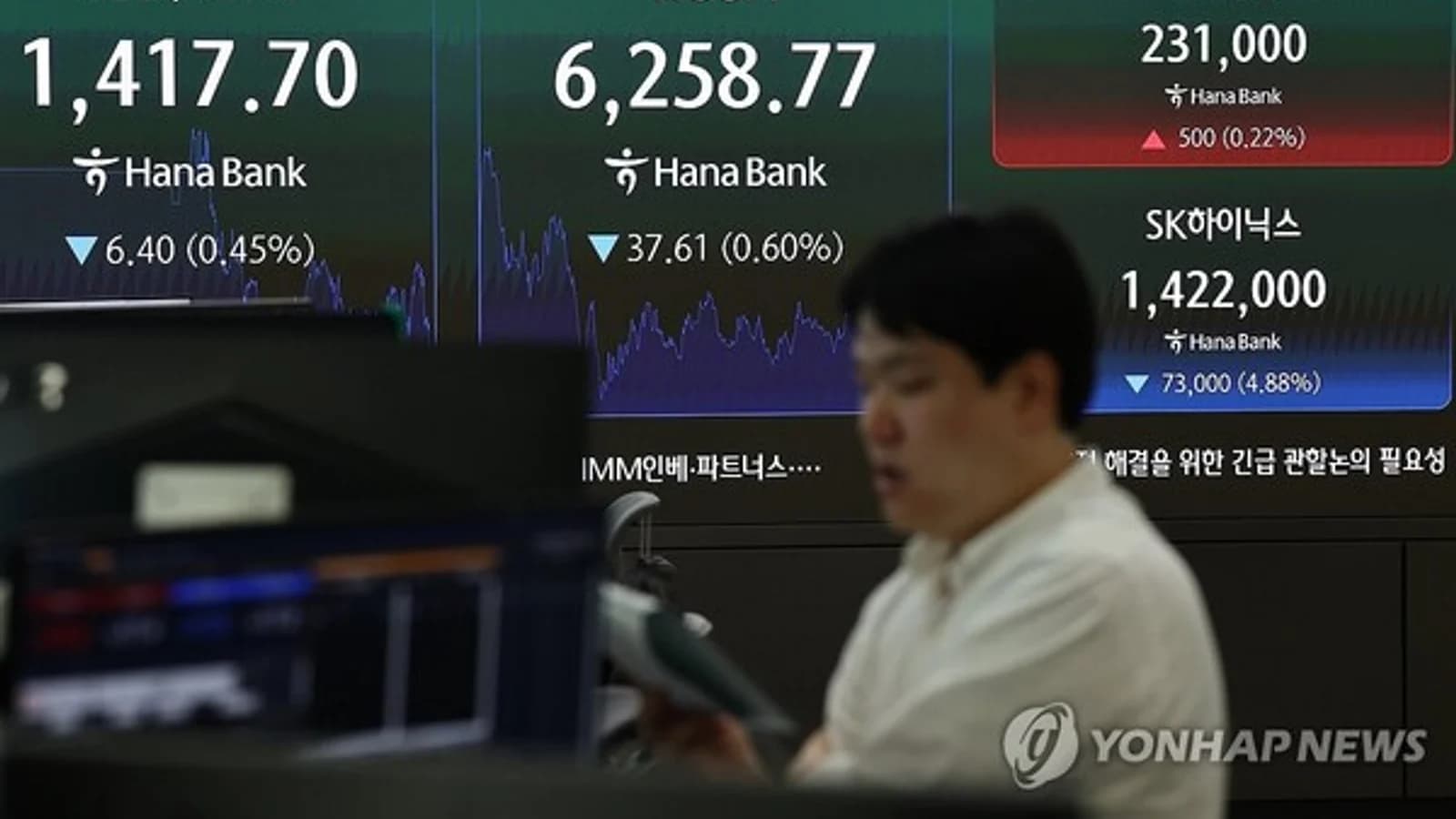
Securities-backed loans require additional payments (margins) if the value of the pledged stocks declines. If the borrower fails to meet this obligation, the loan can be repaid through a forced liquidation sale. In fact, in July, the stock prices of major semiconductor companies, including Samsung Electronics, plummeted. After recording an intraday high of 374,500 won on June 19, Samsung Electronics' share price fell to 189,200 won by July 29, dropping to half its value in just 40 days.
In a report released in early June, the Bank of Korea stated that the scale of individual leverage investments, primarily through margin trading and securities-backed loans, had reached an all-time high. The central bank also pointed out that the accumulation of leveraged investments could lead to an influx of forced sell-off volumes during future stock price corrections, thereby amplifying market volatility.
[Credit Loan Delinquency Rates Rise in Tandem... 'Sharp Stock Price Declines Increase Repayment Burden']
Overall credit loans at the five major banks are exhibiting a trajectory of deterioration similar to that of overdraft accounts. As of the end of June this year, the outstanding credit loan balance stood at 107.1 trillion won, up 3.6% from the end of last year. However, overdue amounts surged by 19.4%, from 314 billion won to 375 billion won. The delinquency rate also rose by 0.05 percentage points, from 0.30% to 0.35%.
The prevailing analysis within the banking sector is that the recent sharp decline in stock prices has had a direct impact on the rising delinquency rates for both overdrafts and credit loans. An official from a commercial bank explained, "Many borrowers who took out loans to invest during the stock market boom are now facing difficulties repaying their principal and interest."
Another bank official noted, "Those in their 20s generally have lower incomes and fewer assets, while many of those aged 60 and above are post-retirement, meaning they may lack sufficient repayment capacity," adding, "Losses from investing in risky assets, combined with interest burdens, could be the core reasons behind the widening delinquencies."
CBC Globe publishes verified stories with editorial review, source checks, and tenant-specific publication standards.
Related Articles

tvN 'Street Restaurant Fighter' Round 3 on August 9... Cracks Emerge Within Alliance Teams Over Four Semifinal Spots

Naver and Kakao's Twin-Track AI Strategies: Global Infrastructure Expansion vs. KakaoTalk B2C Focus
KOSPI PER Falls to 5.1x, 'Historically Undervalued'… Market Volatility Stabilizes Amid Leveraged Liquidation and Tightened Regulation