
Hanwa Becomes KAI's Second-Largest Shareholder with 15.89% Stake... "Files for KFTC Corporate Combination Review"
As part of its 'AI Space Power' strategy, Hanwha Group has acquired a 15.89% stake in Korea Aerospace Industries (KAI), becoming the company's second-largest shareholder. As the stake exceeds 15% of a listed company's shares, the group plans to file for a corporate combination review with the Korea
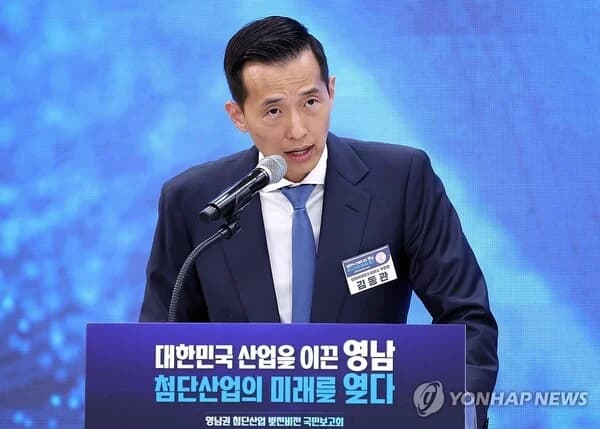
As part of its 'AI Space Power' strategy, Hanwha Group has acquired a 15.89% stake in Korea Aerospace Industries (KAI), becoming the company's second-largest shareholder. As the stake exceeds 15% of a listed company's shares, the group plans to file for a corporate combination review with the Korea Fair Trade Commission (KFTC).
Acquires 15.89% Stake in KAI... Becomes Second-Largest Shareholder Hanwha Group increased its KAI stake to 15.89% through open-market purchases over the past month. The breakdown by affiliate is as follows: Hanwha Aerospace holds 9.90%, Hanwha Systems holds 4.98%, and Hanwha Aerospace USA holds 1.01%. With this, Hanwha has become KAI's second-largest shareholder, while the largest shareholder remains the Export-Import Bank of Korea (KEXIM), holding a 26.41% stake.
Previously, Hanwha announced plans to invest approximately 500 billion won by the end of this year to increase its KAI stake to around the 15% level, and in May, it officially changed the purpose of its shareholdings to 'management participation.'
Files for KFTC Review... Seeks Full-Scale Management Participation Having secured a stake of 15% or more, Hanwha plans to soon file a corporate combination review with the Korea Fair Trade Commission. Through this stake expansion, Hanwha is looking to move beyond simple investment and pursue full-scale management participation for business cooperation with KAI and the expansion of global exports. In particular, to respond to future battlefields where unmanned systems and intelligence are accelerating, as well as global defense protectionism, Hanwha is reviewing ways to directly participate in KAI's core decision-making processes.
Hanwha has accumulated technological capabilities in various fields, including aircraft engines, avionics, radar, satellites, space launch vehicles, and ground and naval defense systems. Meanwhile, KAI is the only domestic company with capabilities in the development and production of finished aircraft and overall aircraft system integration. If the capabilities of the two companies are combined, it becomes possible to build the nation's largest space industry value chain, encompassing launch vehicles, satellites, ground systems, and space services.
A Hanwha official explained, "This expansion of our KAI stake is aimed at enhancing the national security of the Republic of Korea, strengthening the competitiveness of overseas exports in the space and aviation sectors, and building an ecosystem." He added, "Through the combination of Hanwha and KAI, we can elevate the competitiveness of the domestic aerospace industry and contribute to strengthening the nation's space industry capabilities."
'AI Space Power' Strategy Involving 55 Trillion Won Investment by 2040 This move aligns with Hanwha Group's 'AI Space Power' strategy, which involves an investment of 55 trillion won by 2040. Hanwha is undertaking the construction of future infrastructure, including independent launch vehicles, satellites, space AI data centers, and defense AI data centers. Furthermore, the group is accelerating the creation of a southern regional aerospace belt connecting Changwon, Gyeongnam (Hanwha Aerospace), Sacheon, Gyeongnam (KAI), and Goheung, Jeonnam (Naro Space Center), while also devoting efforts to expanding the aerospace ecosystem through the cultivation of regional talent, technological advancement of partner companies, and support for startups.
At the 'AI Space Power' strategy announcement event held in Jinju, Gyeongnam in July, Hanwha Group Vice Chairman Kim Dong-kwan emphasized, "Only when space and aviation, as well as AI and defense, are connected as one, can we truly leap forward as an AI space power."
CBC Globe publishes verified stories with editorial review, source checks, and tenant-specific publication standards.
Related Articles
U.S. Commerce Secretary Howard Lutnick Cites Korea Zinc's U.S. Critical Minerals Investment (Project Crucible) as Key Example
100kg Wild Boar Appears at Golf Course in Seogwipo's Pyoseon-myeon... Hunter Shoots It Dead, Golfers Evacuate in Commotion
![[On Site] Band YB Heats Up Boryeong Special Stage... 'Sound Planet Festival 2026' Kicks Off in Earnest](/_next/image?url=https%3A%2F%2Fmedia.cbcglobe.com%2Ftenants%2Fcbc00000-0000-4000-8000-000000000001%2Fmedia%2Fcbc%2F2026%2F08%2F596844%2F28e68c387d9f6d0b%2Fvariants%2Fhero.webp&w=1920&q=75)
[On Site] Band YB Heats Up Boryeong Special Stage... 'Sound Planet Festival 2026' Kicks Off in Earnest