June 3 Local Election 'Ballot Shortage' Special Investigation Committee Extends Activities... Ruling and Opposition Parties Clash Over Songpa-gu Recount
The National Assembly Special Investigation Committee, which is probing the ballot shortage incident during the June 3 local elections, has extended its activity period by one month. It was initially launched to investigate the ballot shortage issue, but the scope of the investigation expanded to en
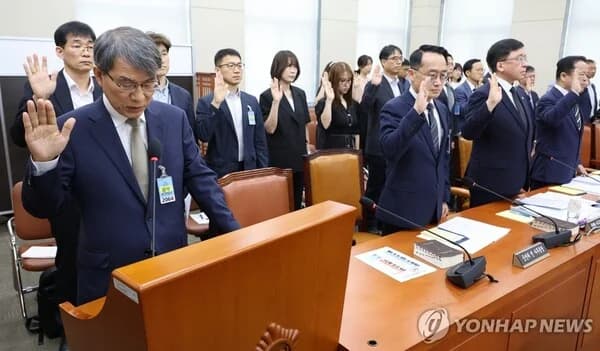
The National Assembly Special Investigation Committee, which is probing the ballot shortage incident during the June 3 local elections, has extended its activity period by one month. It was initially launched to investigate the ballot shortage issue, but the scope of the investigation expanded to encompass the overall process, including the preparation of voter registers, the entry of voter counts, and the tallying of voter turnout. In particular, the investigation broadened as additional allegations emerged, including erroneous entry of voter counts, manipulation of hourly turnout figures, and errors in register preparation.
At the recent third hearing, the ruling and opposition parties once again clashed over the schedule and method for the recount at the Songpa-gu polling station. The Democratic Party argues that the recount scheduled for the 18th should be conducted under the leadership of the Special Investigation Committee. Meanwhile, the People Power Party counters that a public recount should be conducted under the supervision of the special counsel once one is appointed.
People Power Party Rep. Seo Beom-su stated that the committee's extension was made with the linkage to the special counsel in mind, and proposed aligning the public verification schedule once the special counsel is confirmed. Rep. Joo Jin-woo also emphasized that they are not refusing the recount but rather seeking to enhance credibility by linking it with the special counsel. He raised suspicions about ballot storage conditions, evidence contamination, and false entry of turnout figures, while urging the disclosure and verification of the National Election Commission's server data. Rep. Shin Dong-wook added that with allegations of turnout manipulation, there should be no rush in setting the schedule.
In contrast, Democratic Party Rep. Yun Geon-young stated that the Special Investigation Committee is the proper body to conduct the public verification of the recount, pointing out the seriousness of prolonging an illegal situation. Rep. Yang Bu-nam also argued that the recount falls under the committee's authority and should be conducted independently of the special counsel.
At the hearing, 29 witnesses attended, including acting National Election Commission Chairman Wi Cheol-hwan and former Chairman Noh Tae-ak. In addition to NEC officials, officials from some city, county, and district election commissions in the Seoul metropolitan area and the Chungcheong region were also on the witness list.
The on-site verification of the recount involves committee members and observers recommended by each political party, and the entire process is broadcast live through the National Assembly broadcasting system and media outlets. All ballots at the Songpa-gu Election Commission's counting center are subject to verification. After checking the seals and storage conditions of the ballots and storage containers, they are opened. Election-related documents and equipment, such as poll records and vote counting tables, are also verified together. After checking whether the actual number of ballots matches the count on the tally sheet, the ballots are repackaged, resealed, and transferred to the NEC's secure facilities. This process is expected to take approximately 15 hours. A total of 440 personnel from the NEC and various levels of election commissions will be mobilized, and police will be responsible for maintaining order and controlling access at the site.
Meanwhile, the Public Recommendation Committee, agreed upon by the ruling and opposition parties, will finalize two special counsel candidates to recommend to the President by the 14th. The President must appoint one as special counsel within three days of receiving the recommendation. However, some observers note that it will take some time before the special counsel is fully operational. Currently, the ruling and opposition parties continue to hold differing views on the method of recommending special counsel candidates as well as the schedule and method of the recount.
CBC Globe publishes verified stories with editorial review, source checks, and tenant-specific publication standards.
Related Articles

Daedong Posts Q2 Revenue of 467.1 Billion Won and Operating Profit of 41.2 Billion Won, Achieving Record First-Half Performance

Comedian Oh Ji-heon: "Father Was a Top Korean History Instructor… Pain of Parents' Divorce, Lost Contact with Father for 8 Years"
Prosecutor Kang Baek-shin, 'Special Investigations Ace' Who Led Indictments in State Affairs Interference, Daejang-dong, and Lee Jae-myung Cases... Submits Resignation on the 10th