
Military Civilian Employee Welfare Basic Act Proposed: First Legal Basis Established for Housing Welfare Including Accommodations and Rental Subsidies
With the bill to enact the Military Civilian Employee Welfare Basic Act introduced in the National Assembly, the first institutional framework is expected to be established to legally guarantee housing welfare for military civilian employees, including the provision of military accommodations and re
With the bill to enact the Military Civilian Employee Welfare Basic Act introduced in the National Assembly, the first institutional framework is expected to be established to legally guarantee housing welfare for military civilian employees, including the provision of military accommodations and rental subsidies for private housing.
47,000 Military Civilian Employees Left Outside Comprehensive Welfare Legislation
Currently, approximately 47,000 military civilian employees work in various fields including defense administration, logistics and maintenance, research and development, informatization, and facility management. However, despite being placed in special environments such as working within military installations, serving in remote areas, and supporting military operations, there has been no independent comprehensive welfare act for military civilian employees. Under the current legal system, separate welfare basic acts have been established for military personnel, police officers, and firefighters respectively. This has led to persistent criticism that the special working conditions and welfare needs of military civilian employees have not been sufficiently reflected in policy.
Accommodation Occupancy Rate at 18.2%... Poor Housing Environment Drives Turnover
The housing welfare environment for military civilian employees has been found to be poor in practice. According to Ministry of National Defense data from last year, among the total 43,298 assigned military civilian employees, only 7,879 resided in military accommodations, resulting in an occupancy rate of just 18.2%. By branch, the rates were 21.2% for the Army, 9.6% for the Navy, 17.6% for the Air Force, 11.2% for the Marine Corps, and 14.9% for units directly under the Ministry of National Defense, all at low levels.
The lack of accommodation support is a major cause of military civilian employee turnover. Of the 2,572 Army military civilian employees who resigned voluntarily, 16.4% cited the lack of accommodation support as their reason for leaving. Over the past three years, the total number of voluntary resignations among all military civilian employees reached 3,879, and the competition rate for military civilian employee open recruitment has also steadily declined from 9.3 to 1 in 2022 to 8.5 to 1 in 2023 and 7.0 to 1 in 2024.
Education Support for Children Also a Blind Spot
Education support for the children of military civilian employees is also left in an institutional blind spot. Military personnel children, considering the special circumstances such as frequent reassignments, are allowed to transfer schools even when enrollment capacity is exceeded. However, military civilian employee children are excluded from the application of relevant regulations despite also experiencing frequent position changes. In fact, there have been cases where children of military personnel and military civilian employees living in the same apartment complex applied for transfer to the same school, but only the military personnel child was approved while the military civilian employee child was denied.
Representative Yoo Yong-won Leads Proposal of Military Civilian Employee Welfare Basic Act
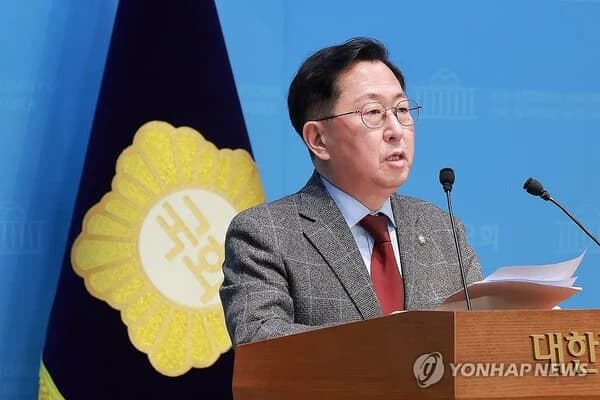
To address these issues, Representative Yoo Yong-won of the People Power Party, a member of the National Assembly National Defense Committee, led the proposal of the Military Civilian Employee Welfare Basic Act on the 10th. The key contents of this bill are as follows.
- Codification of State Responsibility: The state shall be responsible for creating conditions and formulating and implementing policies for the improvement of military civilian employee welfare.
- Establishment of Basic Plans: The Minister of National Defense shall conduct a basic welfare plan and welfare status survey every five years and prepare annual implementation plans.
- New Welfare Committee: A Military Civilian Employee Welfare Committee shall be established within the Ministry of National Defense to deliberate on welfare policies, institutional improvements, and budgetary support.
- Housing Welfare Support: Military accommodations shall be provided to military civilian employees, and when accommodations are not provided, private housing rental subsidies shall be supported, including loans for lease deposits and lump-sum rent, loan interest, and monthly rent.
- Education and Living Support: The bill includes provisions for supporting school transfers and admission for military civilian employee children, providing room and board facilities when certain requirements are met, using military welfare and sports facilities, and implementing retirement planning education programs for military civilian employees.
Representative Yoo Yong-won stated, "Despite being a core human resource that underpins the continuity and stability of national defense capability, military civilian employees have been left in an institutional blind spot," and added, "With the passage of this bill, military civilian employee welfare policies can be systematically pursued under the state's responsibility in accordance with long-term plans."
CBC Globe publishes verified stories with editorial review, source checks, and tenant-specific publication standards.
Related Articles

KFA Closes Applications for Interim Coach Hiring... Evaluation Committee to Be Formed This Week, Appointment in August

U.S. Commerce Secretary Howard Lutnick Cites Korea Zinc's U.S. Critical Minerals Investment (Project Crucible) as Key Example

100kg Wild Boar Appears at Golf Course in Seogwipo's Pyoseon-myeon... Hunter Shoots It Dead, Golfers Evacuate in Commotion
![[On Site] Band YB Heats Up Boryeong Special Stage... 'Sound Planet Festival 2026' Kicks Off in Earnest](/_next/image?url=https%3A%2F%2Fmedia.cbcglobe.com%2Ftenants%2Fcbc00000-0000-4000-8000-000000000001%2Fmedia%2Fcbc%2F2026%2F08%2F596844%2F28e68c387d9f6d0b%2Fvariants%2Fhero.webp&w=1920&q=75)