
Rocket Lab Posts Record Q2 Revenue of $234 Million... Backlog Exceeds $2.36 Billion
U.S. space company Rocket Lab Corporation (NASDAQ: RKLB) demonstrated its growth momentum by simultaneously achieving all-time highs in both revenue and backlog for the second quarter of fiscal year 2026. With a combination of expanding demand across launch vehicles and space systems, a series of ma
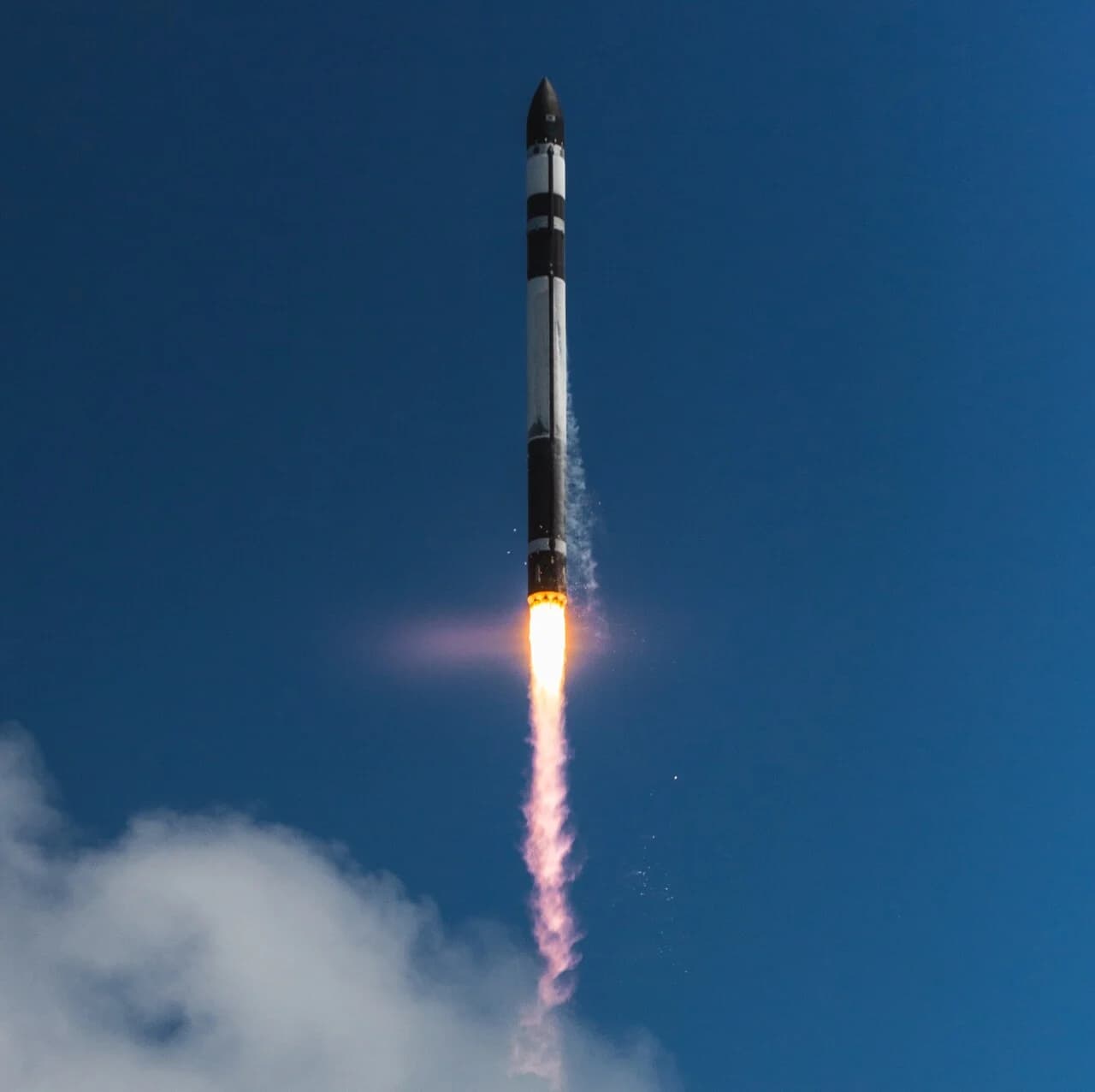
U.S. space company Rocket Lab Corporation (NASDAQ: RKLB) demonstrated its growth momentum by simultaneously achieving all-time highs in both revenue and backlog for the second quarter of fiscal year 2026. With a combination of expanding demand across launch vehicles and space systems, a series of major new contract wins, and comprehensive business expansion, the company is accelerating its transition into an end-to-end space enterprise.
■ Q2 Revenue of $234 Million · Backlog of $2.36 Billion Rocket Lab reported Q2 FY2026 revenue of $234 million, for the quarter ending June 30. This represents a 62% year-over-year increase, marking the highest quarterly revenue in the company's history and surpassing the previous quarter's record by $34 million. The backlog reached an all-time high of $2.36 billion, surging 137% compared to the same period last year.
Rocket Lab founder and CEO Peter Beck stated, "The second quarter was another fantastic quarter for Rocket Lab," adding, "With demand surging across all business areas, we achieved a record revenue of $234 million."
The influx of new orders continues. Entering the third quarter, the value of new contracts already signed in the launch and space systems sectors has exceeded $1 billion.
■ Accelerating Vertical Integration Following Mynaric and Motiv with Iridium Acquisition Rocket Lab is also accelerating its business expansion. Following the completed acquisitions of Mynaric and Motiv, the company announced an acquisition agreement with Iridium Communications Inc. The strategy is to emerge as a vertically integrated space company that directly designs and manufactures satellites and related systems, launches them into space with its own vehicles, and ultimately operates satellite constellations.
CEO Beck emphasized, "Through these moves, Rocket Lab is growing into a 'Tier 1 space company' with its own launch capability and will be positioned to provide core communication services to millions of users worldwide."
New contracts are also piling up in the launch business. In Q2 and the period following the quarter's end, Rocket Lab secured over $437 million in new contracts related to its Electron, HASTE, and Neutron launch vehicles. As a result, the launch contract backlog has grown to over 90 missions, marking an all-time high.
■ Neutron First Launch Preparations in Full Swing... Targeting Launch Pad Delivery for Q4 2026 Development of the next-generation medium-lift reusable rocket, Neutron, is also proceeding smoothly. Major milestones have been achieved in the assembly, integration, and testing of the hardware to be used for its maiden flight. Production of the first-stage tank is currently underway, targeting delivery to the launch pad in the fourth quarter of 2026. If Neutron's inaugural launch proceeds as planned, the scope of launch services is expected to expand from its traditional focus on small rockets into the medium-lift launch vehicle market.
A new mobile launch system named 'GHOST' was also unveiled. Designed to support suborbital and orbital launches from locations around the world, the system's first deployment site is the Pacific Spaceport Complex in Kodiak, Alaska, USA. Two launch pads dedicated to high-frequency launch missions will be constructed at this location, with the first operational use expected to be a suborbital launch from Alaska in 2027.
■ Expansion into U.S. Space Force Contracts, Geostationary Satellite Market, and European Foothold The company's business with the U.S. government and in the defense and security sectors is also expanding. Rocket Lab secured a contract to supply multiple 'Flatellite' spacecraft for the U.S. Space Force's Space-Based Airborne Moving Target Indication (SB-AMTI) program. These satellites are scheduled to be launched via Neutron. SB-AMTI is a national security-related program designed to detect, track, and monitor airborne threats from space, and Rocket Lab is one of only two companies providing both launch services and spacecraft for this initiative.
Additionally, through two contracts for the manufacturing of three geostationary satellites, the company secured total deals worth over $160 million. This includes a prime contract to build and operate two satellites for the U.S. Space Force's Space Systems Command (SSC). This marks the first time Rocket Lab will build and operate geostationary satellites for the U.S. government.
The company has also established a foothold in Europe. By officially founding 'Rocket Lab Germany GmbH,' it has laid the groundwork to expand its satellite and component manufacturing capabilities in Germany going forward. This is a strategic move to respond to the demand from both commercial and state-led space programs in Europe.
■ Q3 Revenue Projected at Up to $265 Million Rocket Lab projects that its growth trajectory will continue into the third quarter of 2026. The company's Q3 revenue guidance is set between $250 million and $265 million. The GAAP gross margin is expected to be 29% to 31%, while the non-GAAP gross margin is projected at 35% to 37%.
Operating expenses are forecasted to be between $143 million and $149 million on a GAAP basis, and between $121 million and $127 million on a non-GAAP basis. Net interest income is expected to reach $21 million, while Adjusted EBITDA is anticipated to record a loss between $17 million and $23 million. Q3 stock-based compensation expenses are estimated to be between $18 million and $20 million. The basic weighted-average common shares outstanding are projected to be approximately 641 million shares, which includes roughly 41 million shares of Series A convertible participating preferred stock.
Rocket Lab's performance this quarter is highly significant, as it goes beyond simple revenue growth—the backlog and launch contracts simultaneously expanded to record levels. By broadening its business scope to include Neutron development, U.S. government space and defense contracts, geostationary satellites, and global telecommunications, the company is rapidly accelerating its transformation into a comprehensive space enterprise.
['Seo-hak! Star' is an overseas stock content piece, including U.S. equities, provided by CBC News. We will continue to strive to provide our readers with a wide range of information moving forward. Please note that all investments are made at the discretion of the individual, and the ultimate responsibility lies with the investor.]
CBC Globe publishes verified stories with editorial review, source checks, and tenant-specific publication standards.
Related Articles
Alteogen (196170) Falls Over 7% During Trading... Whether It Can Hold the 300,000 Won Mark 'in Focus'

Gold Prices on August 11, 2026: Pure Gold Up 880,000 KRW... International Gold Recovers $4,400, What Are the Future Variables?

Hanwha Solutions Commercializes Eco-Friendly Cable Material with 50% Recycled Raw Materials... Reduces Carbon Emissions by 34%
![[Breaking] PJ Metal Posts Q2 Operating Profit of KRW 11.7 Billion, Successfully Returning to Profit Year-over-Year](/_next/image?url=https%3A%2F%2Fmedia.cbcglobe.com%2Ftenants%2Fcbc00000-0000-4000-8000-000000000001%2Fmedia%2Fcbc%2F2026%2F06%2F581748%2Fed2a73c31f2e2200%2Fvariants%2Fhero.webp&w=1920&q=75)