
Typhoons No. 13, 15, and 16 Simultaneously Develop in the Western Pacific... Direct Impact on Korean Peninsula 'Unlikely'
Typhoons No. 13, No. 15, and No. 16 have simultaneously developed in the western Pacific region and are moving northward, but analysis indicates that the likelihood of any of the three typhoons directly affecting the Korean Peninsula is low. ■ Typhoon No. 13 'Dolphin' Makes Landfall in China... 500
Typhoons No. 13, No. 15, and No. 16 have simultaneously developed in the western Pacific region and are moving northward, but analysis indicates that the likelihood of any of the three typhoons directly affecting the Korean Peninsula is low.
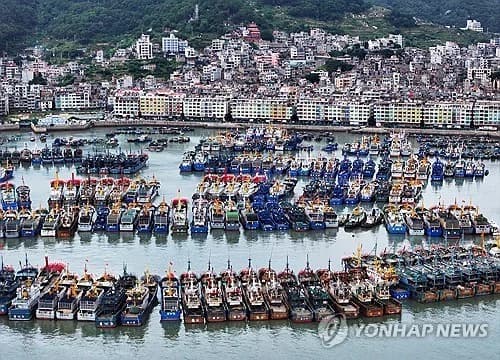
■ Typhoon No. 13 'Dolphin' Makes Landfall in China... 500,000 Evacuate As Typhoon No. 13 'Dolphin' made landfall in China, more than 500,000 people were evacuated in Zhejiang Province and Shanghai, and all water activities were suspended. Following measures by Chinese authorities, high-speed rail services passing through Shanghai and Hangzhou were suspended from the 9th to the 10th, and more than 1,300 flights were canceled at Hongqiao and Pudong airports.
The China Central Meteorological Observatory issued a 'red alert,' the highest level of typhoon warning, as Dolphin was expected to exhaust all its energy in a short period of time. Dolphin's maximum wind speed near its center is 45 m/s (Beaufort scale force 14), with a central pressure of 950 hPa. Dolphin made landfall in China on the 10th and is expected to move northwestward inland through Tuesday. After entering the inland area, it is forecast to weaken rapidly and transform into a tropical depression by the 11th.
■ Typhoon No. 15 'Chanhom' Closest to Korean Peninsula, but Direct Impact Limited Typhoon No. 15 'Chanhom' is the closest of the three typhoons to the Korean Peninsula, but based on its current projected path, its strong wind radius is not expected to directly cover the peninsula. Chanhom is forecast to weaken as it passes through Japan early in the week, and after midweek, residual rain clouds could move into the East Sea. However, the possibility remains that the weakened tropical depression approaching the East Sea could cause changes in surrounding pressure systems and moisture flow.
■ Typhoon No. 16 'Peilou' Moves Eastward... No Impact Expected on Korean Peninsula Typhoon No. 16 'Peilou' developed in waters north of Guam and is predicted to move northeastward through midweek. According to the Korea Meteorological Administration, Peilou is expected to head eastward, in the opposite direction from the Korean Peninsula, and is unlikely to affect South Korea.
The unusual eastward movement, rather than westward, is due to the steering flow near its area of formation. A typhoon's path is determined more by the steering flow, a large-scale wind pattern formed in its surroundings, than by its own force. During the summer in the northwestern Pacific, the position and strength of the North Pacific High, as well as nearby low-pressure systems and troughs, greatly influence typhoon trajectories. Typhoons tend to follow the winds along the edges of high-pressure systems rather than breaking through their centers.
■ No Wind Pathway Formed Toward the Korean Peninsula According to the Korea Meteorological Administration's surface weather chart, a high-pressure flow sits to the east of the Korean Peninsula, while a low-pressure system is positioned over eastern China and the Manchuria region, leaving the Korean Peninsula sandwiched between these pressure systems. As a result, no wind pathway has formed that would directly pull the three typhoons toward the Korean Peninsula. Meanwhile, in the low-latitude waters southeast of Japan where Peilou is located, a wind pathway heading eastward has formed between the surrounding low-pressure area and the high-pressure flow. According to the projected path from the Korea Meteorological Administration, Peilou is expected to move almost due eastward through today before turning to the northeast.
Meanwhile, massive waves are crashing along the Chinese coast due to the impact of the typhoon. (Photo = AP Newsis)
CBC Globe publishes verified stories with editorial review, source checks, and tenant-specific publication standards.
Related Articles

Gyeonggi Governor Choo Mi-ae: "Semiconductor Companies Must Strengthen Self-Rescue Measures to Minimize Process Water Discharge and Reduce Environmental Impact"

South Korea Men's Volleyball Defeats Japan → Wins Second Consecutive East Asian Championship Title... Fourth Overall Championship
Capable of Working at 100m Heights... Large Aerial Work Platforms Over 40t Newly Designated as Special Construction Machinery