
Honam Semiconductor Cluster Kicks Off in Earnest... Military Airport Relocation by 2028 to Accelerate Fab Construction
<h2>Mega-Investments in Chungcheong and Yeongnam Regions Gain Momentum... 353 Trillion Won Projected for Execution This Year Alone</h2> Large-scale corporate investment projects in the Chungcheong and Yeongnam regions have entered full-scale implementation. Eight companies in the Chungcheong region
<h2>Mega-Investments in Chungcheong and Yeongnam Regions Gain Momentum... 353 Trillion Won Projected for Execution This Year Alone</h2>
Large-scale corporate investment projects in the Chungcheong and Yeongnam regions have entered full-scale implementation. Eight companies in the Chungcheong region have established investment plans totaling 392 trillion won, while 12 companies in the Yeongnam region have set plans worth 312 trillion won. The actual investment executed in both regions this year alone is projected to reach 353 trillion won. Separately, research and development (R&D) projects worth 57 trillion won will also commence this year.
The government plans to continuously monitor and resolve obstacles in the investment process through region-specific consultation channels involving the central government, local governments, and enterprises.
<h2>Public Procurement of Humanoids and Robots Significantly Expanded... 1 Trillion Won 'Growth Together Project' Launched</h2>
The Ministry of Trade, Industry and Energy announced a plan to create an initial market for the physical artificial intelligence (AI) industry by having the government purchase more than 1,000 units, including 700 humanoids and quadruped walking robots, by 2030. President Lee Jae-myung instructed that the scale of government procurement be significantly expanded after conducting a demand survey, emphasizing the need to build a related industry ecosystem.
At the meeting on this day, discussions also covered expanding infrastructure for small and medium-sized robot component companies, joint R&D between large corporations and SMEs, and measures to foster unicorn companies with proprietary technologies. To address polarization between large corporations and SMEs, the government will promote a 'Growth Together Project' worth 1 trillion won over 10 years, fostering collaboration from the technology development stage through to mass production.
To alleviate the financial difficulties of export-oriented materials, components, and equipment companies, 5 trillion won in mutual-growth trade financing will be provided, and a separate 5 trillion won new semiconductor fund will also be established. The expansion of delivery price-linked agreements was also included in the support targets.
<h2>Gwangju Military Airport Relocation Completed in Second Half of 2028... Semiconductor Industrial Complex Utilized Early</h2>
The relocation plan for the Gwangju military airport, a core task in developing the Honam semiconductor cluster, has been concretized. The government plans to complete the relocation and temporary dispersed placement of military facilities by the second half of 2028 to enable early utilization of the military airport site as a semiconductor industrial complex.
The planned site for the ammunition depot will be proactively prepared so that companies can quickly begin construction on a semiconductor fabrication plant (fab) if desired. In addition to the 2.5 million pyeong already designated as a candidate site for a national industrial complex, additional nearby sites will be designated based on corporate demand.
Water and power supply measures were also discussed. The government intends to secure 650,000 tons of water per day by 2030 utilizing reclaimed wastewater and nearby dams such as Dongbok Dam, Juam Dam, and Naju Dam, and to begin supplying electricity from the end of 2028 through the construction of the first-phase supply network. Renewable energy, energy storage systems (ESS), and combined heat and power as well as LNG power generation in the region will also be pursued in parallel.
Regarding the relocation of U.S. military facilities within the Gwangju military airport, it was agreed to complete the relocation by the end of 2028 following working-level consultations between South Korea and the United States. A senior Cheong Wa Dae official explained that the U.S. side has also responded positively to consultations thus far.
<h2>President Lee Jae-myung Calls for a 'Blitzkrieg' Beyond a 'Speed War'... Mega-Special Zone Special Act to Be Enacted Within the Year</h2>
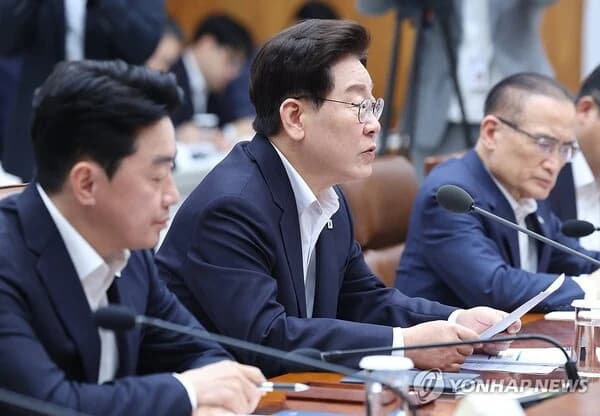
President Lee Jae-myung presided over the 'Second Joint Public-Private Review Meeting on Mega Projects' held at Cheong Wa Dae and called for related procedures to be pursued simultaneously to shorten the project timeline. President Lee emphasized, 'We are in a situation where we must wage a blitzkrieg, going beyond a speed war.'
The enactment of the 'Mega-Special Zone Special Act,' aimed at shortening the licensing and environmental impact assessment periods for large-scale industrial projects, will be pursued within the year. A dedicated mega-project organization will be newly established at Cheong Wa Dae, and a pan-governmental support council will be set up in the Office of the Prime Minister to handle inter-ministerial collaboration and corporate investment support.
The government plans to identify regulatory obstacles hindering local investment and create a regulatory innovation list to systematically address them.
However, a cautious stance was maintained regarding the relaxation of labor regulations, particularly exceptions to the 52-hour workweek. A senior Cheong Wa Dae official stated, 'We judge that the success of mega-projects is not directly linked to the 52-hour workweek,' adding that the issue is only possible with the consent of local residents and the labor community, and cannot be decided unilaterally by the government.
Chief of Staff Kang Hoon-sik stated that 'mega-projects should serve as the starting point for bold regulatory innovation and breaking down barriers between ministries,' adding that the government will continuously monitor and support the actual execution of corporate investment plans and the shared growth of the industrial ecosystem.
CBC Globe publishes verified stories with editorial review, source checks, and tenant-specific publication standards.
Related Articles
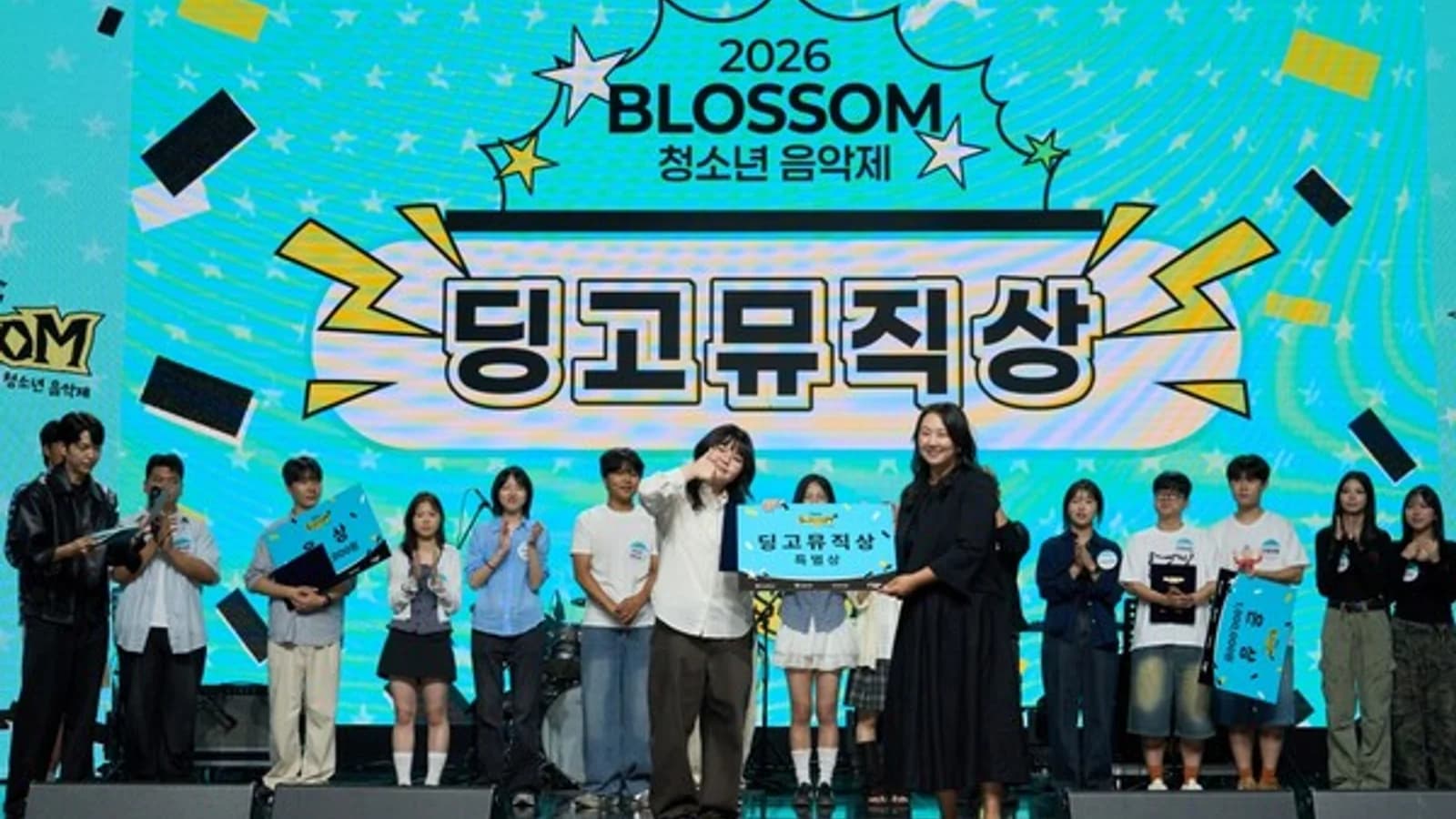
Dingo Music Becomes Official Partner of the 5th Blossom Youth Music Festival... Establishes 'Dingo Music Award' Amid 17.8-to-1 Competition Among 142 Teams
DPR CREAM·ARTIC Successfully Wrap Up Mexico Tour… Reveal 22-Song Setlist and 4 Unreleased New Tracks
![[Official] Sung Hoon Cast as Lead in MBN's New Romance 'The Boss's Obvious Taste'... 'Transforms into AI Genius Chaebol' (Premieres in November)](/_next/image?url=https%3A%2F%2Fmedia.cbcglobe.com%2Ftenants%2Fcbc00000-0000-4000-8000-000000000001%2Fmedia%2Fcbc%2F2026%2F08%2F596987%2Fd3a22a02c3a4cfee%2Fvariants%2Fhero.webp&w=1920&q=75)
[Official] Sung Hoon Cast as Lead in MBN's New Romance 'The Boss's Obvious Taste'... 'Transforms into AI Genius Chaebol' (Premieres in November)