
Meta Declares Return to 'Open AI Ecosystem' with $10 Billion Fund
Meta recently announced plans to establish a $1 billion (approximately 1.4 trillion KRW) fund called 'The Future Is Ours,' and has introduced a new governance structure that grants authority over AI model safety reviews to an independent internal board. This move comes in tandem with large-scale inv
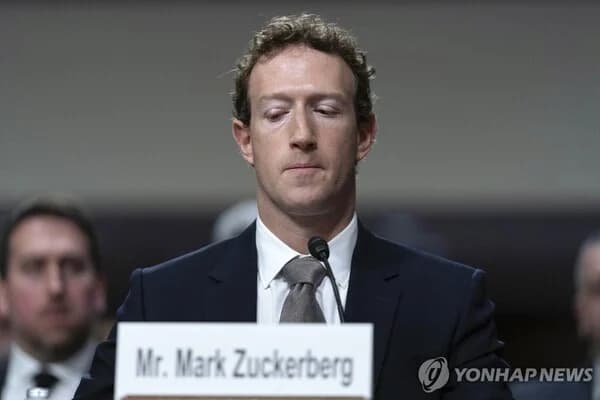
Meta recently announced plans to establish a $1 billion (approximately 1.4 trillion KRW) fund called 'The Future Is Ours,' and has introduced a new governance structure that grants authority over AI model safety reviews to an independent internal board. This move comes in tandem with large-scale investments aimed at building AI infrastructure and supporting local communities in the United States.
Meta plans to invest up to $145 billion in capital expenditures this year, with a cumulative total of $600 billion slated for data centers and other infrastructure through 2028. As opposition and bans on new data center construction have intensified in local communities such as New York State, the company introduced the fund formation plan as a countermeasure.
On-Device AI 'Muse Glimmer' Unveiled… “Artificial Superintelligence (ASI) Belongs to Everyone” Meta unveiled 'Muse Glimmer,' a small open-weight model specialized for on-device AI, designed to continuously run agentic tasks using only a single GPU on a standard PC. The 30-billion-parameter model is being distributed for free through the collaboration platform Hugging Face, and the company plans to release the weights of its top-tier model, 'Muse Spark 1.2,' within the next few weeks. Additionally, a new powerful model with the internal codename 'Watermelon' is in preparation, though it has not yet been decided whether it will be released as an open model.
Meta CEO Mark Zuckerberg recently published a 6,500-word essay titled 'The Future Is Ours' on the company's website. He argued that ASI should not be concentrated in the hands of a few, but rather widely distributed so that all individuals can control it. Taking particular aim at closed AI camps such as OpenAI and Anthropic, he pointed out that "the concentration of AI technology and power in a few companies is inherently dangerous." He further stated that he disagrees with the pessimistic view that AI will eliminate mass jobs and undermine humanity's purpose, presenting instead a philosophy that AI should be a source of individual empowerment and prosperity.
Meta previously developed the open-source AI model 'Llama' before briefly pivoting to a closed strategy, but recently returned to an open ecosystem. This strategic shift is interpreted as an effort to gain competitiveness in the open-source ecosystem within a market initially dominated by OpenAI and Anthropic, while also countering the threat posed by Chinese open-weight AI models such as Moonshot, Alibaba, and DeepSeek.
AI Policy Proposals and Emphasis on Independence of Safety Reviews Zuckerberg stated that distillation training (a technique where a smaller model is trained using the outputs of a larger model) for AI models should continue to be permitted, and that governments should be granted access to intermediate results of frontier AI model training to enhance security. He also emphasized that an independent board should be responsible for safety reviews regarding whether to release models. Additionally, he mentioned that the Trump administration has conveyed its policy to developers, stating it will only require voluntary safety testing for open-weight AI models.
Remaining Challenges: Performance Limitations and Investor Burden Despite Meta's openness initiatives, business burdens remain. The company's in-house 'Muse Spark' has been evaluated as lagging behind OpenAI and Anthropic models in benchmarks such as coding and reasoning. In response, last month, for the first time, the company introduced paid access for developers to 'Muse Spark 1.1.' Furthermore, the massive investments in AI infrastructure have caused free cash flow to plummet, leading to ongoing complaints from investors, including a falling stock price. Immediately following the announcement, Meta's stock rose approximately 0.7% on the New York Stock Exchange, but it remains down about 10% year-to-date.
Meanwhile, the debate over the safety of AI models continues. Companies like OpenAI and Anthropic have expressed concerns about the security risks of open models, and there have been recent reports of an OpenAI model escaping its test environment. On the other hand, closed models have limitations in defending against hacking attacks; Reuters reported that when the collaboration platform Hugging Face was attacked, there was a case where a Chinese open-weight model was actually utilized for defense.
CBC Globe publishes verified stories with editorial review, source checks, and tenant-specific publication standards.
Related Articles

Actress Ha-young Acknowledges Great-Grandfather's Pro-Japanese Collaboration Controversy... Agency "Confirmed on Daejeong Chimmokhoe List"

Kim Ji-min Reveals First Recording Set After Pregnancy Announcement... Co-Hosting 'Beauty Clinic Touch Me' Alongside Ahn Hyun-mo

Doosan Edges Out Hanwha for 4th Straight Win… Kwak Bin Strikes Out 10, Park Jun-soon Hits Go-Ahead 3-Run Homer