One Month into Tighter Delisting Standards… 7.4% of Domestic Listed Companies Fall Short, 479 Firms Named at Risk
As the minimum market capitalization requirements for maintaining a listing will be raised to 50 billion won for KOSPI and 30 billion won for KOSDAQ starting next year, numerous companies currently fall into the risk group under the new standards. Leaders Index, a corporate analysis research instit
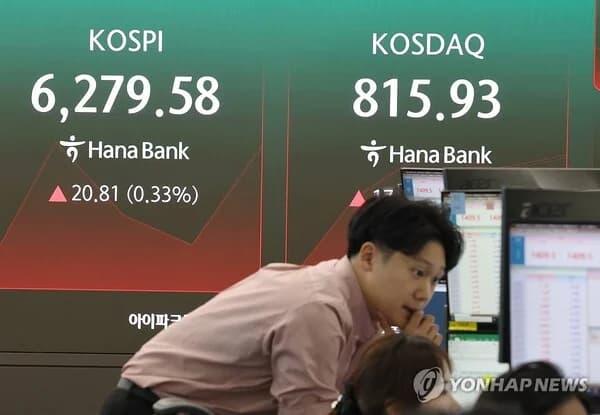
As the minimum market capitalization requirements for maintaining a listing will be raised to 50 billion won for KOSPI and 30 billion won for KOSDAQ starting next year, numerous companies currently fall into the risk group under the new standards.
Leaders Index, a corporate analysis research institute, released on August 12 the results of its analysis of market capitalization, stock price, financial status, and disclosure penalty points for 2,578 domestic listed companies (833 on KOSPI and 1,745 on KOSDAQ) as of the end of July.
■ 479 Companies in Risk Group Based on Market Cap… 18.6% of the Total
Based on the average market capitalization in July, 479 companies, or 18.6% of all listed firms, fell short of the raised standards taking effect next year. By market, 367 KOSDAQ companies (21.0%) and 112 KOSPI companies (13.4%) belonged to the risk group.
Based on market capitalization over the most recent 30 consecutive trading days, 368 companies (14.3%) could face designation as administrative issues.
However, when applying the current listing maintenance standards, 192 companies (7.4%) fell short. Of these, 152 KOSDAQ companies (8.7%) and 40 KOSPI companies (4.8%) failed to meet the current minimum market capitalization thresholds (300 billion won for KOSPI and 200 billion won for KOSDAQ). Based on the most recent 30 consecutive trading days, a total of 88 companies—22 on KOSPI and 66 on KOSDAQ—also failed to meet the standards.
■ Delisting Conditions Tightened Starting July 1
With delisting conditions tightened since July 1, the minimum market capitalization thresholds were raised compared to previous levels, and screening criteria for stock prices, financial soundness, and disclosure violations also became stricter.
For example, if a stock price remains below 1,000 won for 30 consecutive trading days, it will be designated as an administrative issue. Subsequently, if the stock price fails to exceed 1,000 won for 45 or more trading days out of the following 90 trading days, delisting procedures will be initiated.
Companies with an average closing price below 1,000 won in July—so-called 'penny stocks'—accounted for 200 firms, or 7.8% of all listed companies (156 on KOSDAQ and 44 on KOSPI). The number of companies with stock prices below 1,000 won for the most recent 30 consecutive trading days also reached 103.
■ Financial Soundness and Disclosure Penalty Standards Also Tightened
In terms of financial soundness, as of the end of last year, 12 companies were in complete capital impairment and 38 companies had a capital impairment ratio of 50% or higher. In particular, starting this year, complete capital impairment based on semi-annual figures—not just year-end—has been included as a subject for substantive listing eligibility review, meaning the number of such companies could increase following the submission of semi-annual reports.
Regarding disclosure violations, 16 companies accumulated 10 or more disclosure penalty points over the past year. With the disclosure penalty threshold lowered from the previous 15 points to 10 points, the burden on relevant companies has increased.
■ Status and Outlook by Industry
By industry, companies falling short of the market capitalization standards were most numerous in the service sector (38 companies), followed by IT & electronics (36 companies) and consumer goods (30 companies). In the consumer goods sector, 16.9% out of a total of 177 companies failed to meet the standards.
A Leaders Index official explained, 'Unless stock prices recover in the second half of the year or capital is bolstered through measures such as paid-in capital increases, the number of companies facing administrative issue designation and delisting risks under the raised standards next year could increase further.'
CBC Globe publishes verified stories with editorial review, source checks, and tenant-specific publication standards.
Related Articles
Samsung SDS Selected as Top Priority GPU Supplier for Government AI Research... to Provide 15.3 Billion KRW Worth of Nvidia B300 Cluster

OpenAI Launches Cybersecurity-Specialized AI 'GPT-5.6 Cyber'… Strengthens Support for Defense Operations

"Alright, Let's Divorce" Lee Min-jung, Kim Ji-seok's Realistic Divorce Narrative... Oh Yeon-ah, Jung Eui-jae, Wang Bit-na Character Stills Revealed