
Perseid Meteor Shower Peak and Total Solar Eclipse Coincide on Nights of Aug 12-13... Up to 100 Meteors Per Hour Visible
A rare astronomical show will unfold in the Northern Hemisphere sky this summer. The peak of the Perseid meteor shower, a signature summer meteor shower, and a total solar eclipse will overlap during the same period. On the nights of August 12 to 13, up to 100 meteors per hour will streak across th
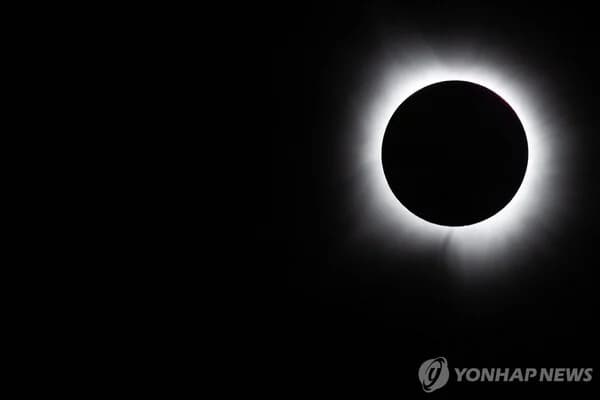
A rare astronomical show will unfold in the Northern Hemisphere sky this summer. The peak of the Perseid meteor shower, a signature summer meteor shower, and a total solar eclipse will overlap during the same period.
On the nights of August 12 to 13, up to 100 meteors per hour will streak across the sky, while a total solar eclipse will be visible in parts of Europe for the first time in 27 years.
First Total Solar Eclipse in Europe in 27 Years... Visible in Greenland, Iceland, and Spain
On August 12 (local time), a total solar eclipse will be observable in Greenland, Iceland, and Spain. This marks the first such event in Europe since 1999, a span of 27 years. The eclipse path will begin in northern Russia and pass through the Arctic Ocean, Greenland, Iceland, and the North Atlantic before reaching northwestern Spain and Portugal.
In some areas, a total eclipse will occur, during which the entire sun will be completely obscured for approximately one to two minutes. In Leon, Spain, totality will begin at 8:28 p.m. local time and last about two minutes, while in Reykjavik, Iceland, it will begin around 5:48 p.m. In cities such as Valencia and Zaragoza, observers will be able to witness the phenomenon of a 'black sun' near the horizon just before sunset. A partial solar eclipse will be visible across most of Europe and parts of North America and Africa.
During the total solar eclipse, the 'corona,' the sun's outer atmospheric layer that is normally hidden by the sun's intense glare, will be revealed. The National Aeronautics and Space Administration (NASA) plans to use the WB-57 high-altitude research aircraft to track the moon's shadow and observe the corona's movements. In Iceland and Spain, balloons equipped with scientific instruments will be launched to study the effects of a sudden reduction in sunlight on Earth's atmosphere.
Perseid Meteor Shower Peak... Favorable Viewing Conditions in South Korea on the Night of Aug 12 and Dawn of Aug 13
The Perseid meteor shower occurs annually between mid-July and late August, when Earth passes through the dusty orbital debris left by Comet Swift-Tuttle. Its observation history spans over 2,000 years.
This year, the peak coincides with a waning crescent moon, minimizing interference from bright moonlight and creating favorable viewing conditions. NASA predicts that in areas free from artificial lighting and cloud cover, observers may be able to see 50 to 100 meteors per hour.
In South Korea, the exact peak will fall during the morning and daytime hours of August 13, making observation difficult at that time. Instead, the meteor shower is expected to be visible from the night of August 12 through the dawn of August 13, or from the night of August 13 through the dawn of August 14.
Observation tips include heading outside of urban areas to locations with minimal light pollution and an unobstructed view of the sky. Viewing with the naked eye is more effective than using a telescope, and it takes about 30 minutes for the eyes to adjust to the darkness. The optimal time to view the meteor shower at its brightest is immediately after the total solar eclipse ends.
Six-Planet Alignment and Domestic Live Broadcasts
On August 12, a planetary alignment of six planets will also be observable in locations such as Spain, Iceland, and Greenland alongside the total solar eclipse. While meteor showers are occasionally observed, large-scale outpourings of meteors occur only during designated periods each year. This happens because Earth, as it orbits the sun, passes through belts of dust and debris left behind by comets or asteroids.
Although the total solar eclipse will not be directly visible from within South Korea, NASA plans to stream live footage from the affected regions. The science YouTube channel 'Science of Failure' will host a continuous live broadcast from 8 p.m. on August 12 to 4 a.m. the following day, linking feeds from the Mauna Kea Observatory in Hawaii with live footage from Europe to cover both the Perseid meteor shower and the total solar eclipse. Astrophysicist Dr. Kang Sung-joo will host the program.
Regarding this celestial event, Dr. Kang described it as "a rare opportunity to witness both a shower of stars and the disappearance of the sun in a single night."
CBC Globe publishes verified stories with editorial review, source checks, and tenant-specific publication standards.
Related Articles

U.S. Massively Revokes 175,000 Foreign Visas... Including Crime, Birth Tourism, and National Security Threats

South Korea U-17 Women's Volleyball Races to Four Consecutive Wins at World Championship... Round of 16 Berth Secured Early

Hanjin to Transport 17,500km of Emergency Relief Supplies for Venezuela Earthquake... "Swift Delivery of 500 Family Tents"