Seoul's Seogye and Cheongpa-dong Redevelopment Projects Gain Momentum... Net Increase of 1,695 Households, Mayor Oh Se-hoon Inspects Site
Seoul Mayor Oh Se-hoon visited the redevelopment project site in the Seogye and Cheongpa-dong area of Yongsan-gu on the morning of the 11th, meeting with residents to assess the housing supply effects of the maintenance projects and the current status of residential environment improvements. On this
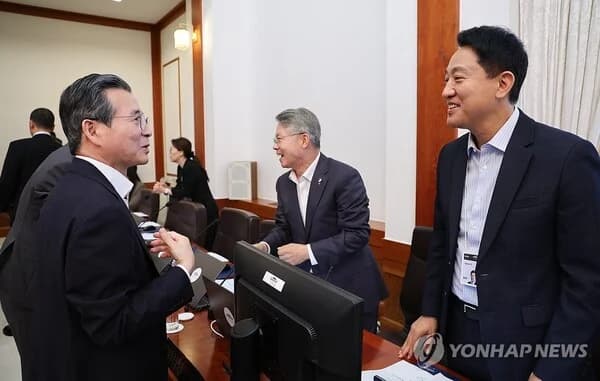
Seoul Mayor Oh Se-hoon visited the redevelopment project site in the Seogye and Cheongpa-dong area of Yongsan-gu on the morning of the 11th, meeting with residents to assess the housing supply effects of the maintenance projects and the current status of residential environment improvements. On this day, Mayor Oh held a meeting with approximately 30 attendees, including residents, the association president, and members of the Housing Stability and Urban Subcommittee of the G3 Planning Committee, at the redevelopment association office for Cheongpa Zone 2, where he listened to their requests regarding improvements in project feasibility, expedited licensing and permits, and relaxation of regulations on relocation cost loans.
Mayor Oh stated, "Seogye and Cheongpa-dong is a site that demonstrates the supply effects of maintenance projects through data, with a net increase of 1,695 households even excluding the units lost from demolished existing housing. Since maintenance projects are virtually the only large-scale supply solution in Seoul, where available land is scarce, I will see to it through to the end so that plans lead to groundbreaking and occupancy, allowing the actual residential changes to be felt firsthand."
The Seogye and Cheongpa-dong area is a densely populated low-rise residential neighborhood formed by residents who migrated to Seoul during the industrialization and urbanization period of the 1960s. Despite its proximity to Seoul Station, the maintenance project fell through in 2012 and was converted into an urban regeneration project. Due to steep hills and narrow alleys that make it difficult for fire trucks to access, the area has endured poor living conditions for over 20 years.
In response, the Seoul Metropolitan Government is re-pursuing maintenance projects in the area through methods desired by residents, such as Rapid Integrated Planning and Moa Town. Currently, a total of seven private maintenance projects, including Rapid Integrated Planning redevelopments and Moa Town initiatives, are underway in the Seogye and Cheongpa-dong area. Among these, even excluding Cheongpa Zone 3, the remaining six zones alone are projected to increase from the existing 6,393 households to 8,088 households, representing a net increase of 1,695 households (approximately 26.5%).
In detail, the Seogye Integrated Zone secured approximately 50 additional households compared to the original plan by applying the current floor area ratio, while Cheongpa Zone 2 shortened the project timeline by supporting the direct establishment of the association, thereby bypassing the promotion committee stage. Additionally, for the Moa Town project at 116 Seogye-dong, a plan is being pursued to rezone the area from a Type 3 general residential zone to a quasi-residential zone, which would increase the number of units by 327, from the existing 172 to 499 households. Final confirmation will be decided through future deliberations.
The Seoul Metropolitan Government intends to continue expanding administrative procedures, such as the standard processing deadline system, integrated reviews, and concurrent stage-by-stage processing, while strengthening project-by-project progress management to ensure the swift advancement of maintenance projects. Furthermore, the city plans to systematically prepare relocation measures by simultaneously reviewing relocation timings for each project site and the nearby rental and lease market conditions to manage the market impact caused by relocation demand. It will also take into account housing supply conditions in non-apartment housing and adjacent neighborhoods.
Regarding the government's financial and housing supply measures, Seoul emphasized the need for institutional improvements, including: adjusting the mandatory public rental housing ratio in redevelopment projects; expanding the floor area ratio for private maintenance projects up to 1.2 times the legal maximum; a temporary three-year grace period on restrictions for transferring association membership rights; raising the loan-to-value (LTV) ratio for relocation cost loans to 70%; and easing the consent rate required for establishing a redevelopment association to 70%.
Meanwhile, the Seoul Metropolitan Government plans to supply an additional 310,000 housing units through 253 maintenance projects by 2031. Even after accounting for the loss of existing housing units due to demolition, approximately 87,000 units (39.2%) are projected to be added on a net basis, with 48,000 of those being public rental units. In fact, in 59 zones where maintenance projects have been completed over the past three years, the number of housing units has already increased by approximately 20,000 (36.4%).
CBC Globe publishes verified stories with editorial review, source checks, and tenant-specific publication standards.
Related Articles
MSIT Officially Launches Industry-Academia-Research Council for Self-Driving Labs... Appoints Seoul National University Professor Jung Yoo-sung as Chair
Exports Surge 45.3% in Early August... Semiconductors Drive 46.8% of Total, Hitting Record High
Plan to Raise 710 Trillion Won with Six Financial Institutions to Build AI Infrastructure