
To Avoid 'Electricity Bill Shock,' Don't Just Look at 'Power Consumption'… Usage Time Changes Your Bill
Experts have pointed out that to avoid summer electricity bill shocks, consumers should consider not only the 'power consumption' of home appliances but also their 'actual usage time.' On the July 11 broadcast of KBS Joy's 'Escape Crisis No. 1: Open the Emergency Exit!', the show compared the actua
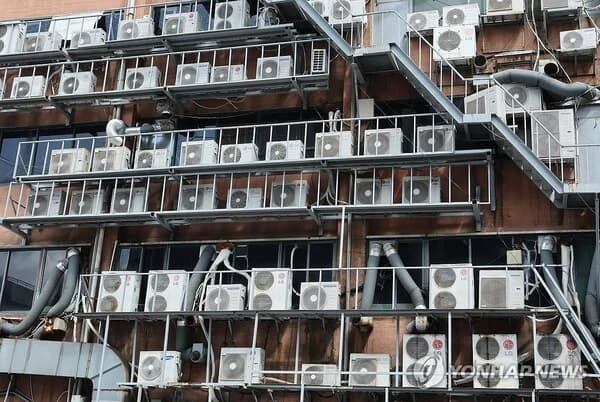
Experts have pointed out that to avoid summer electricity bill shocks, consumers should consider not only the 'power consumption' of home appliances but also their 'actual usage time.'
On the July 11 broadcast of KBS Joy's 'Escape Crisis No. 1: Open the Emergency Exit!', the show compared the actual power consumption of commonly used home appliances and introduced practical ways to reduce electricity bills. The episode also covered prevention of abnormal weather-related accidents typical in summer, such as landslides and heavy downpours. The MCs addressed vacation-season safety along with the recurring issue of high electricity bills.
In the 'Escape Crisis Replay' segment, featuring Yesul and Juho, a power meter was used to directly measure the power consumption of various appliances.
[Comparison Results of Power Consumption by Appliance]
■ Hair Dryer (approx. 1400W) vs. Bidet (approx. 60W) The instantaneous power consumption of the hair dryer was overwhelmingly higher. However, when actual usage time was factored in, the bidet's power consumption was roughly twice as high. This is because bidets are often left running for extended periods.
■ Electric Kettle (approx. 1400W) vs. Electric Fan (approx. 45W) When the electric kettle was used three times a day for five minutes each and the fan was run for 24 hours, the fan consumed more daily power.
■ Air Purifier (approx. 25W) vs. Computer (approx. 160W) When the computer was used for five hours a day and the air purifier for 24 hours, the computer's power consumption was higher.
■ Large TV (65 inches, approx. 232W) vs. Electric Rice Cooker (approx. 80W) The instantaneous power consumption was higher for the TV, but when usage time — including the keep-warm function — was taken into account, the rice cooker consumed more power.
■ Air Conditioner vs. Refrigerator Air conditioners show significant differences in power consumption depending on how they are used. Since the most power is consumed during the process of cooling the room to the desired temperature, it was explained that setting it to an appropriate temperature (around 26°C) and maintaining it continuously is more efficient than repeatedly turning it on and off.
As these examples demonstrated, electricity bills cannot be judged solely based on instantaneous power consumption figures.
[Electricity-Saving Tips by Appliance]
The broadcast also provided practical energy-saving tips for each product. For bidets, it is recommended to turn off the heating function and use power-saving mode. For air purifiers and vacuum cleaners, filters should be cleaned frequently to prevent efficiency loss. Refrigerators should be managed by filling only 60–70% of the fridge compartment while keeping the freezer fully stocked to preserve cold air, which helps reduce power consumption. For electric rice cookers, instead of using the keep-warm function for long periods, it is recommended to cook a large batch at once, divide it into smaller portions, freeze them, and reheat as needed.
'Escape Crisis No. 1' emphasized that the actual power consumption of home appliances reflects both power consumption ratings and usage time, and that small changes in daily habits can effectively reduce unnecessary power waste.
CBC Globe publishes verified stories with editorial review, source checks, and tenant-specific publication standards.