
Perseid Meteor Shower Peaks on the Night of the 13th... 'Zero Moonlight' Optimal Conditions, Up to 100 Meteors per Hour Expected
The Perseid meteor shower will be observable in South Korea from the night of the 13th through the early morning of the 14th. This year, the peak of the meteor shower coincides with a new moon phase when the moon does not rise, making observing conditions far more favorable than in previous years.
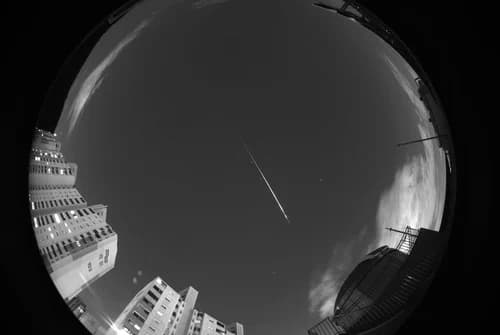
The Perseid meteor shower will be observable in South Korea from the night of the 13th through the early morning of the 14th. This year, the peak of the meteor shower coincides with a new moon phase when the moon does not rise, making observing conditions far more favorable than in previous years.
■ Peak Time at 12 PM on the 13th... Two Opportunities for Nighttime Observation in South Korea
The peak time for this year's Perseid meteor shower is around 12 PM on the 13th. According to the Korea Astronomy and Space Science Institute, this falls during broad daylight in South Korea, making it impossible to directly observe the peak moment. However, opportunities to view shooting stars will be available in South Korea from the night of the 12th through the early morning of the 13th, and again from the night of the 13th through the early morning of the 14th.
The International Meteor Organization (IMO) projected that this meteor shower could produce up to 100 meteors per hour under ideal conditions. However, the actual number observed will vary depending on factors such as urban light pollution, cloud cover, and observing location.
■ Coincides with 'Planetary Parade'
Earlier, on the morning of the 12th, a 'planetary parade' phenomenon also occurred, in which six planets—Mercury, Jupiter, Mars, Uranus, Saturn, and Neptune—rose above the horizon simultaneously. Among them, Uranus and Neptune are difficult to identify with the naked eye, requiring a telescope or binoculars.
■ Observation Tips: No Telescope Needed, Dark Location Is Key
A telescope or binoculars is not necessary for observing shooting stars. Rather, it is important to choose a location with a wide field of view and dark surroundings. Instead of staring in only one direction, it is helpful to gaze across a broad expanse of sky and wait about 20 to 30 minutes to allow your eyes to adapt to the darkness. With no moonlight this year, the chances of capturing even fainter meteors than usual have also increased.
■ Online Live Stream Also Available
An online live stream has also been prepared for those unable to view the sky in person. The National Gwacheon Science Museum will broadcast the Perseid meteor shower and a total solar eclipse live through its YouTube channel starting at 10 PM on the 12th. Under the theme 'One Night, Two Cosmic Shows,' it will be conducted as a trilateral live broadcast connecting South Korea, Spain, and the United States. The Seodaemun Museum of Natural History will also provide a real-time feed of the meteor shower observation through its YouTube channel starting at 8:30 PM on both the 12th and 13th.
CBC Globe publishes verified stories with editorial review, source checks, and tenant-specific publication standards.
Related Articles

'I Am SOLO' Season 33's Storm of Personalities... From 'Small Happiness Over Looks' to 'A Bathroom Trip Mid-Tension'
![KIA Defeats Samsung 3-1... Lee Eui-ri Earns First Career Save, Adam Oler Reaches 10 Wins [KBO Review]](/_next/image?url=https%3A%2F%2Fmedia.cbcglobe.com%2Ftenants%2Fcbc00000-0000-4000-8000-000000000001%2Fmedia%2Fcbc%2F2026%2F08%2F597503%2Fc48c7cf91b977196%2Fvariants%2Fhero.webp&w=1920&q=75)
KIA Defeats Samsung 3-1... Lee Eui-ri Earns First Career Save, Adam Oler Reaches 10 Wins [KBO Review]

South Korea's First Firefighting Specialized 'National Fire Hospital' Opens in Eumseong... 19 Clinical Departments, 302 Beds, Customized Care Including PTSD