Resistance Poet Shim Hoon's Handwritten Manuscripts Return After 90 Years... 59 Items Including "When That Day Comes" Revealed
Handwritten manuscripts of Shim Hoon (born Shim Dae-seop, 1901–1936), a resistance poet during the Japanese colonial period, have returned to Korea from the United States, 90 years after his death. The collection encompasses key materials that span his literary achievements, including the manuscript
Handwritten manuscripts of Shim Hoon (born Shim Dae-seop, 1901–1936), a resistance poet during the Japanese colonial period, have returned to Korea from the United States, 90 years after his death. The collection encompasses key materials that span his literary achievements, including the manuscript of his signature poem "When That Day Comes," full-length novels, and film screenplays.
On August 10, ahead of Liberation Day, the National Museum of Korean Literature held a press conference at the Eunpyeong Cultural Center in Suseok-dong, Eunpyeong-gu, Seoul, to unveil materials acquired from abroad. A total of 46 items comprising 59 pieces returned to Korea this time; they are treasures kept for 50 years in a paulownia wood box by the family of the late Shim Jae-ho, a former Dong-A Ilbo journalist.
After emigrating to the United States in 1974, Shim Jae-ho carefully preserved Shim Hoon's materials for decades at his home in Arlington, Virginia. Through the family's long preservation efforts and seven years of negotiations with the National Museum of Korean Literature, the materials finally returned to their homeland. At the event, Shim Hoon's granddaughters Shim Young-joo and Shim Young-min participated via video to convey the significance of the donation. In particular, Shim Young-joo shared her sentiments about fulfilling her father's wishes by returning the materials to Korea.
The newly revealed materials range from literary manuscripts to personal records that offer glimpses into his life. Notable items include the original manuscript of the poem "When That Day Comes," which never saw the light of day due to Japanese censorship, and "Oh, Sons of Korea!", written upon hearing the news of athlete Son Kee-chung's gold medal at the 1936 Berlin Olympics. The collection also includes numerous personal records such as photographs of Shim Hoon and a condolence telegram.
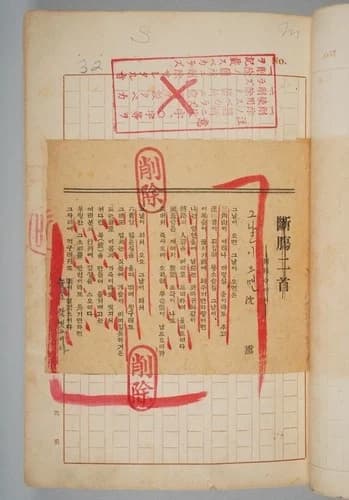
In particular, the manuscripts vividly trace Shim Hoon's footsteps from 1919, when he participated in the March 1st Independence Movement as a fourth-year student at Gyeongseong First Higher Common School and was imprisoned. A handwritten letter to his mother during his incarceration at Seodaemun Prison, titled "A Letter to My Mother from Prison," also returned. Manuscripts submitted to the library of the Police Affairs Bureau of the Government-General of Joseon, along with the "When That Day Comes" manuscript, retain the brutal traces of Japanese censorship and "deletion" markings intact, further enhancing their historical value.
CBC Globe publishes verified stories with editorial review, source checks, and tenant-specific publication standards.
Related Articles
![KIA Defeats Samsung 3-1... Lee Eui-ri Earns First Career Save, Adam Oler Reaches 10 Wins [KBO Review]](/_next/image?url=https%3A%2F%2Fmedia.cbcglobe.com%2Ftenants%2Fcbc00000-0000-4000-8000-000000000001%2Fmedia%2Fcbc%2F2026%2F08%2F597503%2Fc48c7cf91b977196%2Fvariants%2Fhero.webp&w=1920&q=75)
KIA Defeats Samsung 3-1... Lee Eui-ri Earns First Career Save, Adam Oler Reaches 10 Wins [KBO Review]

South Korea's First Firefighting Specialized 'National Fire Hospital' Opens in Eumseong... 19 Clinical Departments, 302 Beds, Customized Care Including PTSD
Perseid Meteor Shower Peaks on the Night of the 13th... 'Zero Moonlight' Optimal Conditions, Up to 100 Meteors per Hour Expected