[Breaking] International Gold Price Surpasses $4,500 per Ounce...Is the Traditional Formula Shaking?
International gold prices have breached the $4,500 per ounce mark. The market is on high alert for the possibility of further gains in gold prices. As of the morning of the 13th, Korean time, based on the GC New York Mercantile Exchange, international gold prices exceeded $4,500 per ounce during tr
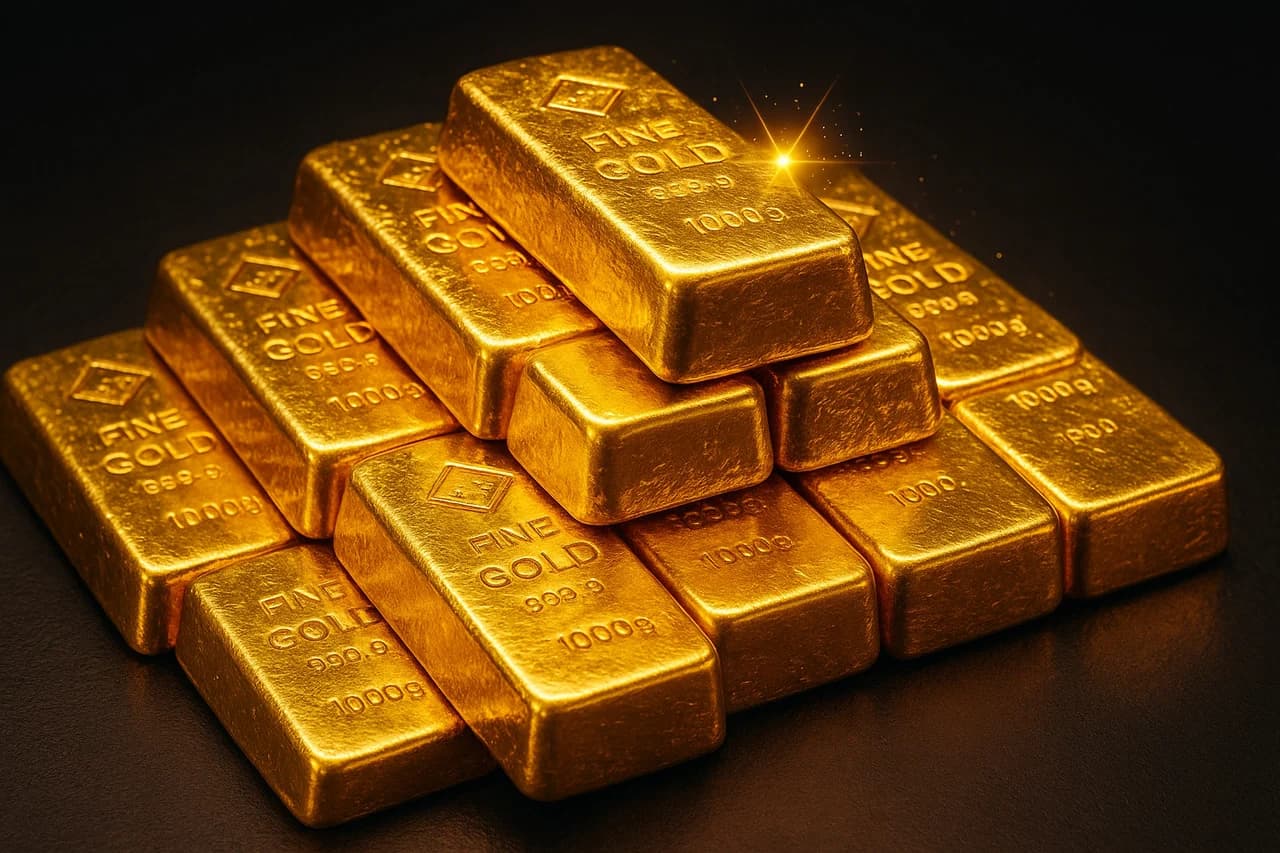
International gold prices have breached the $4,500 per ounce mark. The market is on high alert for the possibility of further gains in gold prices.
As of the morning of the 13th, Korean time, based on the GC New York Mercantile Exchange, international gold prices exceeded $4,500 per ounce during trading. At the same time, the traditional formula surrounding stocks and gold is shaking in the global financial market. It is no longer a simple dynamic where a revival in risk appetite pushes down gold, a safe-haven asset; rather, demand for gold holdings continues regardless of stock market gains.
Gold Prices Surge Amid Tech Stock Strength...Investment Capital 'Working Both Sides'
On the 12th (local time), the New York stock market closed higher, led by tech stocks. The Dow Jones Industrial Average ended at 53,770.27, down 21.58 points (-0.04%) from the previous session, but the S&P 500 index recorded 7,748.50, up 20.30 points (0.26%). The Nasdaq Composite Index closed at 26,588.49, up 143.04 points (0.54%), showing a relatively clear strength.
Looking only at the New York stock market, it seems that investors' attention is focused on large-cap tech and growth stocks. However, looking at the gold market as well makes the trend more complex. This is because funds chasing stock price gains and funds preparing for economic and financial uncertainty are moving simultaneously. This is the background as to why gold prices remain a major focus even amid the strength of U.S. tech stocks.
Why is Gold a 'Safe-Haven Asset'?
Gold is recognized as valuable without corporate performance or interest payments. It has been called a 'safe-haven asset' because it is a physical store of value that does not rely on the credit of any specific country or company.
This perception runs parallel to changes in the monetary system. In the late 19th century, major countries operated the gold standard, linking their currencies to a fixed amount of gold. It was a time when gold holdings were directly tied to currency credibility. However, through the World Wars and the Great Depression, the limitations of a system that matched money supply to gold holdings were exposed.
The Bretton Woods system, established in 1944 at the end of World War II, placed the dollar at the center of the international financial order. Currencies of various countries were linked to the dollar, and the United States made dollars convertible into gold. It was a structure where gold was placed behind the dollar.
Free Fluctuation After the 'Nixon Shock'...What Are the Variables Determining Gold Prices?
However, as global economic growth caused a surge in circulating dollars and U.S. fiscal burdens grew, doubts arose about the sustainability of dollar-gold convertibility. In 1971, then-U.S. President Richard Nixon suspended the convertibility of the dollar into gold, breaking the core link of the post-war system. With the so-called 'Nixon Shock,' the era of the fixed dollar-gold link came to an end, and gold became an asset whose price was formed independently in the market.
Immediately after gaining a free market price, gold faced severe inflation. When international oil prices soared due to the Middle East conflict and oil supply disruptions in the 1970s, both production costs and consumer prices rose together. As stagflation weighed down the global economy and the purchasing power of money fell, demand for gold to preserve value in physical form increased. This was the catalyst for the perception that 'people turn to gold when inflation rises.'
Gold prices cannot be explained by inflation alone. Interest rates and the value of the dollar must be considered together.
- Real Interest Rates: Gold does not generate interest, so when market interest rates rise, the opportunity cost increases. Conversely, when expectations of rate cuts strengthen, gold's weakness diminishes. In particular, real interest rates, which reflect inflation, are cited as a key variable.
- Dollar Value: The international gold market is dollar-based. If the dollar strengthens, non-U.S. investors have to pay more of their own currency, and if the dollar weakens, the burden of gold prices decreases.
The Duality of Gold in Times of Crisis
The 2008 global financial crisis is a prime example. In the early stages of the crisis, all assets, including gold, were sold off to secure cash, but as central banks around the world cut interest rates and supplied massive liquidity, market attention turned back to gold. This was because concerns about currency devaluation grew as enormous amounts of money were injected.
Gold is repeatedly highlighted in crises because it is 'someone's asset but not another's debt.' Bank deposits depend on banks' payment obligations, bonds on government and corporate debts, and stocks on corporate value, but physical gold does not presuppose the repayment ability of any specific institution.
During the European sovereign debt crisis in the early 2010s, gold also drew attention as concerns grew over national credit ratings and the Eurozone system due to the national debt problems of some countries.
Not an Unconditional Safe-Haven Asset... 'Two-Way Risks Exist'
However, gold has not risen one-sidedly during every crisis. During periods of U.S. economic recovery, interest rate hikes, and a strong dollar, gold sometimes showed weakness. Even if financial markets are unstable, if there is an urgent need for cash, gold can be sold off, and even if geopolitical risks are high, if the dollar and U.S. Treasury yields rise significantly, gold price gains can be limited.
The 2020 COVID-19 pandemic once again proved the duality of gold. In the early stages of the economic contraction, cashing out occurred across all assets, but afterward, as massive fiscal spending and liquidity supply from major countries increased concerns not only about financial assets but also about the real value of currencies, demand for gold expanded again.
Post-pandemic, inflation skyrocketed due to global supply chain disruptions and rising raw material prices, and as major central banks aggressively raised interest rates, opposing forces are simultaneously acting on gold.
[This article is by no means an investment solicitation. All investments are made by individual choice and judgment, and please note that the final responsibility lies with the investor.]
CBC Globe publishes verified stories with editorial review, source checks, and tenant-specific publication standards.
Related Articles
[Breaking] Korea Cosmetics Manufacturing Soars 14.79% in After-Market Trading on Hopes of THAAD Sanctions Lift Following Korea-China Summit

[Breaking] Hotel Shilla Stock Reverses to 3.99% Gain... After-Market Strength on Expectations of South Korea-China Summit Progress and Easing of Hallyu Ban

[Breaking] YG Entertainment Shares Surge 14.99% to 51,400 Won... Rally on Expectations of THAAD Ban Lift