Amid Declining Gold Prices, U.S. CPI and PPI Released in Succession... Gold Market on High Alert for Fed Monetary Policy Direction
According to the Korea Gold Exchange market prices on August 14, 2026, the purchase price of pure gold (3.75g) fell by 11,000 won from the previous day to 866,000 won (a change rate of -1.27%). The selling price dropped by 6,000 won to 726,000 won (a change rate of -0.83%). The selling price for 18K
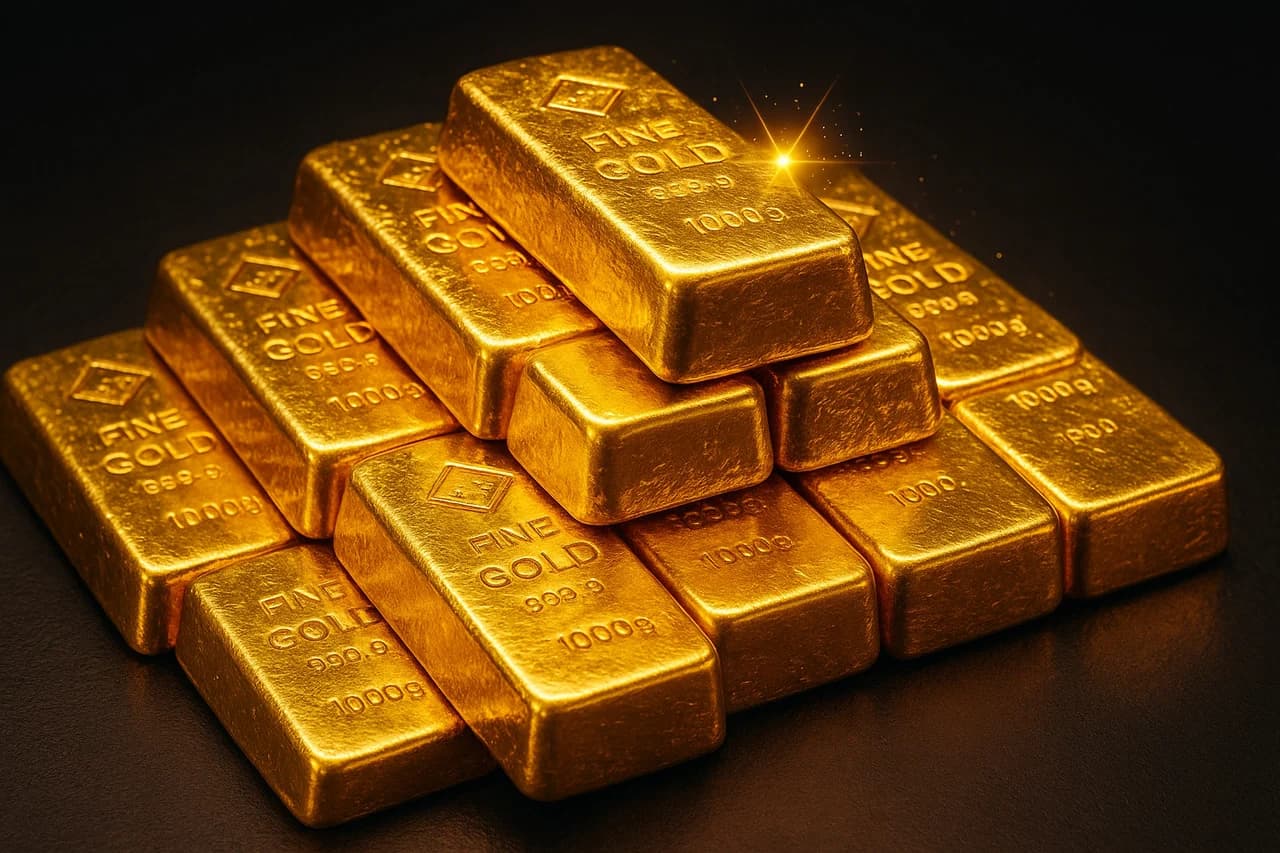
According to the Korea Gold Exchange market prices on August 14, 2026, the purchase price of pure gold (3.75g) fell by 11,000 won from the previous day to 866,000 won (a change rate of -1.27%). The selling price dropped by 6,000 won to 726,000 won (a change rate of -0.83%). The selling price for 18K gold was recorded at 533,700 won (down 4,400 won, -0.82%), and for 14K gold at 413,900 won (down 3,400 won, -0.82%).
Precious metals were broadly weaker. Platinum showed a purchase price of 340,000 won (-1.76%, down 6,000 won) and a selling price of 276,000 won (-1.45%, down 4,000 won). Silver (3.75g) recorded a purchase price of 12,120 won (-1.49%, down 180 won) and a selling price of 10,240 won (-1.46%, down 150 won).
Successive Release of U.S. Price Indicators... Emerges as Key Variable for Gold Prices
Meanwhile, as the U.S. Producer Price Index (PPI) was released following the Consumer Price Index (CPI), attention in the international gold market is now focused on U.S. price trends and the next moves by the Federal Reserve (Fed). Due to gold's nature as a non-interest-bearing asset, it is highly sensitive to interest rate expectations, and recent price trends have emerged as a key variable determining gold prices.
Key U.S. inflation-related economic indicators were revealed over two days on August 13 and 14 (Korean Standard Time). According to data released by the U.S. Bureau of Labor Statistics, the July PPI rose 4.7% year-on-year. Core PPI, which excludes volatile items such as food and energy, also increased 4.7% compared to the same period last year.
The PPI is an indicator that measures the price changes received by producers when selling goods and services. Because it shows price trends at a stage before goods are delivered to consumers, it is widely used as a key metric to gauge corporate cost burdens and the future direction of consumer prices. If upward price pressure at the production stage eases, it can impact consumer prices with a certain time lag, making financial markets highly sensitive to PPI changes.
Earlier, the July CPI released the previous day also showed a trend that did not significantly stimulate market inflation concerns. According to the Bureau of Labor Statistics, the July CPI rose 3.4% year-on-year, a slight decrease from 3.5% in June. Core CPI rose 2.5% year-on-year, slowing from the 2.6% increase recorded in June.
Interest Rates, Dollar, and Prices: The Triangular Structure Driving Gold Prices
With the release of the PPI following the CPI, investors' calculations are becoming increasingly complex. This is because if the perception forms that inflationary pressures are continuously weakening, it will affect market interest rates and the value of the dollar, which in turn can act as a direct variable for gold prices.
The reason U.S. prices are critical in the gold market is that they are directly linked to the Fed's monetary policy. Gold does not provide regular interest like deposits or bonds. If a high-interest-rate environment is prolonged, gold's relative appeal may diminish compared to assets that generate interest income. Conversely, if price stability reduces the burden on the Fed's monetary policy and increases the likelihood of rate cuts, the opportunity cost of holding gold decreases.
The movement of the dollar is also a core factor. Since international gold is generally traded in dollars, a weaker dollar reduces the burden of purchasing gold for investors using other currencies. It is a structure where interest rates, the dollar, and prices interact to drive gold prices.
A Store of Value for Thousands of Years... Now an Investment Asset in Modern Financial Markets
Evaluating gold merely as a financial product bought and sold according to interest rate changes falls short, as its history is far longer. Throughout human history, gold has functioned as a symbol of wealth, power, and exchange value for thousands of years. In ancient civilizations, it was used for jewelry and religious artifacts, and later, with the expansion of international trade, it expanded its role as a currency and a store of wealth.
A representative example demonstrating the historical significance of gold in modern financial markets is the gold standard and the Bretton Woods system. In the past, major nations linked the value of their currencies to a specific amount of gold to maintain trust in their money. Under the Bretton Woods system established after World War II, an international monetary order was formed where the U.S. dollar was linked to gold and other major currencies moved around the dollar.
However, as the global economy grew, the circulating dollars increased rapidly, and the United States faced a situation where it was difficult to maintain the exchange between dollars and gold. In 1971, when the U.S. suspended the convertibility of the dollar into gold, the system directly linking gold and the dollar underwent a decisive change. Subsequently, gold prices broke free from the fixed framework set by governments, and its nature changed to an asset that moves based on supply and demand, interest rates, prices, and the dollar's value in the international financial market.
The fact that gold repeatedly emerges during periods of financial market instability is not unrelated to this history. During times of heightened uncertainty regarding currency value and the financial system—such as the high inflation and energy price shocks of the 1970s, the 2008 global financial crisis, and the massive liquidity supply following the COVID-19 pandemic—gold has consistently been cited as a means of preserving value.
Gold does not generate profits like corporate stocks, nor does it pay interest like bonds. Nevertheless, the background reason it has remained an investment asset for a long time lies in its scarcity. While the supply of fiat currency can change according to the policies of central banks and governments, gold is supplied through the physical process of mining. The limitation in significantly increasing production in the short term underpins gold's scarcity. ## Even Amid Risk-On Sentiment, Gold Price Variables Remain Distinct
Currently, the U.S. financial market is showing a strengthening preference for risk assets. On August 14 (Korean Standard Time), the S&P 500 index on the New York Stock Exchange closed up 50.49 points (0.65%) at 7,798.99, setting a new all-time closing high. The Dow Jones Industrial Average recorded 53,839.99, up 69.72 points (0.13%), and the Nasdaq Composite Index closed at 26,803.03, up 214.54 points (0.81%).
However, a strong stock market does not necessarily lead to weak gold prices. While stocks are highly sensitive to corporate earnings, economic outlook, and growth expectations, gold is influenced by a broader range of macroeconomic variables, including interest rates, the dollar, prices, and international affairs.
In the current market, where the CPI and PPI have been released in succession, whether the trend of easing prices will persist is expected to be a more important variable than any single indicator. The future direction of the gold market is also unlikely to be determined by one price metric alone. Factors such as U.S. employment indicators, consumption trends, comments from Fed officials, U.S. Treasury yields, and dollar movements are likely to act in combination.
Having been a means of storing wealth since thousands of years ago, gold has transformed into an investment asset traded in one of the world's largest financial markets today, passing through the era of the gold standard. Although the role of gold has varied across eras, its fundamental essence—the 'demand to preserve value'—has largely persisted. In a situation where U.S. CPI and PPI are once again shaking interest rate expectations, gold's future movements will ultimately be determined at the intersection of this ancient store-of-value function and the global interest rate and dollar logic of modern financial markets.
[※ This article is not intended to solicit investment, and the final judgment and responsibility for investments lie with the investor.]
CBC Globe publishes verified stories with editorial review, source checks, and tenant-specific publication standards.
Related Articles
Samsung SDI Shares Fall Against the Trend (-2.58%)... KOSPI and KOSDAQ Rally on NVIDIA's Strong Earnings
Samsung E&A Shares Plunge Over 6%... Moving Against the Grain as KOSPI and KOSDAQ Rally

Hanwha Ocean Shares Fall to 44,000-Won Level... 159-Billion-Won Loss at US Philly Shipyard, Special Vessels Post Third Consecutive Quarterly Loss