
Ethereum vs. Solana: Divided by 'Trust,' Not 'Speed'... Why Ethereum Remains the Standard of the Blockchain Market
In the blockchain market, a similar scene plays out every time a new network emerges. When evaluating how fast transactions are processed, how low fees are, and how efficient the development environment is, Ethereum has effectively served as a reference point. Solana, which has positioned itself as
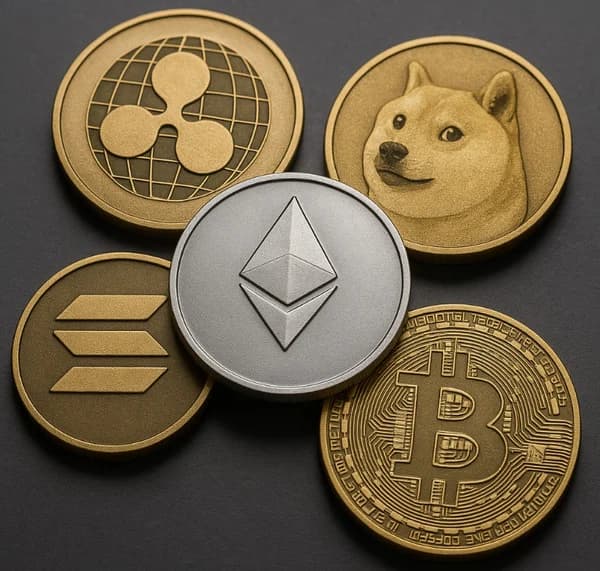
In the blockchain market, a similar scene plays out every time a new network emerges. When evaluating how fast transactions are processed, how low fees are, and how efficient the development environment is, Ethereum has effectively served as a reference point. Solana, which has positioned itself as a formidable rival to Ethereum by touting fast processing speeds and low costs, is no exception. However, viewing the two networks solely through the lens of a performance competition risks missing the differences in the ecosystems each is trying to build.
■ 'How much faster than Ethereum?'... A de facto benchmark
Ethereum's competitiveness lies not simply in processing transactions quickly. The key point is that it has built high levels of trust across the blockchain industry on the back of a developer ecosystem and capital accumulated over a long period, smart contract infrastructure, and the decentralized finance (DeFi) market.
As the smart contract platform market has grown, numerous competing chains have emerged, but the market still often uses Ethereum as the yardstick when evaluating new platforms. When a new network emphasizes speed, the comparison becomes 'how much faster than Ethereum'; when it promotes low fees, the question is 'how big the cost difference is compared to Ethereum.' Paradoxically, this means Ethereum effectively serves as the 'benchmark' of the blockchain market.
■ Ethereum's strengths revealed in finance
Ethereum in particular has shown its strengths in finance. As services where money moves directly—such as DeFi, stablecoins, tokenized assets, and decentralized exchanges—have formed on a broad scale, the network's value has become difficult to explain by transaction processing performance alone.
In blockchain, there are moments when trust matters more than speed. In financial transactions involving large amounts of assets, what is required simultaneously is not only how fast the network is, but also security, verification structures, sufficient liquidity, and interoperability between applications. The ecosystem Ethereum has built over the years demonstrates its power precisely in this area.
■ Solana's choice: a market approach in a different direction
Solana, by contrast, is attacking the market from a different direction. Its structure aims to show strengths in services with high transaction frequency and consumer-centric applications based on fast processing capability and short response times. Comparatively more emphasis is placed on enabling users to use services without being greatly conscious of the blockchain's existence. Therefore, it is difficult to judge the Ethereum-Solana competition simply by transactions per second or fee differences.
■ Layer 2 scaling strategy: not the 'fastest chain' but the 'most trusted settlement foundation'
Rather than concentrating all activity on the core network, Ethereum has chosen to distribute functions using scaling technologies, including layer 2. The base network is taking on the central role of security and settlement, while actual large-scale transaction processing is increasingly handled by separate scaling networks.
This approach has the drawback of making the structure more complex from the user's perspective. Users may have to move between multiple layer 2 networks, and additional asset transfer steps may be involved. Nevertheless, Ethereum's maintenance of this structure can be seen as placing the network's core role not in being the 'fastest blockchain' but in being the 'most trusted settlement foundation.'
■ Two chains envisioning different futures
Ultimately, the futures the two chains envision are quite different. Solana leans toward processing as many users and applications as possible within a single high-performance network, while Ethereum is closer to a platform that serves as the center of a structure connecting multiple networks, responsible for final trust and asset settlement. For this reason, there are limits to evaluating Ethereum's value by comparing it with competing chains solely on transaction speed.
As the blockchain market expands in the future into consumer-centric industries where fast responsiveness is important—such as gaming, social services, and payments—the presence of high-performance chains like Solana may grow. Conversely, as asset scale grows in institutional funds, tokenized financial products, stablecoins, and DeFi, Ethereum's long-verified trust structure may once again come to the fore.
In the end, the question the market asks needs to change as well. Rather than 'which chain is superior, Ethereum or Solana,' the more important question is 'what kinds of economic activity will settle on which network.'
■ The fact of being the benchmark is itself a competitive strength
So far, the greatest competitiveness Ethereum has shown does not lie in being the fastest blockchain. The very fact that the market continues to use Ethereum as the comparison standard, even after numerous competing networks have emerged, demonstrates the position this network occupies.
If the future of blockchain is unlikely to be unified into a single chain, Ethereum's role may also not lie solely in directly embracing all users. Serving as the foundation for final trust and settlement in an environment where countless chains, applications, and assets are connected—this is closer to Ethereum's long-term survival strategy.
[This article is not intended to recommend the purchase or sale of any specific asset. Prices may fluctuate sharply depending on supply and demand and market conditions, and losses and responsibility arising from investment rest with the investor. AI assisted with parts of this article.]
CBC Globe publishes verified stories with editorial review, source checks, and tenant-specific publication standards.
Related Articles

Jang Young-ran "Cried My Eyes Out Over 'Too Loud' and 'Unlikable' Comments"... Reveals Past of Being Cut from Broadcasts Many Times (Follow Your Sister Only)
Samsung SDI Shares Fall Against the Trend (-2.58%)... KOSPI and KOSDAQ Rally on NVIDIA's Strong Earnings
Samsung E&A Shares Plunge Over 6%... Moving Against the Grain as KOSPI and KOSDAQ Rally
