
Ethereum (ETH) Fluctuates Around $2,400... Key Price Variables Are 'Market Liquidity and Network Demand'
Ethereum (ETH) is fluctuating around the $2,400 level as it seeks short-term direction. Amid continued volatility in the overall virtual asset market, Ethereum fell slightly on a daily basis but recovered part of its losses from the intraday low. As of the 23rd, Ethereum was trading at around $2,41
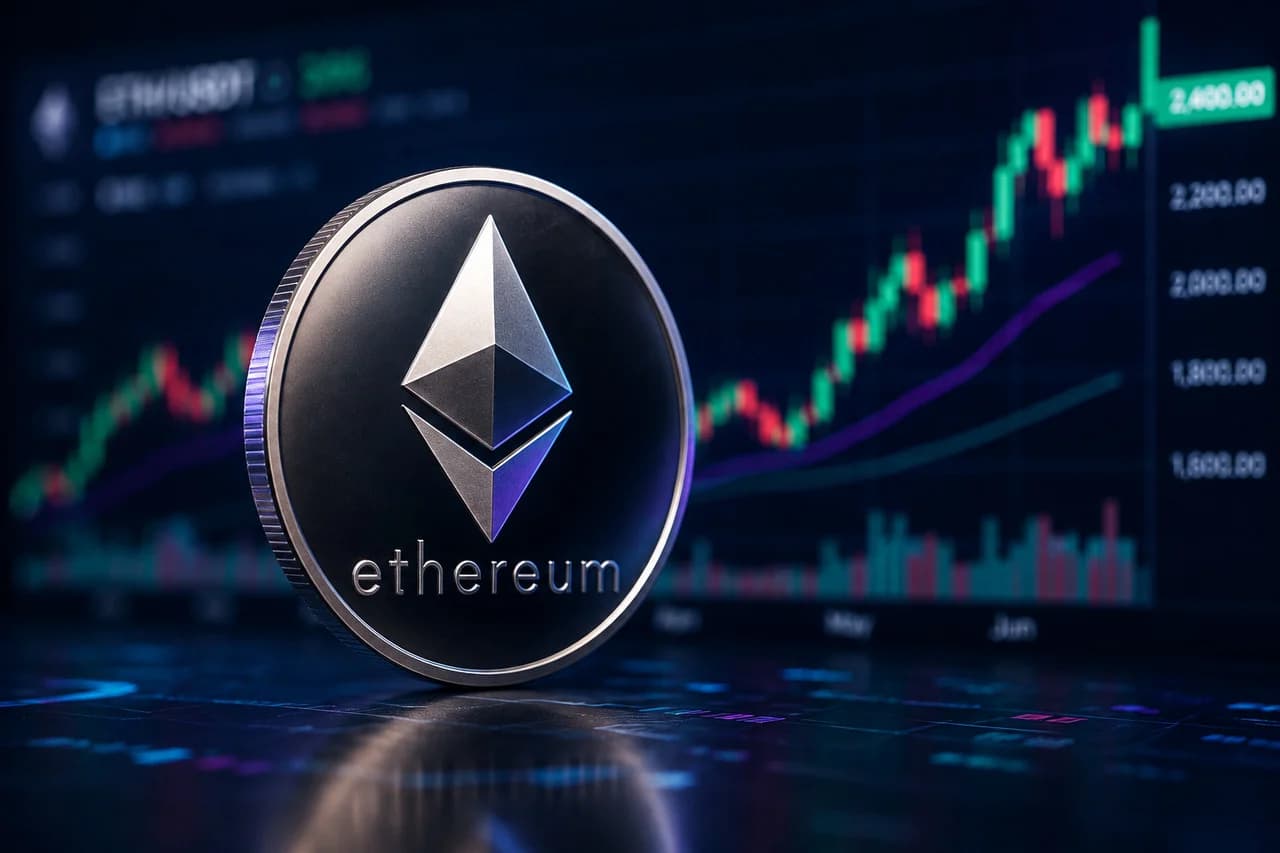
Ethereum (ETH) is fluctuating around the $2,400 level as it seeks short-term direction. Amid continued volatility in the overall virtual asset market, Ethereum fell slightly on a daily basis but recovered part of its losses from the intraday low.
As of the 23rd, Ethereum was trading at around $2,411.88. Over the past 24 hours, it declined approximately 0.50%, with the period's high recorded at $2,444.71 and the low at $2,355.71. The current price is about $56 above the 24-hour low.
During the session, the price at one point fell to the mid-$2,300 range before recovering the $2,400 level. This can be interpreted as a tug-of-war between selling pressure and low-price buying.
■ Variable ①: Market Liquidity
One of the factors that will determine Ethereum's short-term price is the liquidity of the entire virtual asset market, including Bitcoin. Although Ethereum has its own network-specific catalysts, it is often affected alongside Bitcoin when the market's risk appetite weakens sharply. In particular, during periods when leverage liquidations expand in the derivatives market, changes in overall market supply and demand can be reflected in prices more quickly than individual positive news.
■ Variable ②: Network Usage Demand
A key variable unique to Ethereum is network usage demand. How much Ethereum and its related scaling networks are utilized in decentralized finance (DeFi), stablecoins, tokenized assets, and various applications is tied to medium- and long-term ecosystem evaluation.
■ Variable ③: Staking Supply and Demand
Staking flows are also worth watching. Since Ethereum operates on a proof-of-stake (PoS) mechanism, the amount of ETH locked in staking and changes in the volume actually tradeable on the market can affect supply and demand. However, an increase in staked volume does not immediately translate into a price rise; it must be assessed together with new supply, selling pressure, and market liquidity.
■ Variable ④: U.S. Financial Market Conditions
The U.S. financial market environment is another variable. Sharp movements in U.S. Treasury yields and the dollar's value can shift investment sentiment toward risk assets, including tech stocks, and such trends can spill over into the virtual asset market. This means Ethereum is not immune to changes in global liquidity.
■ Key Point: Whether It Settles at $2,400 and Trading Volume
In the current market, it is necessary to watch whether Ethereum settles above the $2,400 level and whether it is accompanied by trading volume. Rather than simply crossing a specific price temporarily, how sustained trading participation is during uptrends or downtrends can be an important factor in judging the strength of short-term momentum.
Unlike Bitcoin, Ethereum is an asset evaluated not only as a virtual asset but also for its network value as a smart contract platform. Accordingly, its future price trajectory requires a comprehensive look at not only the risk appetite of the overall coin market, but also network activity, staking supply and demand, and the growth of the scaling ecosystem.
[This article was written with AI assistance. It is not intended to encourage the purchase, sale, or investment decision regarding any specific virtual asset. Virtual assets are highly volatile and carry the risk of principal loss, and the prices and market indicators mentioned may vary depending on the exchange and the time of aggregation. Before investing, please verify official materials and the latest market prices directly, and make careful decisions based on your own investment objectives and risk tolerance.]
CBC Globe publishes verified stories with editorial review, source checks, and tenant-specific publication standards.
Related Articles
Worldcoin Takes On 'Proof of Personhood' in the AI Era — World ID Real-World Use and Iris Regulation Matter More Than WLD Price
Dogecoin Rises 2% Range... DOGE Recovers $0.09 Amid Altcoin Weakness, 'Trading Volume Is Key'

Polkadot (DOT) Weakened Around $0.90... Expansion of Multichain 'Real-World Use' Key to Rebound