
The Moment BTS Rejected the Grammys' 'Asian Fence'... An Anatomy of a 'Postcolonial Decision'
The changes that BTS has brought to the global music market have now reached a stage that is difficult to explain as the success of a single K-pop group. Some analysts say the industry has moved beyond the old structure in which global music award ceremonies evaluated artists and conferred authority
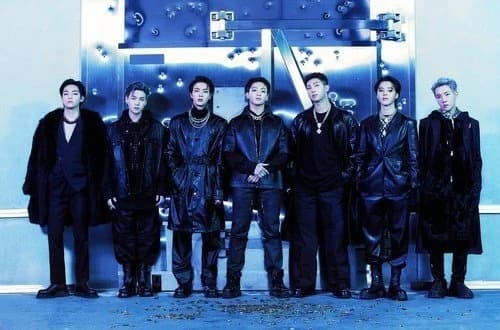
The changes that BTS has brought to the global music market have now reached a stage that is difficult to explain as the success of a single K-pop group. Some analysts say the industry has moved beyond the old structure in which global music award ceremonies evaluated artists and conferred authority upon them, to the point where an artist's participation now determines an award ceremony's prestige.
Cultural philosopher Professor Lee Ji-young, author of 'BTS Art Revolution,' recently appeared on Choi Wook's 'Maebool Show' and interpreted the phenomena surrounding BTS and the Grammys from a 'postcolonial' perspective. Professor Lee, who specializes in film philosophy and has analyzed cultural phenomena philosophically, noted that papers and research on BTS are being produced extensively around the world.
'Who Has the Right to Evaluate Whom?'
The broadcast explained that although the Grammys created a new category called 'Best Asian Pop Music Performance,' BTS did not submit entries, on the grounds that 'music is not divided by language.' Professor Lee and the panelists assessed that this decision has generated considerable reaction abroad, particularly in Europe, rather than in Korea.
What Professor Lee focused on was not the mere 'refusal of an award.' The core issue is the question of 'who has the authority to evaluate whom.' He explained that in the past, non-Western artists, including those from Korea, often accepted recognition by the standards and evaluations of authoritative American or Western institutions as an honor in itself. However, BTS's choice can be seen as an act that posed the question, 'Do you even have the authority to evaluate us?' He especially interpreted it as a 'postcolonial act and decision,' noting that it was a case in which an Asian artist with global influence in popular arts rejected the existing Western evaluation system itself, generating significant impact.
This is underpinned by a shift in the distribution structure of global popular culture. In the past, music that reached the top of the American market spread to countries around the world and became global hits. The massive American cultural market effectively served as a kind of 'gateway' to global popular culture. However, with the spread of the internet, social media, and global platforms, this vertical structure has weakened. Cultures from various countries can now cross borders and be consumed without necessarily passing through the United States.
Questioning the Grammys' Genre Classification
Professor Lee Ji-young also raised questions about the way the Grammys have classified genres. He cited the history of the Grammys separating Black music into a distinct category, as well as the case of renaming 'World Music' to 'Global Music.' He noted that the Grammys themselves acknowledged during the renaming process that the previous term carried colonialist connotations. He analyzed that this history provides context for viewing the controversy surrounding the new Asian music category.
Ultimately, the issue is not simply about 'adding one more award.' The broadcast cited an analysis from French media arguing that classifying Asian music in a separate category could have the effect of isolating Asia's cultural influence from the existing center. The point is that the structure itself—whereby Korean artists compete within a separate enclosure rather than directly competing alongside American pop artists in the same categories—should be viewed critically.
Where Does an Award Ceremony's Authority Come From?
What makes BTS's choice even more significant is the question of where the Grammys' authority comes from. Professor Lee explained that the authority of music awards cannot be physically enforced like military or economic power. An award ceremony's prestige is formed only when artists want to stand on that stage, consider being nominated an honor, and accept winning as meaningful. Therefore, the moment a world-class artist declares they 'will not participate in that evaluation system,' the situation is reversed. Rather than the artist having to prove their worth, a situation can arise in which the award ceremony must prove why it has the right to evaluate them.
The broadcast also introduced claims by an American producer who said he had heard from a Grammys insider that there was a plan to bring BTS in as the first winner of the new category in order to elevate the category's prestige. In this context, Professor Lee interpreted BTS's decision not to participate as posing a fundamental question about the authority of that evaluation system.
Comments by Grace Kao, introduced on the broadcast as a former vice president of the American Sociological Association, also drew attention. According to the broadcast, she emphasized BTS's influence, noting that BTS has far more followers than the Grammys, even citing Jungkook's dog's account as an example. The Maebool Show compared actual social media follower counts, stressing the popular reach BTS possesses.
The Key Word: 'Horizontality'
However, the essence of the BTS phenomenon as Professor Lee sees it lies deeper than fame or follower numbers. The keyword he has consistently emphasized is 'horizontality.' The existing world cultural order was close to a vertical form, with English and Western culture at the center and other languages and cultures on the periphery. But in the BTS fandom, a different picture emerged. Professor Lee cited examples of fans around the world singing BTS's songs in Korean, learning Korean, and even organizing their lives around Korean Standard Time (KST) for content releases and concert schedules. This, he explained, is a unique cultural movement in the opposite direction from the existing pattern of the world adapting to English-speaking culture—global fans adjusting themselves to the Korean language and Korean time.
He also believes that the enthusiasm for BTS cannot be explained by music or looks alone. Professor Lee interpreted it as the result of the meeting between the 'aspiration for a horizontal and equal world' held by people around the globe and the messages BTS has conveyed. He said that messages about inequality and injustice, young people's struggles, self-respect, and solidarity combined with the political and social unconscious of people around the world. He also stressed that BTS has continuously delivered messages to the younger generation through speeches and various remarks as well as songs. He analyzed that by combining music, dance, performance, and popular appeal, philosophical and social messages were able to spread far more widely than the language of existing thinkers or scholars.
Beyond Music, into National Image
The broadcast also mentioned the phenomenon of BTS's influence extending beyond the boundaries of the music industry into national image. Cases of foreign heads of state and celebrities showing interest in BTS and requesting autographs were cited, and some assessed that the very sight of numerous overseas fans traveling to see BTS itself demonstrates Korea's cultural standing.
Ultimately, the debate surrounding BTS and the Grammys leads to a much larger question than 'who wins an award.' In the past, being selected by an institution of global authority was proof of success. But in the digital platform era, artists directly connected to tens of millions of fans can form global cultural power without the approval of existing institutions. In effect, the relationship itself has changed—whether the Grammys confer authority on BTS, or BTS's participation adds authority to the Grammys.
Some have raised concerns that if the new category loses momentum due to BTS's decision, opportunities for junior K-pop artists could narrow. But Professor Lee Ji-young's interpretation is the exact opposite. He assessed that BTS did not block the path for juniors but rather opened a new one. If BTS had accepted the separate 'Asian fence,' the structure in which subsequent Asian artists would also be evaluated within that enclosure could have become entrenched.
What BTS has shown goes beyond the single incident of declining an award. It is the moment the relationship shifts from 'please recognize us' to 'your evaluation is not necessarily needed.' This is why Professor Lee reads it as a postcolonial decision. Now, as the old boundary dividing the center and periphery of world culture is being shaken, BTS is demonstrating another possibility—that it can meet the world directly outside the fence built by existing authority, rather than climbing to the top of that authority.
Meanwhile, BTS is currently ranked 8th in the Best Group category at the Netizens Awards for August. As of 9:23 a.m. on the 20th, they had received 367 votes. BTS has shown steady performance at the Netizens Awards. Attention is focused on what kind of conclusion they will draw by the end of this month.
[This article was written with AI assistance. This content was reconstructed by selecting only BTS-related remarks based on the transcript and summary of Choi Wook's 'Maebool Show' provided by the user. The evaluations by individuals introduced on the broadcast and statements by foreign media and insiders are citations and summaries of the claims and interpretations presented on that broadcast, and the facts were not separately verified in the writing process of this article. Evaluations of cultural and social significance may vary depending on perspective.]
CBC Globe publishes verified stories with editorial review, source checks, and tenant-specific publication standards.
Related Articles

Kim Da-hyun Releases 4th Full-Length Album 'Emoticon'… Sincerity Conveyed to Fans Through Self-Written Song 'Under the Tree'

Hanroro Takes First Official Stage in Japan at Summer Sonic 2026, Betting on Live Performances of Seven Self-Written Songs
Son Tae-jin Wins the Choi Baek-ho Special on 'Immortal Songs'... The Essence of Vocals Proven by 420 Votes and the Original Artist's Praise