
Hyundai Mobis Expected to Be Revalued on Humanoid Robot Supply Chain; Hyundai Motor Securities Maintains Target Price of 690,000 Won and BUY Rating
Hyundai Mobis could see its corporate value reevaluated as a key parts supplier amid Hyundai Motor Group's expansion into the humanoid robot business, according to market analysts. With global humanoid companies going public and competing on mass production, and Hyundai Motor Group's Atlas commercia
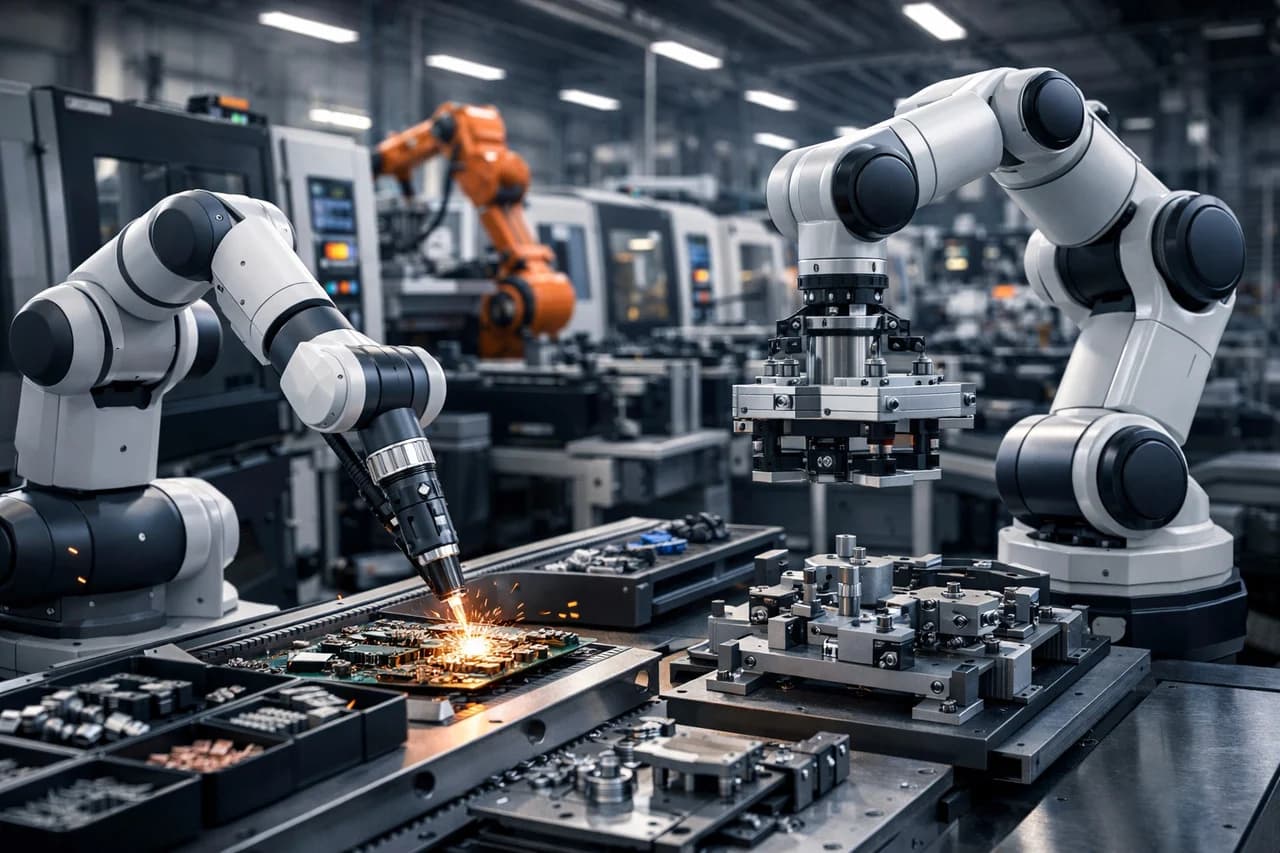
Hyundai Mobis could see its corporate value reevaluated as a key parts supplier amid Hyundai Motor Group's expansion into the humanoid robot business, according to market analysts. With global humanoid companies going public and competing on mass production, and Hyundai Motor Group's Atlas commercialization strategy becoming more concrete, securities analysts say robotics is emerging as a new valuation factor for Hyundai Mobis.
Hyundai Motor Securities: 'Maintains BUY and Target Price of 690,000 Won'
On the 26th, Hyundai Motor Securities published a report on Hyundai Mobis (012330) titled 'No China, More Money,' maintaining its 'BUY' investment opinion and target price of 690,000 won. The gap between the target price and the previous day's closing price is about 38.6%.
Hyundai Motor Securities cited U.S. robotics-related policies and import regulation moves, as well as changes in the corporate value of global humanoid companies including China's Unitree, as external variables surrounding Hyundai Mobis. It also analyzed that listing moves by Agility Robotics and the concretization of humanoid mass production and supply chain strategies by competitors including Tesla could affect the valuation of robot parts makers.
Actuator Supply Upon Atlas Mass Production: 'Beyond a Simple Beneficiary'
The key point is that Hyundai Mobis is participating in the actual parts supply chain, going beyond being a mere indirect beneficiary within Hyundai Motor Group's robotics ecosystem. Hyundai Mobis has agreed with Boston Dynamics to supply actuators when the next-generation humanoid robot Atlas enters mass production.
Actuators are core drive devices that move a robot's joints, and they serve as the link through which Hyundai Mobis can extend its design and mass production capabilities, accumulated in the automotive parts business, into the robotics field.
Atlas Deployment to U.S. Production Sites in 2028; Annual Production of 30,000 Units Envisioned
The growing concreteness of Hyundai Motor Group's Atlas mass production plan is another variable. The group plans to gradually deploy Atlas at U.S. production sites starting in 2028. According to the strategy unveiled on the 26th, the group also presented a plan to build an Atlas production system in the United States with an annual capacity of 30,000 units and to deploy the initial commercial volume of 25,000 units mainly at Hyundai Motor and Kia production sites.
The RMAC, designed to deploy Atlas in actual manufacturing sites, is also an important link. Hyundai Motor Group operates the Robot Metaplant Application Center (RMAC) in Georgia, building a system that trains and validates robots by recreating real manufacturing environments. The group plans to expand the site and deploy Atlas at the Metaplant from 2028.
Reviewing Expansion of Parts Portfolio into Sensors, Controllers, and Batteries
Accordingly, the market's focus on Hyundai Mobis's robotics business is expected to shift from Atlas sales volume to how much its core robot parts portfolio can expand, starting with actuators. Hyundai Mobis is also reviewing ways to broaden its robot parts business into areas such as sensor modules, controllers, and battery systems.
Hyundai Motor Securities appears to be placing weight on the possibility that companies that have actually entered the robotics supply chain, like Hyundai Mobis, will be revalued, as changes in the global robot industry intersect with Hyundai Motor Group's physical AI and robotics investment strategy.
Volatility Risks Remain
However, since the humanoid robot industry is still in the early stages of full-scale mass commercialization, business value may vary depending on production costs, mass production pace, the scale of actual industrial adoption, and competitors' technological advances. China's Unitree also saw its share price surge immediately after listing and then undergo a significant correction from its peak, showing volatility around the high valuations of robot companies.
[Stocks may experience increased price volatility depending on corporate performance, industry conditions, merger terms, market supply and demand, and other factors. Securities firms' analyses and forecasts may differ from actual future results and do not guarantee returns on specific stocks. Before making investment decisions, it is necessary to comprehensively review the company's official disclosures, financial condition, and business progress. This article is not intended to recommend the purchase or sale of specific stocks. This article was written with AI assistance.]
CBC Globe publishes verified stories with editorial review, source checks, and tenant-specific publication standards.
Related Articles

Samchundang Pharm Rises for Second Consecutive Day... Searching for Direction in the 170,000-Won Range After Sharp Decline

Renewable Energy Stocks Diverge... Hanwha, DJEM, and Hyein Surge While Korea Electric Power Plunges
Nvidia's Emphasis on 'Physical AI' Spread Lifts Korean Robot Stocks... Rainbow Robotics Up 2%