September 1 Gold Price: Pure Gold (3.75g) Buys at 871,000 Won... Silver Rises, Platinum, 18K, and 14K Fall
September 1 Gold Price: Pure Gold (3.75g) Buys at 871,000 Won... Silver Rises, Platinum, 18K, and 14K Fall ■ September 1 Precious Metals Prices at a Glance According to the Korea Gold Exchange prices as of September 1, 2026, pure gold showed mixed buying and selling prices, while 18K, 14K, and pla
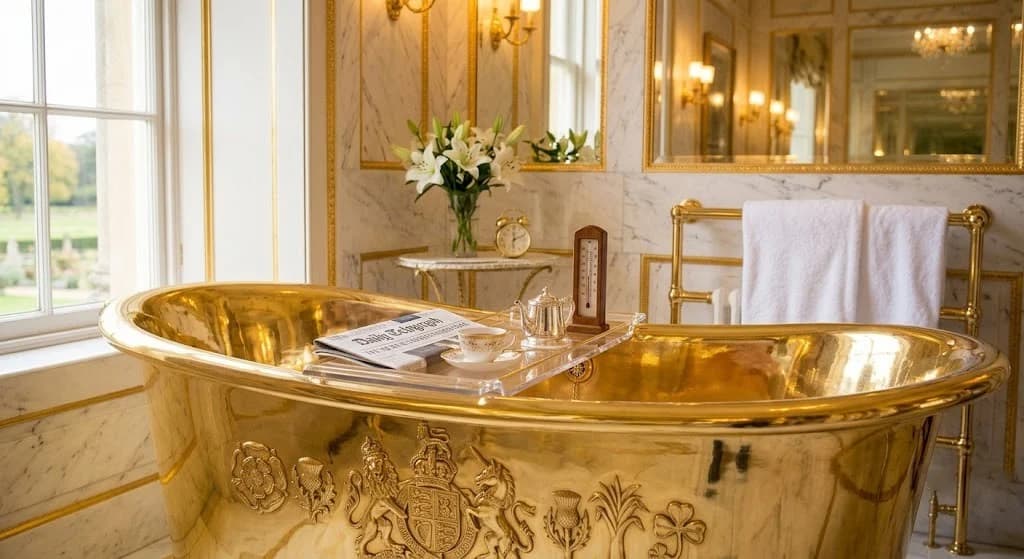
September 1 Gold Price: Pure Gold (3.75g) Buys at 871,000 Won... Silver Rises, Platinum, 18K, and 14K Fall
■ September 1 Precious Metals Prices at a Glance
According to the Korea Gold Exchange prices as of September 1, 2026, pure gold showed mixed buying and selling prices, while 18K, 14K, and platinum fell and silver rose.
• Pure gold (3.75g): buy price 871,000 won (change +0.23%, up 2,000 won) / sell price 729,000 won (change -0.14%, down 1,000 won) • 18K: sell price 535,900 won (change -0.13%, down 700 won) • 14K: sell price 415,600 won (change -0.12%, down 500 won) • Platinum: buy price 350,000 won (change -0.57%, down 2,000 won) / sell price 280,000 won (change -1.07%, down 3,000 won) • Silver: buy price 12,620 won (change +0.79%, up 100 won) / sell price 10,270 won (change +0.78%, up 80 won)
■ Gold Weakens Despite Geopolitical Tensions... Why?
As military exchanges between the United States and Iran resumed after about a month, tensions in global financial markets rose again, but gold, a representative safe-haven asset, actually weakened. This is interpreted as the possibility of a U.S. interest rate hike and high bond yields pressuring prices more strongly than the traditional formula that funds move into gold when war and geopolitical anxiety grow.
As the U.S. and Iran took military action again, international oil prices rose. This was due to growing concerns that reignited tensions in the Middle East could lead to crude oil supply instability. The New York stock market also fell, with the Dow Jones Industrial Average down 0.70%, the S&P 500 down 0.33%, and the Nasdaq Composite down 0.12%.
Normally, such a situation is favorable for gold. In situations that are difficult to predict, such as wars or financial crises, the scarcity of gold—which does not directly depend on the payment capacity of a specific country or company—is highlighted compared to stocks or corporate bonds.
However, this time was different. Concerns that rising international oil prices could again increase inflationary pressure in the U.S. raised the possibility of a Federal Reserve rate hike. Hawkish remarks from Fed Chair Kevin Warsh, who succeeded Jerome Powell, added to this, and the interest rate burden overwhelmed gold's safe-haven effect. The market also showed a significantly increased possibility of a September rate hike.
■ Gold Pays No Interest... Why Rising Rates Are a Burden
Gold does not pay interest. As U.S. Treasury yields rise, the opportunity cost of holding gold increases compared to bonds that generate interest. This is why gold prices do not necessarily rise along with gold, even if geopolitical anxiety stimulates gold buying, when rates rise quickly.
■ Gold, the 'Safe-Haven Asset' Built by Thousands of Years of History
The background of gold's special position in financial markets lies in its thousands of years of history. Gold has been used as a symbol of wealth and power since ancient Egypt and Mesopotamia, and later served as currency and a means of exchange in both the East and West. Its characteristics—resistance to corrosion, limited supply, and the ability to store high value in a small volume—have made gold a long-term store of value.
Gold's status continued in the modern financial system. Since the 19th century, major countries operated the gold standard, linking the value of their currencies to a fixed amount of gold. This was a way of maintaining trust in currency by tying the value of money to gold, a physical asset. Under the Bretton Woods system created after World War II, the U.S. dollar was linked to gold and major currencies were in turn pegged to the dollar. The U.S. maintained a system of exchanging one ounce of gold for 35 dollars.
In 1971, U.S. President Richard Nixon suspended the conversion of dollars into gold, triggering the so-called 'Nixon Shock,' and the international monetary system centered on gold effectively came to an end. Since then, the world's major currencies have moved to a fiat currency system not directly linked to gold.
Paradoxically, gold's role did not disappear even after its link to currencies was severed. Central banks around the world still hold gold as part of their foreign exchange reserves. It is one means of reducing the risk of concentrating foreign reserves in a specific country's currency or bonds and preparing for extreme situations in financial markets.
■ 'An Asset That Does Not Depend Solely on Someone's Promise'
Gold's historical value ultimately comes from its characteristic of being 'an asset that does not depend solely on someone's promise.' Bank deposits presuppose a bank's payment capacity and the financial system, while government bonds are based on national credit. Stocks also depend on a company's future cash flows for their value. Gold does not generate profits or interest on its own, but its scarcity itself has long been the basis of its value. This is why gold re-emerges whenever concerns about war, financial crises, currency instability, or inflation grow.
However, since gold is also an investment asset with fluctuating prices, the formula that 'it always rises when a crisis occurs' does not hold. This market movement is a prime example. The geopolitical anxiety from the renewed U.S.-Iran conflict is a factor pushing gold prices up, but rising international oil prices are stoking inflation concerns, which in turn link to expectations of a U.S. rate hike and rising Treasury yields, exerting force in the opposite direction on gold.
■ Gold Was Strong in August... What Are the Future Variables?
Gold prices still showed a strong trend for August as a whole. According to Reuters, gold rose about 9.7% during August, potentially recording the strongest monthly gain since January of this year. This is why it is difficult to conclude that mid- to long-term gold demand has weakened based on short-term corrections alone.
The key variables that will determine the future direction of gold prices are expected to be the intensity of the U.S.-Iran conflict, international oil prices, U.S. Treasury yields, and Fed monetary policy. If military tensions expand while rate hike expectations weaken, gold's traditional safe-haven character could again be strongly highlighted. Conversely, if high oil prices fuel inflation concerns and lead to prolonged high U.S. rates or additional rate hikes, gold prices could be pressured despite geopolitical anxiety.
Gold has maintained its position as a store of value through thousands of years, even as dynasties, nations, and monetary systems changed countless times. What the market is watching now is not simply the price of an ounce of gold. Gold is re-evaluated every time uncertainty about war, prices, interest rates, and currency rises simultaneously because behind it lies a long-accumulated 'history of trust.'
[※ This article is for investment reference purposes only, and the final judgment and responsibility for investments lie with the investor.]
CBC Globe publishes verified stories with editorial review, source checks, and tenant-specific publication standards.
Related Articles
Today's Gold Price (November 17): Pure Gold 1 Don at 724,000 Won... Where Are Gold Prices Headed Amid Dollar Strength?
Nvidia's Q3 Earnings Report Imminent... First Test Since Jensen Huang's Resignation — Can It Hit $108 Billion Revenue Forecast?

[Breaking] Evernos Holdings (XRPN) Flat at $7.45... Bitcoin at $64,922, Market on Alert Over Weakness in Leading Stock