Nuclear Power Stocks Diverge Amid IAEA General Conference and SMR Regulatory Discussions... KEPCO E&C Falls 1.66%, BHI Rises Over 2%
On the 15th, nuclear power-related stocks showed mixed movement in the domestic stock market. As the 70th International Atomic Energy Agency (IAEA) General Conference takes place in Vienna, Austria, Doosan Enerbility, KEPCO Engineering & Construction, and Wooil Technology declined, while BHI and KEP
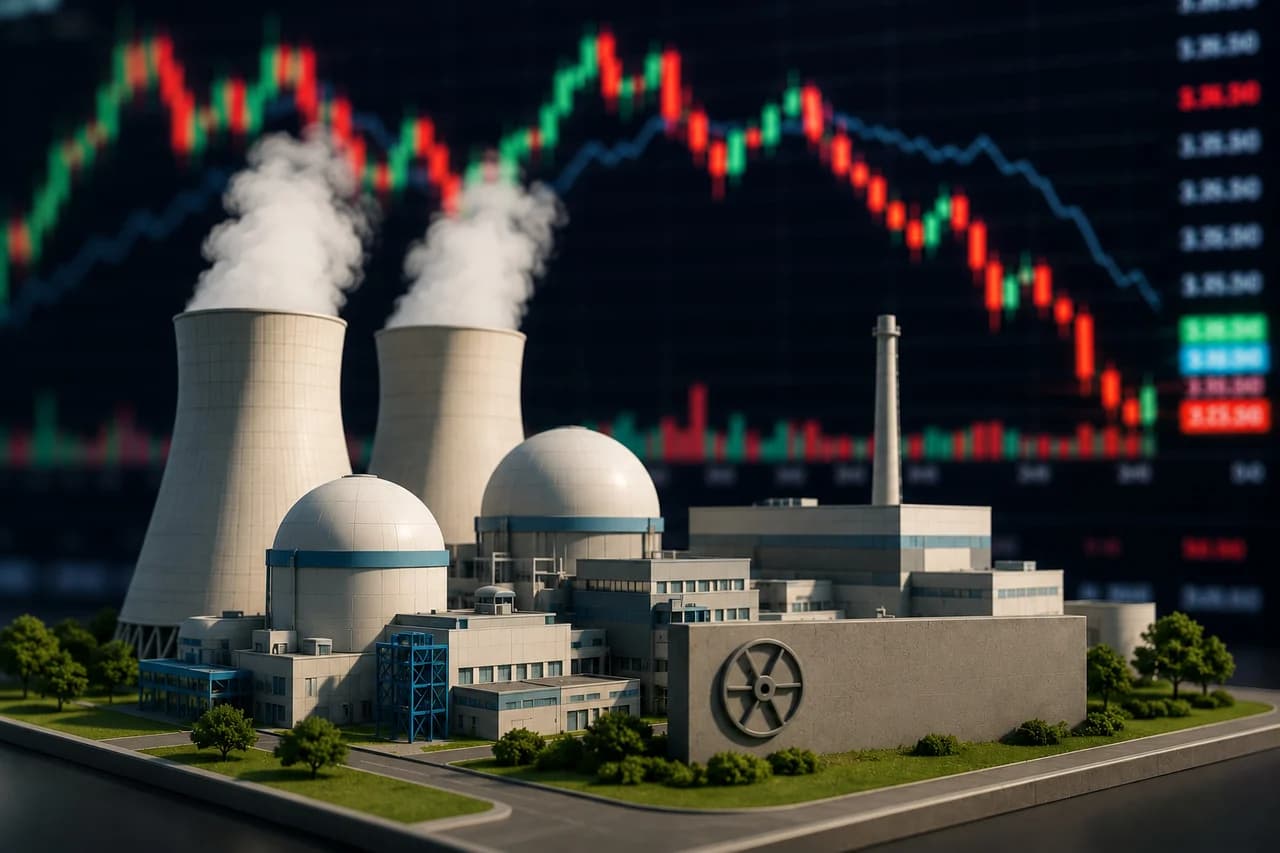
On the 15th, nuclear power-related stocks showed mixed movement in the domestic stock market. As the 70th International Atomic Energy Agency (IAEA) General Conference takes place in Vienna, Austria, Doosan Enerbility, KEPCO Engineering & Construction, and Wooil Technology declined, while BHI and KEPCO KPS, which are related to equipment and services, rose.
■ Differentiation Among Stocks Amid Fluctuations
During the day's session, Doosan Enerbility traded at 86,300 won, down 0.80% from the previous trading day. It rose to as high as 87,800 won during the session but was also pushed down to 84,900 won. Wooil Technology fell 3.61% to 13,350 won, with an intraday low of 12,910 won and trading volume exceeding 2.36 million shares. KEPCO E&C also declined 1.66% to 135,900 won.
In contrast, BHI, a nuclear power equipment-related stock, rose 2.48% to 66,200 won. Orbitech climbed 0.73% to 5,550 won, and KEPCO KPS traded up 0.63% at 47,700 won, showing clear stock price differentiation within the same nuclear power theme.
■ Safety Regulation Issues Discussed at the IAEA General Conference
While nuclear power-related stocks searched for direction, discussions on the expansion of nuclear power generation and safety regulatory systems are underway in the international community. The Chairman of the Nuclear Safety and Security Commission is attending the 70th IAEA General Conference, held in Vienna, Austria, from the 14th to the 18th, to discuss nuclear safety regulation issues with the international community.
The IAEA General Conference is a major annual international nuclear meeting held every September, and representatives from 181 member states are expected to attend this year's conference. From the perspective of the domestic nuclear power industry, the direction of changes in international safety regulatory standards could be an important variable as nuclear power and small modular reactor (SMR) development expand worldwide.
The NSSC Chairman will also attend the 58th International Nuclear Regulators Association (INRA) meeting during the conference. INRA is a consultative body established in 1997, in which the heads of regulatory agencies from nine major nuclear power countries—South Korea, the United States, Canada, the United Kingdom, Japan, Germany, France, Sweden, and Spain—discuss nuclear and radiation regulatory policies. At this meeting, the countries will discuss nuclear regulatory challenges they face, and in celebration of INRA's 30th anniversary, they also plan to exchange views on past achievements and the future role of international nuclear regulatory bodies.
■ Domestic Regulatory Response for the SMR Era
As the center of gravity of the nuclear power market shifts from conventional large-scale reactors to next-generation reactors such as SMRs, the importance of regulation is also growing. The standard design approval process for innovative SMRs is underway domestically.
The NSSC has been pushing forward regulatory procedures to respond to next-generation reactors, including disclosing its review plan for the standard design approval of an innovative small modular reactor (i-SMR) in August. It has also decided to invest 62.94 billion won in the 2026 nuclear safety research and development project, aiming primarily to respond to safety issues and proactively secure regulatory technologies needed for future nuclear power plants.
These moves also carry significant mid- to long-term implications for nuclear power-related companies. Nuclear power projects can only translate into actual business after passing regulatory procedures such as design approval, safety verification, and operating licenses, in addition to technology development and construction capabilities. In particular, since SMRs differ from existing large reactors in design and operation, the faster their commercialization, the greater the need for dedicated safety regulatory technologies and the establishment of international standards.
The NSSC's recent indication in its 2027 budget proposal to accelerate research on SMR regulatory technologies aligns with this trend. The NSSC also continues safety regulatory cooperation with international organizations such as the IAEA and the OECD Nuclear Energy Agency (OECD/NEA), as well as with major nuclear power countries.
■ Gains and Losses Across Value Chain Stocks
In the stock market, long-term expectations for the expansion of the nuclear power industry and supply and demand for individual stocks are being reflected simultaneously, moving share prices in different directions. G2 Power rose 1.24% to 10,640 won, Energy Talk climbed 2.28% to 5,380 won, and Boseong Powertech gained 1.93% to 7,400 won. Meanwhile, Korea Electric Power Corporation (KEPCO) fell 1.25% to 31,550 won.
For the next stage of the nuclear power industry, not only the expansion of new nuclear plants and SMR construction but also the safety regulatory system supporting them must move together. Attention is focused on how major nuclear power countries will concretize safety standards and regulatory cooperation for next-generation reactors through the 70th IAEA General Conference and the INRA meeting.
In the domestic stock market, the key point to watch will be how not only large nuclear power-related stocks such as Doosan Enerbility and KEPCO E&C but also nuclear power value chain stocks such as BHI, KEPCO KPS, Orbitech, and G2 Power will move in response to these policy and industry changes.
[This article is general information based on government materials, including those from the Nuclear Safety and Security Commission, and provided stock price information, and does not recommend buying or selling any particular stock. Nuclear power and SMR policies and business schedules may change in the future, and the final judgment and responsibility for investments rest with the investor. AI provided some assistance.]
CBC Globe publishes verified stories with editorial review, source checks, and tenant-specific publication standards.
Related Articles
NVIDIA's Placement of Megaspeed on Sales Ban List Confirmed Through Joint Statement by U.S. Commerce and Justice Departments
BlackRock's Q3 13F Filing: NVIDIA Ranks First in Holdings at $443.2 Billion — What's the Share of Semiconductor Stocks?
Youngone Corporation's Bangladesh Subsidiary to Raise 180.1 Billion Won via Third-Party Allocation… Funds to Repay Related-Party Debt