
[Study Abroad!Star] IonQ to Present 9 Papers at IEEE Quantum Week — What Are the 4 Technologies That Won Best Paper Awards?
Quantum computing company IonQ (NYSE: IONQ) will unveil a large batch of research results on the 14th (local time) at a leading global quantum computing academic event. Of the nine peer-reviewed papers scheduled for presentation, four have won Best Paper Awards, which the company says highlights bot
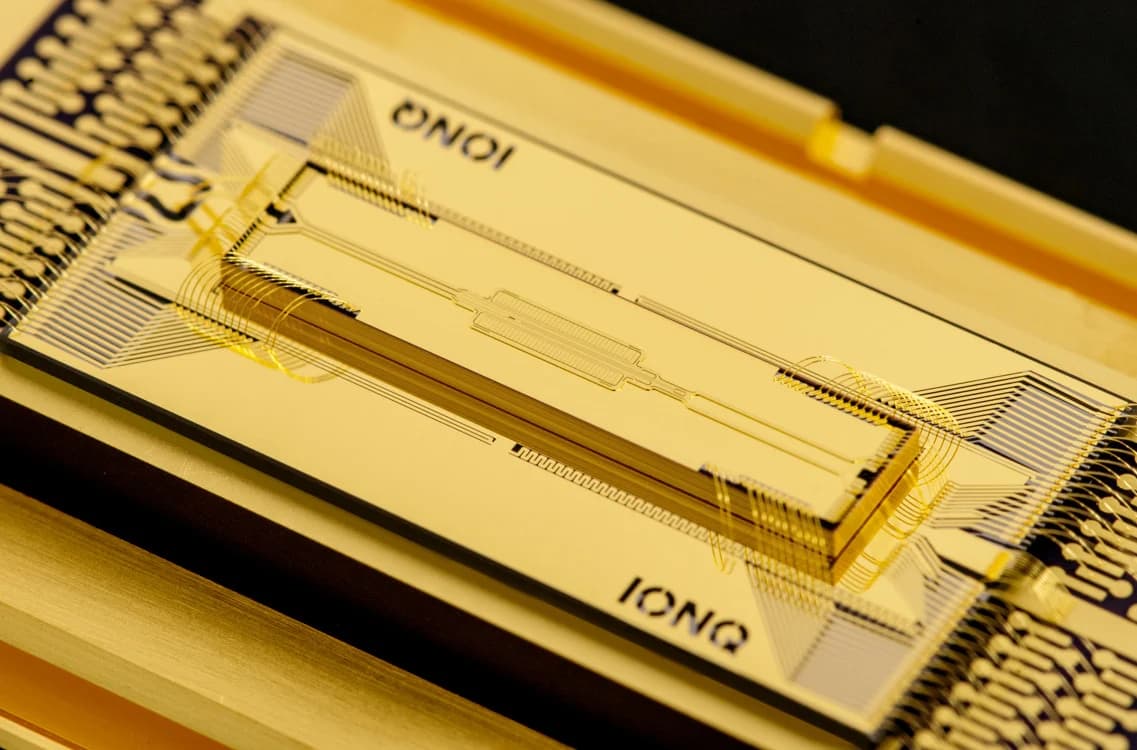
Quantum computing company IonQ (NYSE: IONQ) will unveil a large batch of research results on the 14th (local time) at a leading global quantum computing academic event. Of the nine peer-reviewed papers scheduled for presentation, four have won Best Paper Awards, which the company says highlights both its technological strength and industrial applicability.
IonQ will present a total of nine peer-reviewed research papers at the 2026 IEEE International Conference on Quantum Computing and Engineering (QCE26). QCE26 is a leading international academic event in quantum computing and engineering hosted by IEEE, and this year it will be held at the Metro Toronto Convention Centre in Toronto, Canada. In addition to the paper presentations, IonQ researchers will participate in six events including keynotes, tutorials, technical workshops, poster sessions, and panel discussions.
The papers accepted by IEEE cover a wide range of fields, from clinical data imputation to protein folding, industrial fluid dynamics, and freight logistics. The core theme is applying quantum computing not just to theoretical research but to solving real-world industrial problems. Notably, four of the nine papers received the QCE26 Best Paper Award, which is selected through independent peer review by academia, industry, and government research institutions.
Protein Folding Research on 64-Qubit Hardware Wins Best Paper Award
One of the award-winning studies is 'Protein Folding on 64-Qubit Trapped-Ion Hardware Using Counter-Adiabatic Quantum Optimization.' Together with Kipu Quantum, IonQ scaled a protein folding optimization problem up to 61 qubits on the IonQ Tempo. Using a hybrid quantum-classical approach, the team reported reaching the classical computing benchmark energy levels in four of six protein sequences. The study will be presented from 10:00 to 11:30 a.m. local time on the 14th.
Learn with Quantum Technology, Run Inference on Classical Computers
The 'Quantum Parity Representations' study presents a method for finding high-order parity structures using quantum computing resources during the learning stage. IonQ said that at the actual deployment stage, inference is performed entirely on classical computers, yet accuracy was improved by up to 41.7 percentage points.
Simulation Time Reduced by Up to 14.6%
A study conducted jointly with Synopsys, 'End-to-End Performance of Quantum-Accelerated Large-Scale Linear Algebra Workflows,' also won a Best Paper Award. The researchers demonstrated a graph-partitioning approach using quantum computing and reported shortening the total processing time of finite-element simulations on industrial models, including meshes with up to 35 million elements, by up to 14.6%.
In Logistics, Deliveries Increased by Up to 12.1%
IonQ also demonstrated potential applications in logistics. In a study on the shipment selection problem conducted with Einride, the company used real logistics data and expanded the number of selectable shipments by up to 12.1% without significantly increasing costs. The research data was scaled up to problems of up to 130 qubits using IonQ Forte and Forte Enterprise.
3D Advection-Diffusion Equations Implemented on Quantum Hardware
In another study with Synopsys, researchers examined a quantum lattice Boltzmann method for handling advection in three-dimensional space using trapped-ion quantum hardware. IonQ said the study successfully implemented 3D advection-diffusion equations on quantum hardware with high accuracy.
Quantum Neural Networks Restore Missing Clinical Data
In research with Quantum Signals, the team presented a quantum neural network approach for restoring missing data in electronic health records (EHR). The researchers trained the quantum neural network directly on an IonQ Forte Enterprise system. The study is regarded as demonstrating quantum computing's potential in medical and clinical data processing.
Fine-Tuning AI Models: Classification Errors Reduced by Up to 24%
The study 'Measuring Accuracy and Energy Efficiency of Quantum Fine-Tuning of Foundation AI Models,' conducted jointly with QuantumBasel and the University of Basel, also won a Best Paper Award. The study reduced classification errors by up to 24% compared with existing top classical computing methods, and observed a break-even point in energy efficiency at around 34 qubits. The results draw attention as a gauge of the potential of combining quantum computing with artificial intelligence (AI).
Combining AI and Distributed Quantum Optimization Also Wins Best Paper Award
The study 'DQAOA-GPT: AI-Accelerated Distributed Quantum Optimization for Combinatorial Problems' was also selected for a Best Paper Award. IonQ collaborated with a major semiconductor manufacturer, Oak Ridge National Laboratory, and the University of Tennessee, Knoxville, to apply AI-assisted distributed quantum optimization technology to combinatorial optimization problems.
Technology to Reduce Quantum Chemistry Calculation Errors Also Unveiled
IonQ will also present research with a major semiconductor manufacturer and qBraid aimed at reducing errors in quantum chemistry calculations. Using the 'mid-circuit measurement' capability of IonQ Tempo, the researchers studied methods to reduce errors arising in Hamiltonian simulations.
IonQ Executives and Researchers to Deliver Keynote
Key IonQ executives and researchers will also take the QCE26 stage. Lisa Lambert, VP of Global Strategy and head of IonQ Canada, John Gamble, VP of Architecture, and Martin Roetteler, VP of Quantum Applications R&D, will deliver a keynote on the 15th at 8:00 a.m. local time titled 'Engineering Quantum for Real-World Impact.'
The researchers will also participate in a practical quantum computing workshop for advanced biotherapeutics, a panel on software, compilation, and hardware interfaces for quantum error correction, a panel on distributed quantum architectures, and a quantum software workshop. In addition, together with the U.S. Naval Research Laboratory and RTX, they will lead a tutorial introducing a new framework for more efficient decompositions in quantum linear algebra applications.
The research results IonQ is presenting at QCE26 draw attention for showing how far the practical applications of quantum computing can extend — from protein folding and medical data to AI, industrial simulation, and logistics. Particularly notable is the fact that four of the nine papers won Best Paper Awards, and that concrete application cases were presented, including real logistics problems at up to 130 qubits and industrial simulations at a scale of 35 million elements.
['Study Abroad!Star' is overseas stock content, including U.S. stocks, provided by CBC News. We will continue striving to provide readers with a broad range of information. All investments are made at each individual's own discretion, and the final responsibility lies with the investor.]
CBC Globe publishes verified stories with editorial review, source checks, and tenant-specific publication standards.
Related Articles

ENHYPEN Releases 'I Want You' Music Video... Romance in Everyday Life from 'THE SIN : PARALLEL WORLD'

TOMORROW X TOGETHER Surprises with Full Reveal of 6 Tracks from 9th Mini Album 'PERFECT STORM' at World Tour Opening Show in Seoul

MAMAMOO's Solar's Self-Written Song 'To My Twenty-Year-Old Self' Tops iTunes Charts in Hong Kong, Taiwan, and More... Collaboration with Harim's Harmonica Gains Popularity
