
Christopher Nolan's 'The Odyssey' Poses the Question Anew… No Matter How Far You Roam the World, There Is a Place You Must Ultimately Return To
The moment Troy's walls fell and the victory of the Greek coalition was secured, the war should have ended. But for Odysseus, king of Ithaca, the real struggle began then. He had led the ten-year war to victory, yet he needed another ten years—longer than the war itself—to return home. The world did
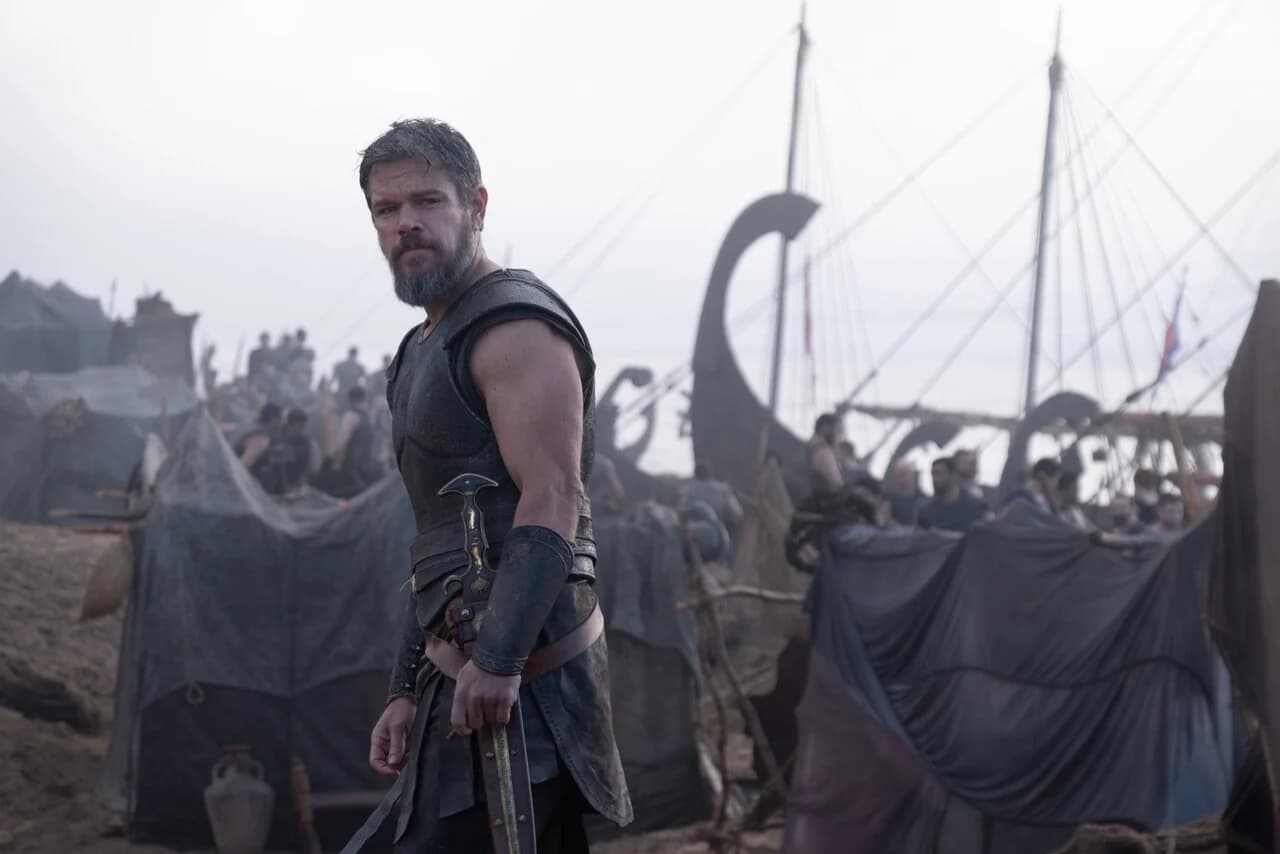
The moment Troy's walls fell and the victory of the Greek coalition was secured, the war should have ended. But for Odysseus, king of Ithaca, the real struggle began then. He had led the ten-year war to victory, yet he needed another ten years—longer than the war itself—to return home. The world did not readily grant his return.
The reason the epic 'Odyssey' has survived nearly three thousand years and continues to be endlessly reinterpreted is simple. On the surface it is an adventure tale filled with monsters, magic, and the intervention of gods, but at its depths lies a question anyone can relate to: Why do we leave, and why do we ultimately seek to return? Odysseus's journey was not a quest to conquer the world or discover new lands; from beginning to end, it was a journey 'to return home.' Nostos—homecoming—is the very word that justifies this epic's existence.
The fact that director Christopher Nolan's recently released film 'The Odyssey' is breaking box office records worldwide is proof that this ancient question remains valid. That a story once passed down in song three thousand years ago can produce the same resonance on a 21st-century screen demonstrates the power of this epic.
■ A Ten-Year Voyage Filled with 'Trials'
The return took so long not because the sea route was distant. What he had to pass through was not geographic distance but a series of trials.
- In the cave of the one-eyed giant, he had to hide even his own name to survive
- On the sorceress's island, he had to watch his men transform into beasts
- He had to descend into the world of the dead and hear the stories of fallen comrades
- He had to refuse offers of eternal youth and comfort
- There was even a moment when he was washed ashore naked on a strange coast and earned hospitality solely through his ability to tell the story of what he had endured
All these trials share one common thread: though different in form, each presents a reason why 'Odysseus need not return to Ithaca'—a comfortable life, a safe island, an offer of immortality, a new place to settle. Yet each time, Odysseus turned his back on these offers and boarded his ship again. The hero this epic portrays is not the strongest man, but the one who clings most persistently to a single destination.
■ The Sirens' Song: The Art of Mastering Desire
Among the trials, the most widely cited scene is the song of the Sirens. Though the Sirens' song is known as a temptation that lures sailors to their deaths, Odysseus does not avoid it. He had his sailors' ears sealed with wax, but he himself, bound to the mast, listened to the song to the very end. Rather than pretending the temptation did not exist, he faced its reality head-on while preparing a device to control himself. This passage has long been interpreted as showing that temperance is not the absence of desire but the art of managing it.
The reason this scene overlaps with the other trials is clear. Every temptation Odysseus faced ultimately converges on a single question: 'Will I remain in this place, or will I endure discomfort and press on?' The Sirens are simply the device that presents this question in its most condensed form.
■ Penelope: The Narrative of the One Who Waits
While Odysseus was being tested at sea, another kind of narrative was unfolding in Ithaca. His wife Penelope was surrounded by suitors who believed her husband dead. She promised to remarry once she finished weaving her father-in-law's burial shroud, but she secretly unraveled her weaving every night to buy time.
This episode is often reductively read as a symbol of 'chastity,' but it is more than that. Penelope is a figure who, in a situation where she could not fight physically, managed her own fate through intelligence and patience. If Odysseus survived at sea with wisdom and endurance, Penelope held out in the palace with the same qualities. The narrative of return is not only the story of the one who left, but also the story of the one who waited.
■ Drawing the Bow: The Proof of Identity
The climax of the return is the moment when the two stories converge. When Odysseus finally returned to his own palace in the guise of a beggar, he did not immediately reveal his identity. He observed the situation, witnessed his old dog Argos recognize him and draw its last breath, and secretly made plans with his son Telemachus.
Then, at the decisive moment, he took up the bow that only Odysseus could draw, before the suitors. When no one else could string it, the man dressed as a beggar took up the bow and shot an arrow through the openings of twelve axes. This scene is the epic's most dramatic proof of identity. Not through words but through the memory of his body—through an act only he could perform—he proves who he is. Immediately afterward, long-suppressed justice erupts. The suitors are punished, and after twenty years, Odysseus finally reclaims his place as king, husband, and father.
■ The Purpose of the Journey Is, in the End, the Return
When we reread Odysseus's story today, we realize anew that this epic is not a tale celebrating adventure itself. The monsters, sorceresses, and divine trials are dazzling, but they are all arranged toward a single destination: Ithaca, the place he left behind. Odysseus sailed the widest seas in the world, but the place he sought to reach was the narrowest and most concrete place in the world—his own bedroom, his orchard, the face of his old nurse.
This structure is not unfamiliar to modern life. Each of us leaves familiar places to wander strange worlds—for careers, for learning, sometimes to escape. But for that wandering to have meaning, we must eventually return somewhere: whether to a physical hometown, a lost relationship, or confidence in ourselves.
What Odysseus proved was not glorious conquest, but the will to return despite an exhausted, wounded body, and the hardship of having to prove oneself again in the place one returns to. No matter how far around the world you travel, there is a place you must ultimately return to. Perhaps that is why a three-thousand-year-old story still holds our hearts today.
[This content is an article highlighting the film 'The Odyssey,' which has been nominated for the Netizen Awards. The Netizen Awards is an online fan voting platform that does not sell voting rights and provides equal voting opportunities to all users. Rankings are determined not by capital but by fans' voluntary and sustained participation, and its cumulative 78 million votes are a record of pure fan devotion built one fan's choice at a time. This article was partially assisted by AI.]
CBC Globe publishes verified stories with editorial review, source checks, and tenant-specific publication standards.
