Complete Guide to Making Chuseok Songpyeon: Hot Water Temperature for the Dough Determines the Texture — Ingredients, Shaping Order, and Steaming Time for Sesame Songpyeon
With Chuseok (September 25) approaching, more households are trying to make songpyeon at home, and demand for guidance on dough-making and steaming methods is growing accordingly. Songpyeon uses simple ingredients, but the final quality varies greatly depending on the water temperature of the dough,
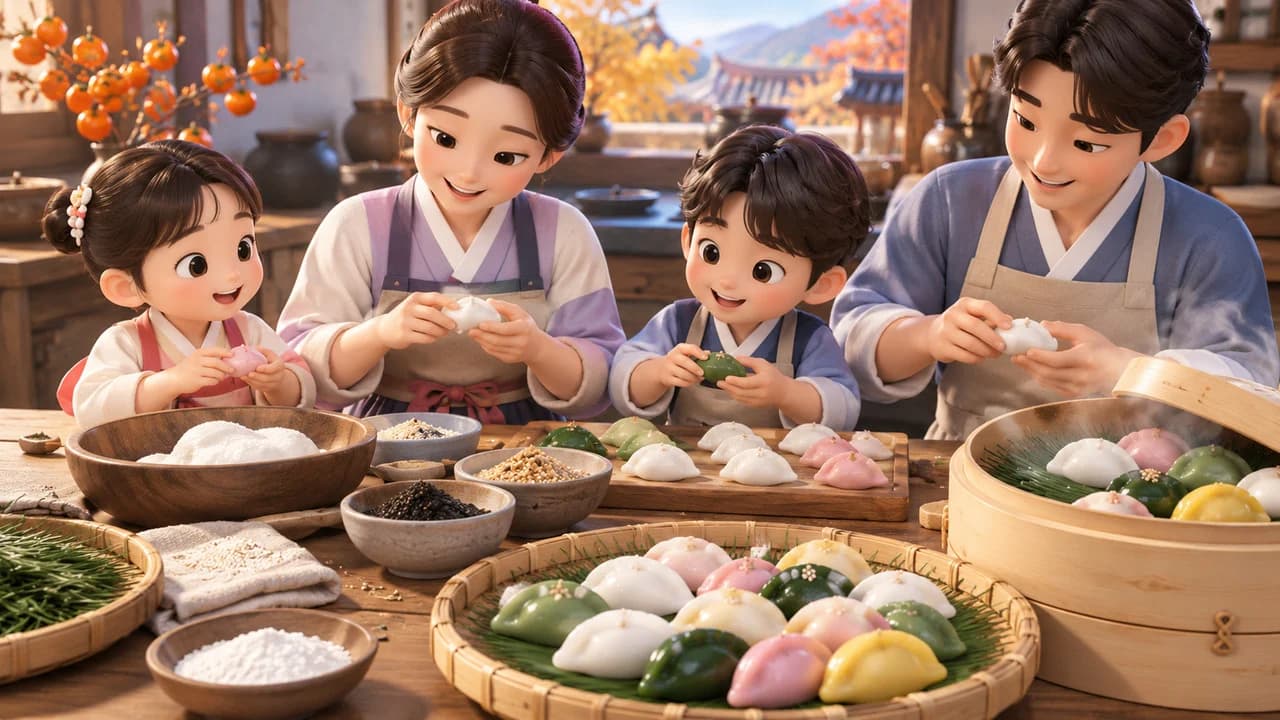
With Chuseok (September 25) approaching, more households are trying to make songpyeon at home, and demand for guidance on dough-making and steaming methods is growing accordingly. Songpyeon uses simple ingredients, but the final quality varies greatly depending on the water temperature of the dough, how the filling is added, and the steaming time.
■ Origins and Ingredients of Songpyeon
Songpyeon is a signature Chuseok food made from newly harvested rice and placed on the ancestral rite table. Songpyeon made from the year's first harvest of early-ripening rice was separately called 'oryeo-songpyeon.' Laying pine needles when steaming has been passed down as a method to prevent the rice cakes from sticking together and to impart the scent of pine.
The basic ingredients for sesame songpyeon are 500g of wet-type non-glutinous rice flour, about 180ml of boiling water, and half a teaspoon of salt. The sesame filling is made with 5 tablespoons of roasted sesame seeds, 3 tablespoons of sugar, 1 tablespoon of honey, and a pinch of salt. Additionally, 100g of pine needles and 2 tablespoons of finishing sesame oil are needed. Wet rice flour sold at mills is mostly pre-seasoned, so salt should only be added when using unseasoned flour. This amount yields about 30 to 35 pieces based on chestnut-sized portions (about 20g each).
■ Step-by-Step Instructions
① Sift the rice flour - Sifting the rice flour once breaks up lumps, making the dough surface smoother and reducing cracking when shaping.
② Hot water dough (ikbanjuk) - The key to the dough is using hot water. Pour boiling water, not cold water, little by little and mix first with a spoon; once it cools slightly, knead by hand to achieve an earlobe-like softness. The boiling water partially cooks the starch in the rice flour, creating viscosity so the dough comes together chewily. The amount of water varies depending on the moisture content of the flour, so adding it gradually rather than pouring all 180ml at once reduces the chance of failure. Covering the kneaded dough with plastic wrap or a damp cloth and letting it rest for about 15 minutes allows the moisture to distribute evenly.
③ Make the sesame filling - While the dough rests, grind the roasted sesame seeds halfway in a mortar or blender, then mix in sugar, honey, and salt. It is just right if it holds together when squeezed in your hand. Using whole sesame seeds makes the filling scatter and hard to shape, while grinding too finely brings out the oil and makes it pasty.
④ Shaping - Tear off a piece of dough, roll it into a ball, and press the center with your thumb to form a small bowl shape. Add about 1 teaspoon of sesame filling and close the dough while pressing out the inner air — this is crucial. Trapped air expands during steaming and can burst the songpyeon. After sealing the opening, shape it into a half-moon. If the dough dries out and cracks during shaping, add one or two spoonfuls of hot water and knead again.
⑤ Steaming - The steamer water must come to a boil first. Once steam rises, lay a damp cloth, spread pine needles evenly, and place the songpyeon on top with space between them so they do not touch. Steam over high heat for about 25 minutes; the dough turning translucent is the signal that it is fully cooked.
⑥ Rinsing and finishing - Quickly rinse the fully steamed songpyeon in cold water and remove the pine needles. Rinsing in cold water rapidly cools the surface, restoring the chewy texture and preventing them from sticking together. After draining, brush thinly with sesame oil for a glossy finish.
■ Time Required
The total working time from preparing the rice flour to finishing is roughly 1 hour and 30 minutes. Dough-making and resting take 20 to 30 minutes, making the filling and shaping take about 40 minutes, and steaming and rinsing take around 30 minutes. With more people shaping, the shaping time shortens, so the process can be adjusted by running the steamer in two batches.
■ Variations with Different Colors and Fillings
Songpyeon is easy to vary by changing the filling and dough color. Mixing mugwort powder into part of the dough creates green, sweet pumpkin powder yellow, and beet powder pink. The filling can be swapped with bean filling made from boiled black soybeans or cowpeas with a little sugar and salt, or chestnut filling made from mashed boiled chestnuts. In some regions, songpyeon with entirely different dough ingredients has been passed down, such as potato songpyeon in Gangwon Province and mosi (ramie) leaf songpyeon in the Yeonggwang area of South Jeolla Province.
■ Storing Leftover Songpyeon
Leftover songpyeon hardens and loses texture if left at room temperature for long. Divide it into single-serving portions and freeze, then re-steam just before eating to restore it close to its original state. When reheating in a microwave, lightly sprinkle with water and cover with plastic wrap to keep the surface from drying out.
[This article provides general cooking information; results may vary depending on ingredient condition and cooking environment. Caution is advised regarding allergenic ingredients (sesame, beans, chestnuts, etc.), honey consumption by infants, and choking hazards when children or the elderly eat rice cakes. AI provided partial assistance.]
CBC Globe publishes verified stories with editorial review, source checks, and tenant-specific publication standards.
Related Articles
'Busan High's Ohtani' Ha Hyun-seung to Appear… 'You Quiz' Episode 361 Tops Simulcast Ratings

Choi Hye-bin Says "I Can't See the Path of the Ball"... Her Tearful Confession Prompts Manager Choo Shin-soo to Launch Customized Batting Training ('Baseball Queen 2')
'I Am SOLO' Season 33 Tops 2049 Ratings… Love Lines Realigned Ahead of Final Choice