
Cho Yong-pil & Great Birth 2026 Concert... How Does a Song Become Maturity?
The voice on Cho Yong-pil's records does not age. Even now, half a century later, 'Come Back to Busan Port' plays back with the breath of a young man in his twenties intact. The cry of 'Woman Outside the Window' has not lost the warmth of the day it was first recorded, and the lively beat of 'Bobbed
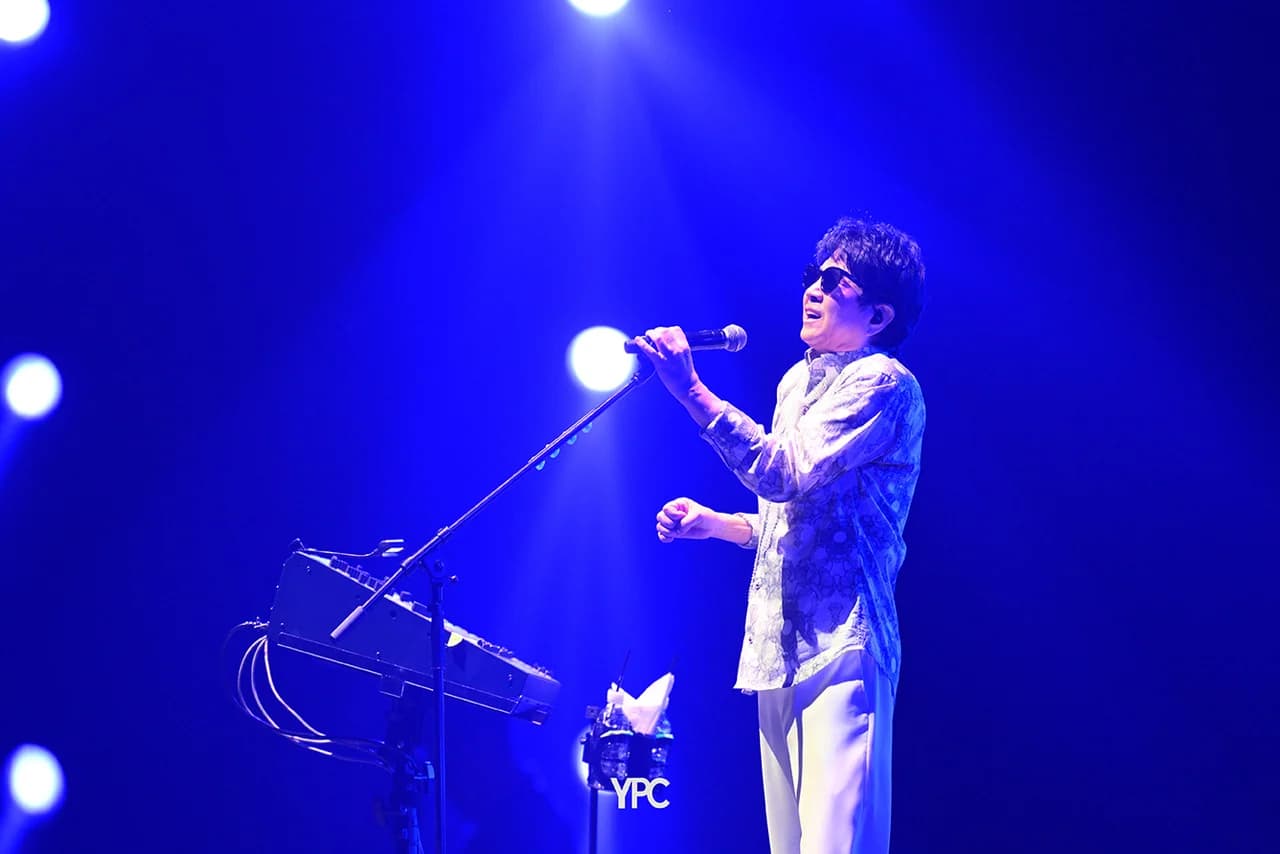
The voice on Cho Yong-pil's records does not age. Even now, half a century later, 'Come Back to Busan Port' plays back with the breath of a young man in his twenties intact. The cry of 'Woman Outside the Window' has not lost the warmth of the day it was first recorded, and the lively beat of 'Bobbed Hair' still carries the pace of the streets of that era. His records are precise documents that capture a period of Cho Yong-pil's career, and lining them up in a row reveals the thick trunk of Korean popular music history.
Cho Yong-pil on stage is different. He never copied his records in concert. Rather than faithfully keeping the original arrangements and reviving the sound in audiences' memories as it was, he chose to take songs completed in the studio apart on stage and reassemble them anew. As his voice aged, he let his songs age with it. If records are photographs of a moment in time, Cho Yong-pil's stage was closer to a portrait repainted anew each time with the same face.
■ A Portrait Repainted at KSPO DOME in November
That portrait will be repainted this November. Cho Yong-pil will take the stage three times at KSPO DOME in Olympic Park, Seoul, from November 27 to 29. Once again, those holding the brush alongside him are the band Great Birth, who have long rewritten his songs. The concert is titled '2026 Cho Yong-pil & Great Birth.' The fact that the band's name stands side by side with the singer's already tells us what this stage aims for.
■ A Stage That Rewrites Memory, Not One That Confirms It
Concerts by long-career singers usually follow one inertia. Audiences come to confirm their memories, and singers strive not to betray them. When the intro plays, the audience already knows the first verse, and the singer delivers the song to match those expectations exactly. Such stages are warm and safe. At the same time, they remain devices for replaying the past. The applause goes not to the song of today but to the song of back then.
Cho Yong-pil's stage has kept its distance from this inertia. Familiar songs begin with unfamiliar intros, and entirely different foundations are laid beneath known melodies. The audience cannot guess which song it is until the first verse, and only realizes what it was the moment the voice flows out. It is a stage that rewrites memory rather than confirming it. The difference seems small, but it is the decisive line separating concerts that endure for decades from concerts that end as a single scene of nostalgia.
■ Great Birth: Not an Accompaniment Act, but a Single Instrument
Half of this work belongs to Great Birth. At a singer's concert, the band usually remains part of the backdrop. The lights shine on the singer, and the applause goes to the singer. Great Birth did not stay within that frame. They set the tempo of songs, extended the length of intros, and pushed new stories into the interludes. Cho Yong-pil could sing his songs again because there were those beside him who could play them again. Over long years of playing together, their relationship came closer to being called a single instrument rather than singer and backing band.
■ The Substance of the Phrase 'Transcending Genre'
The assessment that Cho Yong-pil's music transcends genre has been repeated for a long time. With the textures of trot and rock, ballads and folk songs, pop and children's songs all contained in one person's catalog, it is not wrong. However, that assessment is often read merely as a track record of trying various genres in turn. What is confirmed on stage is a somewhat different scene.
'Come Back to Busan Port' and 'Woman Outside the Window,' 'Bobbed Hair' and 'Dream,' 'Song of the Wind' and 'Bounce' each come from different eras and wear different clothes. On a record catalog, they sit far enough apart that grouping them as one person's works seems difficult. Yet the moment they pass through the sound of the same band, these songs connect like a single sentence. The sentiment of trot, the pulse of rock, and the melodies of ballads do not push each other out but sit within one breath. The substance of transcending genre lies here. It is not displaying different things side by side, but making different things speak the same language on one stage.
There is also proof that this language did not remain in the past tense. 'Bounce,' released in 2013, entered the playlists of younger generations without any explanation that it was a song by a singer in his sixties. It was the result of meeting listeners of that moment with the sound of that moment, not courtesy toward an old name. The habit of rewriting songs on stage and the sense of making new songs with the sound of the present come from the same root. It is an attitude that refuses to taxidermy what has passed.
■ One Million Cumulative Audience Members, and Three Generations Seated Side by Side
The results built by that attitude also remain in the numbers of the audience. The organizers introduce this concert as Korea's first and only concert to record more than approximately one million cumulative audience members. One million is not a scale reachable by a single wave of enthusiasm. It is a number that accumulates only when someone who once sat in the seats buys a ticket again, and that person takes the hand of the next generation into the venue, repeated over decades. If the same songs had been heard the same way each time, the reason to return would have faded year by year. Memory needs confirming only once. What drives the second and third visits is the expectation of what will be different this time.
The viewing age for this stage is 8 and above. It may look like a trivial notation on one side of the concert notice, but this number contains the character of Cho Yong-pil's audience. It means elementary school children, their parents, and their parents' parents can sit side by side in the same row. A song that was the background music of one person's youth becomes the first live performance ever heard by the child in the next seat. No record can create such a scene. It is possible only on a stage where songs age.
■ Songs Designed on the Premise of a Changing Voice
That stage songs age is not merely a beautiful phrase. A voice past seventy cannot be the same as one in its twenties. The edges of the vocal range narrow little by little, and time seeps into the breath that sustains long high notes. On a stage that replicates records, this change becomes a flaw to hide. On a stage that rewrites songs, things are different. The song's clothing is re-tailored to fit the changed voice, and the emptied spaces are filled with the band's sound. It is a way of accepting the years into the song rather than hiding them. The strength that has kept Cho Yong-pil's stage alive for so long comes not from an unchanging voice, but from designing songs on the premise of a voice that changes.
■ The Direction Told by the First Note
When the lights go down at KSPO DOME and Great Birth's first note rings out, the times filling the audience overlap all at once. For someone, the winter when they first bought a ticket; for someone else, today, led by a parent's hand, are contained within the same sound. Hands that once transcribed lyrics in front of a radio decades ago and hands that first searched his name on a smartphone screen move to the same beat. It is the scene of footsteps that departed from different eras arriving at a single moment in a single space.
Before that first note, the audience briefly holds the same question. What song will appear this time, and with what face? If a familiar intro flows out, relief spreads; if an unfamiliar intro follows, a brief silence comes with it. That silence is closer to anticipation than disappointment. It is the tension just before a known song steps out in an unknown form. It is also a sense Cho Yong-pil's audiences have long cultivated.
The first note tells us the direction. Whether it is a sound meant to summon old memories as they were, or a sound meant to step beyond old memories toward somewhere else, is contained within it. Depending on where that note stretches, this stage will become either a repetition of memory or a renewal of memory. And at that crossroads, Cho Yong-pil has always chosen one side: the side that lets songs stopped in the studio flow again on stage. Whether the voice past seventy and the band that has stayed beside him for so many years will make the same choice this winter will be confirmed the moment the first note rings out.
■ Popular Music History Written in the Present Tense
The Cho Yong-pil on record remains forever in that era. His voice will never change, and because it does not change, it remains testimony to an era. The Cho Yong-pil standing at KSPO DOME in November is the Cho Yong-pil of 2026. His voice will not hide the time in between, and Great Birth's performance will embrace even that time into the song.
The history of popular music is usually recorded as a list of sounds that have stopped. Release dates and rankings, sales figures and award records fill that list. Cho Yong-pil is someone whose name sits at the very front of that list. At the same time, he is someone who has shown on stage that history does not remain only in sounds that have stopped. During the three days this winter when songs recorded half a century ago are rewritten once more, Korean popular music history is written one more time in the present tense, not the past.
[This content is an article spotlighting stars nominated for the Netizens Awards. The Netizens Awards is an online fan voting platform that does not sell voting rights and provides equal voting opportunities to all users. Rankings are determined by fans' voluntary and continuous participation rather than capital, and the cumulative 78 million votes are a record of pure fandom built by each individual fan's choice. This article was partially assisted by AI.]
CBC Globe publishes verified stories with editorial review, source checks, and tenant-specific publication standards.
Related Articles

Controversy Over Hanwha Aerospace Hiring Guidelines... CEO Lee Boo-hwan Apologizes, Attention on Senior Vice Chairman Kim Dong-kwan's Responsible Management

Sung Ri's 'It Melts Away' Captivates Fans From the First Verse... Praise in Comments — Will It Carry Over Into This Month's Netizens Awards Singer Category Results?

Jang Han-byeol's Harmonica Performance of 'Gwihonraesa' Draws Buzz… Even the Cast of 'The Legendary Man' Was Left Open-Mouthed