
Huneed... Hurom Robotics Draws Attention as Robot Industry Policy Momentum Builds with Government's 'Daegu-Gyeongbuk Humanoid Production Hub' Plan
As the government announced a plan to designate national advanced strategic industry specialized complexes to foster Daegu and North Gyeongsang Province as a next-generation humanoid production hub, attention is focused on whether market interest will turn to Hurom Robotics, which operates industria
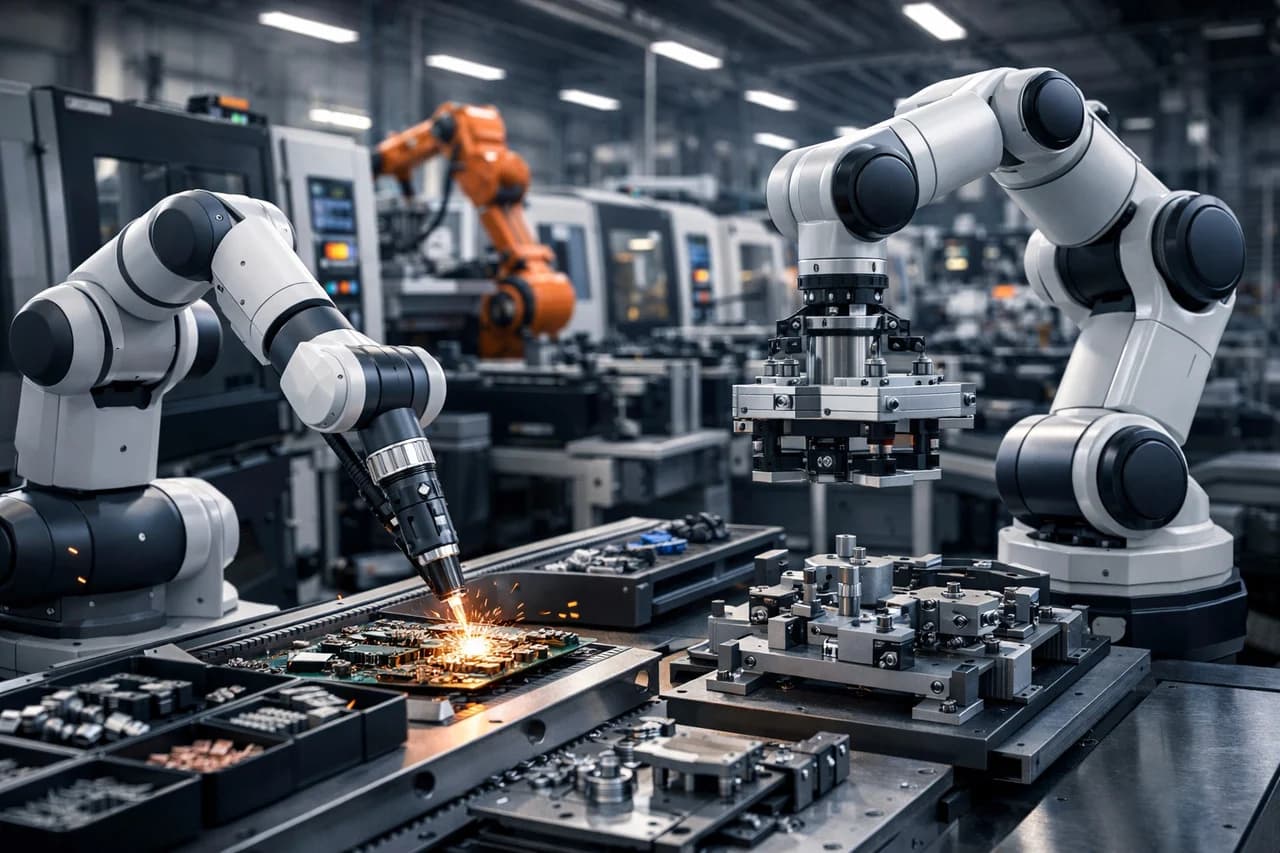
As the government announced a plan to designate national advanced strategic industry specialized complexes to foster Daegu and North Gyeongsang Province as a next-generation humanoid production hub, attention is focused on whether market interest will turn to Hurom Robotics, which operates industrial and intelligent robot businesses.
Robots, defense, and secondary batteries: three new specialized complexes designated
The government held the 9th National Advanced Strategic Industry Committee meeting on September 30 and newly designated three national advanced strategic industry specialized complexes in the fields of robots, defense, and secondary batteries. The government plans to support approximately 12.9877 trillion won in private investment through 2042 based on these complexes.
The application process for the specialized complexes ran from December last year to February this year, with five regions applying. The government evaluated factors such as the presence of leading companies, new investment plans, potential for industrial ecosystem development, and balanced regional development, selecting Daegu and North Gyeongsang Province (Gumi and Pohang) for robots, Changwon in South Gyeongsang Province for defense, and Gwangyang, Yeosu, and Suncheon in South Jeolla Province for secondary batteries.
'Daegu-Gyeongbuk humanoid production hub'... plan to deploy 200,000 AI robots by 2030
In the robot sector in particular, the so-called 'Daegu-Gyeongbuk next-generation humanoid production hub' will be developed centered on Daegu and North Gyeongsang Province. The plan is to strengthen the industrial ecosystem spanning robot research and development, components and materials, production, and demonstration, and to expand the mass production base for humanoids and AI robots going forward. The government also presented a plan to deploy 200,000 AI robots by 2030, establishing a mass production foundation for the AI robot industry. Accordingly, policy momentum may accelerate to expand robot use beyond R&D into actual manufacturing sites, logistics, and services.
Hurom Robotics intersects with policy through manufacturing and logistics robots
Hurom Robotics has industrial overlap with this policy, as it operates businesses based on industrial and intelligent robots. The company has a portfolio of manufacturing robots, including Cartesian robots, horizontal multi-joint robots (SCARA), desktop robots, and vacuum robots, and is pursuing business expansion into areas such as logistics robots utilizing autonomous driving technology.
However, it should be noted that the designation of the Daegu-North Gyeongsang robot specialized complex alone should not be interpreted as Hurom Robotics being directly included as a support target or leading company. Based on the government announcements disclosed so far, it has not been confirmed that Hurom Robotics was designated as a leading company or direct investor in the specialized complex.
Key watchpoint: 'actual orders and performance'
The key watchpoint is whether the government's robot policy can drive equipment investment, R&D, and demand expansion across the entire domestic robot industry beyond individual specialized complexes. If automation demand at manufacturing sites and AI-based robot deployment translate into actual orders, the business environment for industrial robot and automation companies could change.
For Hurom Robotics as well, actual new orders, revenue growth, and profitability improvements are important, separate from policy expectations. Recent company disclosures indicate that weak manufacturing equipment investment in the first half of 2026 and delayed investment by major demand industries weighed on its performance, so it will be necessary to confirm whether the government's robot industry promotion policy translates into actual business results.
With the government selecting Daegu and North Gyeongsang Province as a humanoid production hub, the policy center of gravity of the domestic robot industry is shifting from R&D toward production, demonstration, and deployment. For domestic robot-related companies including Hurom Robotics, not only policy expectations but also actual orders and performance changes are expected to be key variables that will determine future stock price movements.
[This article was written based on publicly available government and corporate materials and does not recommend buying or selling any specific stock. Expectations of industry expansion driven by government policy do not necessarily lead to individual companies' performance or stock price gains. Future business participation and investment plans should be confirmed through additional disclosures and official announcements. Investment decisions and responsibility lie with the investor, and AI assistance was used for some data organization and sentence composition.]
CBC Globe publishes verified stories with editorial review, source checks, and tenant-specific publication standards.
Related Articles

HLB Steps Up Response to Suspected 'Manipulative Short Selling'... Requests Data Cooperation from Shareholder Coalition, Plans to Refer Case to Capital Market Special Judicial Police

KOSDAQ Surges 4.48% to Close at 894.29... Rino Industrial Up 10.90%, Biggest Gain Among Top-Market-Cap Stocks
![[Breaking] NY Markets Close Slightly Higher Despite 10-Year Treasury Yield Spiking to 5.34% Intraday...S&P 500 Up 0.19%](/_next/image?url=https%3A%2F%2Fmedia.cbcglobe.com%2Ftenants%2Fcbc00000-0000-4000-8000-000000000001%2Fmedia%2Fcbc%2F2026%2F10%2F611747%2Fc739df9a54a401b0%2Fvariants%2Fhero.webp&w=1920&q=75)
[Breaking] NY Markets Close Slightly Higher Despite 10-Year Treasury Yield Spiking to 5.34% Intraday...S&P 500 Up 0.19%