
Naver Shares Fall to 180,000-Won Level... 'Gak Sejong' Data Center, 41 Football Fields in Scale, Draws Attention as AI and Robot Infrastructure
With Naver's (NAVER) share price having dropped to the 180,000-won range, the artificial intelligence (AI) and robotics technology infrastructure of 'Gak Sejong,' the mega-scale data center built by Naver, is drawing attention. Gak Sejong, which combines massive data storage capacity with robotic au
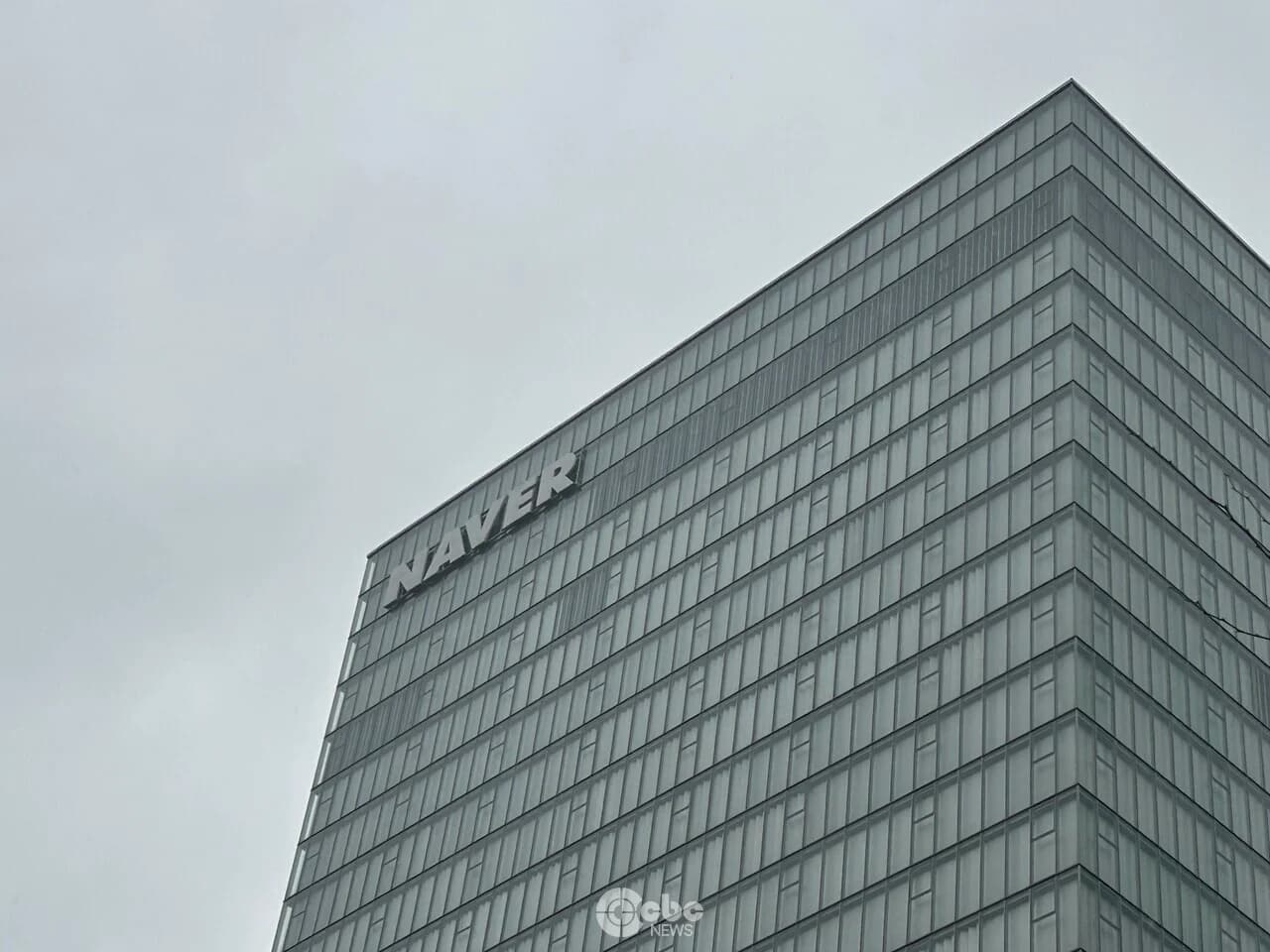
With Naver's (NAVER) share price having dropped to the 180,000-won range, the artificial intelligence (AI) and robotics technology infrastructure of 'Gak Sejong,' the mega-scale data center built by Naver, is drawing attention. Gak Sejong, which combines massive data storage capacity with robotic automation systems, is a key facility underpinning Naver's cloud and advanced technology businesses.
Share Price Nears 52-Week Low, Closing at 183,200 Won
According to Naver Securities, NAVER finished after-hours trading on the 8th at 183,200 won, down 5,800 won (3.07%) from the base price of 189,000 won. Based on the provided quotes, the opening price was 190,300 won, the high was also 190,300 won, and the low was recorded at 181,000 won. The 52-week high is 308,500 won and the low is 181,100 won.
As the share price approaches its 52-week low, attention is also turning to the AI and data center infrastructure that form the foundation of Naver's long-term growth.
What Is 'Gak Sejong'? 41 Football Fields, 600,000 Server Units
Naver's Gak Sejong data center is a facility where various advanced technologies converge, including not only data storage and processing functions but also robotic automation, cloud computing, and autonomous driving. The name 'Gak' derives from Janggyeonggak, the repository that housed the Tripitaka Koreana during the Goryeo dynasty, and carries the meaning of reliably preserving the vast records and information of the digital age.
Its scale is overwhelming. Gak Sejong was built on a 294,000-square-meter site, equivalent to about 41 football fields, and was designed to accommodate up to 600,000 server units and store 65 exabytes (EB) of data once all six phases of expansion are completed.
Its power capacity is also substantial. It can receive up to 270MW of electricity, about 6.75 times that of Gak Chuncheon, completed in 2013.
A Data Center Run by Robots: 'SeRo' and 'GaRo' Automated Operations
What is particularly noteworthy is the way the data center is operated using robots. 'SeRo,' an asset management automation robot developed by Naver Labs, manages the data center's core assets, including servers. 'GaRo,' an autonomous transport robot, moves between server rooms and warehouses carrying heavy equipment. The two robots cooperate with each other to support asset movement and management tasks within the data center, thereby raising the level of automation in server management and improving operational efficiency.
Robot operations are powered by ARC (AI-Robot-Cloud) and the ARM-System (Adaptive Robot Management-System), built on the Naver Cloud Platform. ARC is a system that tracks the location and status of robots and autonomous shuttles in real time and connects them with spatial infrastructure, while the ARM-System assigns tasks to robots and manages work scheduling and resources. These systems are significant in that they go beyond the simple repetitive tasks of individual robots, connecting multiple operations inside the data center into a single network.
Energy Efficiency Through Natural Air Cooling
Technologies to improve energy efficiency have also been applied. Gak Sejong is designed to manage server room temperatures through cooling facilities that use natural airflow, reducing the energy required for air conditioning.
Data centers are businesses where power consumption and cooling efficiency are cited as critical operational factors as AI computing and cloud services expand. Accordingly, the importance of technologies that process large volumes of data reliably while managing energy consumption is growing. Gak Sejong is significant in this environment as an infrastructure that combines Naver's data processing capabilities with its proprietary technologies.
However, the data center's maximum storage capacity and server capacity are design figures premised on full expansion, and should be distinguished from the scale of the facility currently in actual operation.
Although NAVER's share price has shown weakness recently, how the AI, cloud, and robot infrastructure the company has built will affect its future business competitiveness and performance remains to be seen.
[Share prices and business outlook may change depending on future market conditions, and this article is not intended to solicit investment. Investment decisions and responsibility rest with the investor, and AI assistance was used in writing this article.]
CBC Globe publishes verified stories with editorial review, source checks, and tenant-specific publication standards.
Related Articles
HLB (028300) Closes After-Market at 46,000 Won… Hits 47,000 Won intraday but Gains Narrow
Alteogen to Absorb Merger of Alteogen Biologics on December 29... Expanding Business from Drug Development to Sales

Samsung Electro-Mechanics to Invest 6.78 Trillion Won in FCBGA Substrates for AI Servers... Expanding Production Capacity in Sejong and Vietnam