
151 Life-Sentence Prisoners Paroled Over 10 Years… 95% Convicted of Murder and Other Violent Crimes, Gaps Emerge in Post-Release Recidivism Management
It has been confirmed that 151 prisoners serving life sentences have been released on parole over the past decade, and 95% of them were incarcerated for violent crimes such as murder. However, the recidivism status of paroled life-sentence prisoners is not managed separately, sparking controversy ov
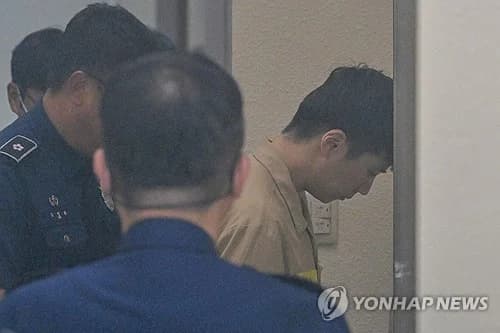
It has been confirmed that 151 prisoners serving life sentences have been released on parole over the past decade, and 95% of them were incarcerated for violent crimes such as murder. However, the recidivism status of paroled life-sentence prisoners is not managed separately, sparking controversy over gaps in post-release supervision.
According to data obtained from the Ministry of Justice by the office of Rep. Seo Young-kyo of the Democratic Party of Korea, a member of the National Assembly's Legislation and Judiciary Committee, 151 life-sentence prisoners were granted parole from 2017 through September 2026.
By type of crime, 144 prisoners, or 95% of the total, were incarcerated for violent crimes including murder, robbery-murder, and parricide. This included five cases of robbery resulting in death, and one case each of attempted robbery-murder and attempted murder.
By year, the number granted parole was 11 in 2017, 40 in 2018, 14 in 2019, 18 in 2020, 17 in 2021, 16 in 2022, 12 in 2023, 1 in 2024, and 9 in 2025, with an additional 13 paroled through September 2026. Notably, all 13 of those paroled this year had been serving time for murder.
Under Article 72 of the Criminal Act, prisoners sentenced to life imprisonment may be eligible for parole if they have served at least 20 years and meet certain requirements.
No Separate Tracking of Recidivism… 'Gaps in Post-Release Supervision'
The problem lies in post-parole management. It has been confirmed that the Ministry of Justice does not separately track the recidivism status of paroled life-sentence prisoners. A ministry official explained that only the reimprisonment rate for all parolees is compiled.
The reimprisonment rates for all parolees disclosed by the ministry were 7.3% in 2018, 6.8% in 2019, 6.2% in 2020, 5.9% in 2021, and 7.4% in 2022.
Calls Grow for Introduction of Life Imprisonment Without Parole
As violent crimes continue to occur—including the recent murder of a woman in her 20s and the kidnapping of his wife in Songpa District, Seoul, and a random stabbing rampage in Incheon—there is growing discussion of the need to introduce de facto life imprisonment without the possibility of parole.
Criminal Division 13 of the Gwangju District Court recently sentenced Jang Yoon-gi, who was indicted for murdering a teenage girl, to life imprisonment, stating that only thoroughly enforcing the life sentence without ever granting parole during the defendant's lifetime would console the victim and her family and prevent similar crimes from recurring.
Previously, the appellate court in the 2021 case of the murder of a mother and her two daughters in Nowon District, Seoul, and the first-instance court in the 2023 stabbing rampage in Bundang, Seongnam, Gyeonggi Province, each handed down life sentences while citing the need to restrict parole.
Ministry of Justice: 'Limited Parole Granted After Strict Review… Post-Release Management to Be Strengthened'
In a press release, the Ministry of Justice stated that parole for life-sentence prisoners is granted only in a limited manner after a strict review that comprehensively considers the gravity of the crime, the progress of sentence enforcement, behavior during imprisonment, the feelings of victims and their families, and the risk of recidivism.
In particular, the ministry explained that the life-sentence prisoners paroled this year were those judged to have a low risk of reoffending, including patients with serious illnesses such as cancer and dementia (8 individuals) and elderly individuals who had served long sentences (average age 71). The ministry added that it recognizes public concerns and will carefully review the details of crimes, court opinions, sentencing rationale, social impact, and likelihood of recidivism, while also strengthening post-release management.
Rep. Seo Young-kyo emphasized that severe punishment is necessary for violent crimes, and that criminals whose offenses are extremely heinous and who show little possibility of rehabilitation must be permanently isolated from society.
CBC Globe publishes verified stories with editorial review, source checks, and tenant-specific publication standards.
Related Articles

All 99 Members Born Through AI... Mega-Sized Girl Group PRODUCE9 Debuts Today (17th) with 'CALL MY NUMBER'

Satirizing AI Cheating on CSAT Controversy... Parody Banner of Electronics Market 'Producing 70 Admitted Students' Draws Attention

Comprehensive Measures Against AI Cheating on CSAT Unveiled... 10-Year Test Ban, Expulsion of Retaking Students, and 8,400 Additional Proctors Deployed
