[US Stock!Star] IonQ Secures $7.5 Million from U.S. Air Force Research Lab to Accelerate Real-World Deployment of Quantum Networks… Upgrading Four Key Technologies Including Free-Space Optical Communication
U.S. quantum computing company IonQ (NYSE: IONQ) announced on the 27th (local time) that it has secured $7.5 million (approximately 10 billion won) in Phase 2 funding from the U.S. Air Force Research Laboratory (AFRL). With this contract, the company plans to elevate quantum network technology, whic
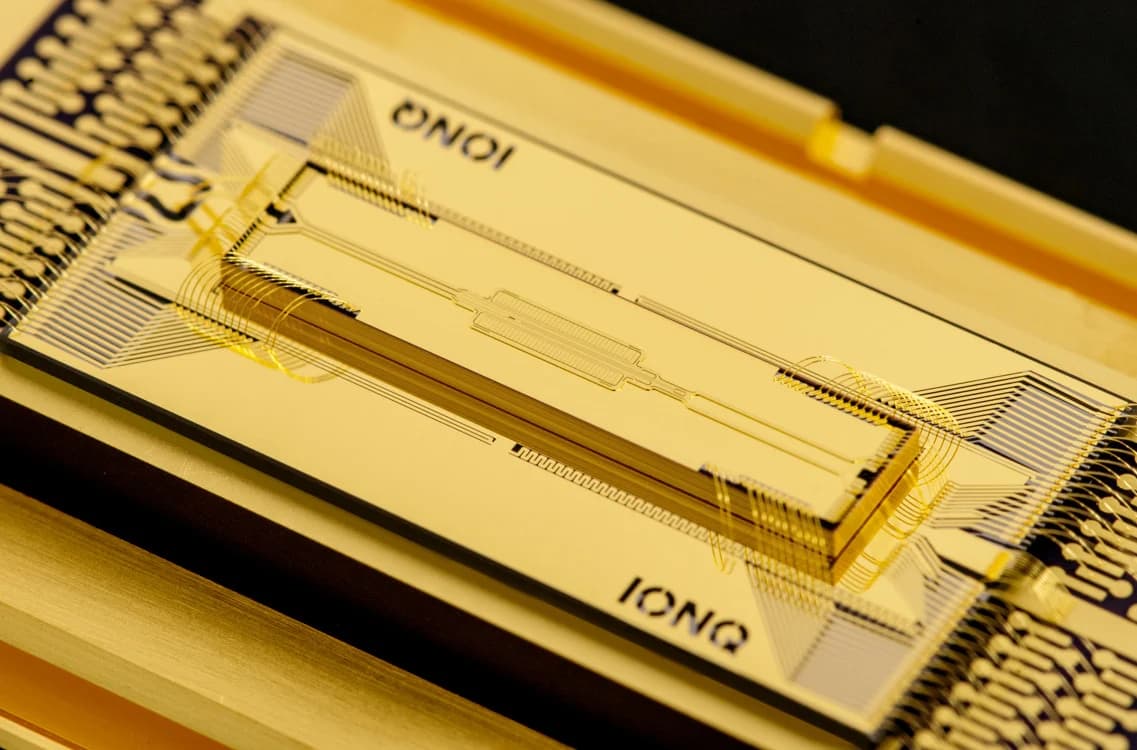
U.S. quantum computing company IonQ (NYSE: IONQ) announced on the 27th (local time) that it has secured $7.5 million (approximately 10 billion won) in Phase 2 funding from the U.S. Air Force Research Laboratory (AFRL). With this contract, the company plans to elevate quantum network technology, which had remained at the laboratory level, to a level that can be operated in real-world communication environments.
This project involves expanding the first-generation quantum network that IonQ built in Rome, New York. The core of the initiative is to add optical equipment, hardware, and software capabilities to the existing network, developing it into a research platform that can connect and ensure interoperability between different quantum systems.
The previously completed Phase 1 focused on building the physical foundation of the quantum network. Phase 2 will strengthen communication capabilities so that various quantum hardware can be connected outside laboratory environments. Just as the conventional internet connects different computers through routers and fiber optic cables, IonQ envisions building a communication environment in which quantum systems can exchange information with one another. In particular, a key task of this project is technology that enables quantum communication not only over the optical communication infrastructure used by existing telecom carriers but also through free space in the atmosphere.
Jordan Shapiro, President of Quantum Platforms at IonQ, said, "The follow-on funding from the Air Force Research Lab demonstrates the long-term partnership between the two organizations and signifies that IonQ's full-stack approach is being recognized." He added, "We are pioneering new frontiers in quantum networking by leveraging free-space optical technology," explaining, "Advanced optical hardware and automated control software are key technologies for bridging the gap between laboratory demonstrations and actual field deployment." He also emphasized, "We are building quantum networks that operate on standard communication infrastructure and in free space, and we are proving this through networks that are actually operating."
Where Will the $7.5 Million Go?… Upgrading Four Key Technologies
In this Phase 2 project, four key technologies will be strengthened so that they can be applied to actual urban communication networks and defense networks.
The first is Free-Space Optical Links technology. By introducing advanced optical systems equipped with pointing, acquisition, and tracking (PAT) capabilities, quantum entanglement will be distributed through line-of-sight quantum channels in the C-band frequency range. This technology allows quantum networks to be connected through space without relying solely on fiber optic cables.
The second is the introduction of Quantum Frequency Converters. IonQ plans to build two quantum frequency conversion modules to improve compatibility between different quantum hardware and existing communication equipment. This will support the connection of quantum systems that operate in different ways while utilizing standard communication wavelength infrastructure.
The third is the improvement of Automated Control Software. Automated self-diagnostics, real-time monitoring, fault response, experiment execution, and automatic result export capabilities will be added to the control software deployed in the field. These features are considered foundational technologies for operating quantum networks stably in real-world environments.
The fourth is an upgrade of quantum network hardware. The company plans to introduce O-band compatible network equipment, improve polarization control capabilities, and enhance the performance of Quantum Network Interface Cards (QNICs).
IonQ's policy is to realize a heterogeneous quantum networking environment in which different types of quantum equipment operate within a single network through these technological improvements.
Not a New Contract, but a Follow-On Phase of an Existing $21.1 Million Contract
However, the $7.5 million announced this time is not a new contract secured separately from the existing agreement. IonQ previously announced a total collaboration project worth $21.1 million with the AFRL in January 2025. The Phase 2 funding was already included in the total contract amount announced at that time, meaning it is not a separate incremental contract. Therefore, this announcement is meaningful not as a new large-scale order but as the full-fledged launch of a follow-on project under an existing contract.
The collaboration between IonQ and the AFRL is not limited to quantum networks. The two parties achieved major results related to photonic interconnect technology in April 2026, and IonQ's quantum computing systems have also been deployed on-site at the AFRL facility in Rome, New York. Building on this collaboration, IonQ continues to develop integrated technologies that connect quantum computing systems and quantum networks.
Beyond Defense Communications to Enterprise Networks… Commercialization Potential Draws Attention
The core of this project lies in developing quantum networks into technologies that can be applied to actual communication infrastructure, moving beyond limited experimental environments. In particular, interoperability that connects different quantum systems and technologies that leverage existing communication networks are expected to be important factors in expanding the future scope of quantum network applications.
Through this project, IonQ plans to lay the groundwork not only for future defense communication networks but also for enterprise communication infrastructure and multi-node quantum networks connecting various quantum devices. However, additional challenges remain before actual commercialization, including technological validation and ensuring stability. This contract also corresponds to the research and development stage of verifying real-world operational feasibility, rather than an achievement that confirms the large-scale commercialization of quantum networks.
Nevertheless, the continued collaboration with the AFRL is a point worth watching in assessing the potential expansion of IonQ's quantum network business. Attention is focused on how specifically IonQ, which is expanding its business domain beyond quantum computing into quantum communication and network infrastructure, can materialize real-world operational technology through this project.
['US Stock!Star' is overseas stock content, including U.S. stocks, provided by CBC News. We will continue to strive to provide readers with a wide range of information. We remind you that all investments are made at each individual's own discretion, and the final responsibility lies with the investor.]
CBC Globe publishes verified stories with editorial review, source checks, and tenant-specific publication standards.
Related Articles

Curocell Files for MFDS Approval to Amend Phase 1/2 Trial Plan for 'Anbalcel' in Adult Acute Lymphoblastic Leukemia

Doosan Robotics to Invest 40 Billion Won in Doosan New Technology Investment Fund No. 2, Set to Acquire 19.8% Stake

Naver Provides 18.74 Trillion Won Debt Guarantee for AI Factory, Receives 670.7 Billion Won in Fees and Details NVIDIA Collaboration Infrastructure Plan