
Brazilian Media Also Takes Note of Morgan Stanley's 'Korea Renaissance'... KOSPI at 10,000 Era Hinges on AI and Shareholder Returns
As global investment bank Morgan Stanley unveiled a structural bullish scenario for the Korean stock market dubbed the 'Korea Renaissance,' Brazilian economic media have also given it close attention. InfoMoney, a Brazilian economic news outlet, detailed the analysis in an article published on the
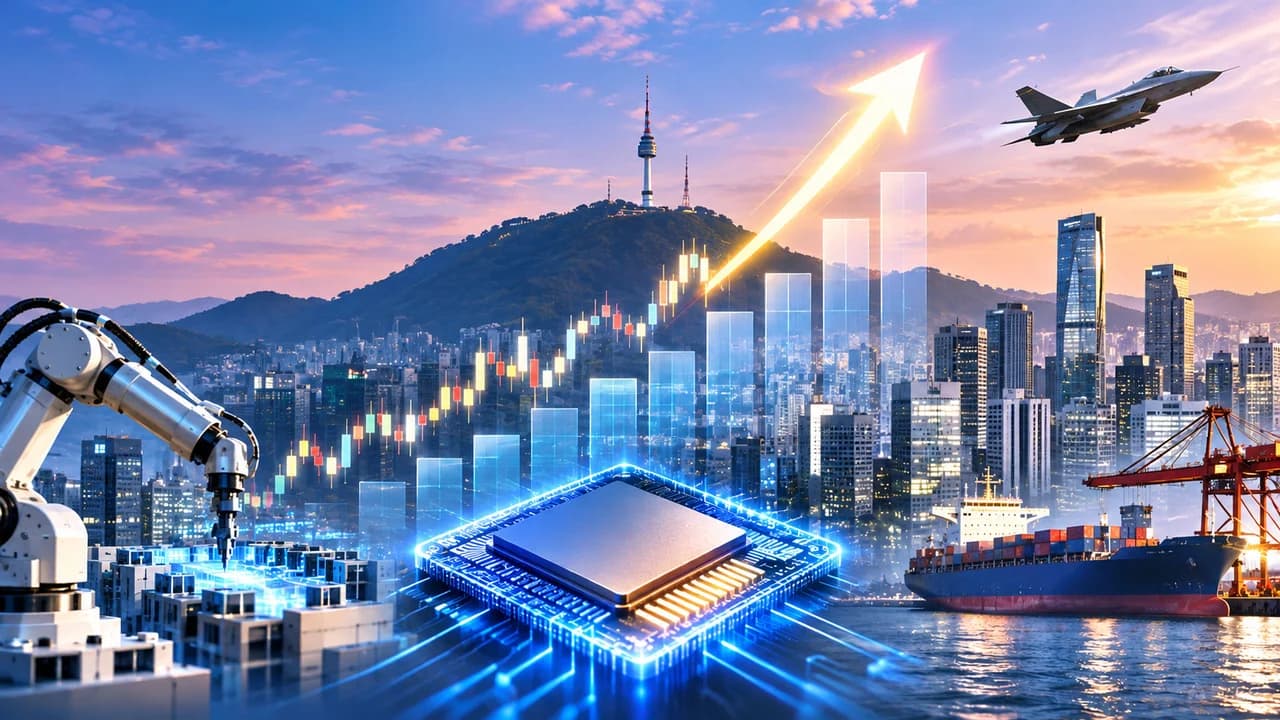
As global investment bank Morgan Stanley unveiled a structural bullish scenario for the Korean stock market dubbed the 'Korea Renaissance,' Brazilian economic media have also given it close attention.
InfoMoney, a Brazilian economic news outlet, detailed the analysis in an article published on the 14th titled 'Renaissance: Why Morgan Stanley Foresees a New Era for the Korean Stock Market.' InfoMoney assessed the outlook as the most optimistic Morgan Stanley has presented on Korea in recent years.
Morgan Stanley projected that as AI investment expansion, improved corporate governance, and stronger shareholder returns converge, the KOSPI has the potential to sustainably surpass the 10,000-point level within the next three to five years. The KOSPI closed at 5,290.53 points on the 13th. Based on that level, reaching 10,000 points would require a gain of roughly 89%.
■ Three Key Logics Driving the KOSPI to 10,000
Morgan Stanley laid out three core arguments: ▲industrial restructuring centered on AI and advanced manufacturing ▲economic revitalization driven by expanded global semiconductor investment ▲capital market reforms aimed at boosting corporate profitability and shareholder returns.
It particularly noted Korea's competitiveness in semiconductors, batteries, industrial automation, shipbuilding, defense, and energy infrastructure. The analysis suggested that as AI technology spreads beyond data centers to factories, robots, autonomous vehicles, and defense systems, it could offer new growth opportunities for Korean manufacturing.
■ Cumulative AI Infrastructure Investment of $6.7 Trillion... Samsung Electronics and SK Hynix Seen as Key Beneficiaries
Morgan Stanley estimated that global AI computing capacity will quadruple by 2028 and that cumulative investment in data center infrastructure could reach $6.7 trillion by 2030. Korean semiconductor companies such as Samsung Electronics and SK Hynix were cited as major beneficiaries of this investment expansion.
■ Potential Growth Rate Approaching 3%, Total Shareholder Return Ratio Projected to Rise to 50-60%
The outlook also included economic growth projections. Morgan Stanley analyzed that Korea's potential growth rate, currently around 2%, could approach the 3% level over the next decade, helped by AI investment, productivity improvements, and expanded domestic production capacity.
Corporate governance reform was also cited as a key variable. Morgan Stanley projected that the total shareholder return ratio of Korean companies, including dividends and share buybacks, would rise from the current roughly 35% to 50-60% within the next three to five years. It expected the sustainable return on equity (ROE) of KOSPI-listed companies to increase from a historical average of about 8% to 13.5-14.5% by 2030, supported by higher corporate earnings, improved profitability, and enhanced capital allocation efficiency.
Promising sectors identified included semiconductors, aerospace and defense, consumer electronics, shipbuilding, and banking and financial services. Morgan Stanley maintained an 'overweight' investment stance on Korea within emerging markets, and forecast that in 2027, as investors refocus on companies' fundamentals and reform progress, the Korean stock market would gradually recover.
■ '10,000 Points Is a Medium- to Long-Term Scenario...Achievement Depends on Variables'
What stands out in this outlook is not only the 10,000-point target for the KOSPI but also the assessment that the profitability and shareholder return structures of Korean companies could change. However, the 10,000-point level is a medium- to long-term projection from Morgan Stanley, and whether it is actually achieved may depend on semiconductor market conditions, corporate earnings, the sustainability of AI investment, and the results of capital market reforms.
This article was compiled based on Morgan Stanley's 'Korea Renaissance' analysis reported by Brazilian economic media outlet InfoMoney on November 14.
[Some AI assistance was used in producing this article. This content does not recommend buying or selling specific stocks, and investment decisions and responsibilities rest with the investor.]
CBC Globe publishes verified stories with editorial review, source checks, and tenant-specific publication standards.
Related Articles
"Everyone Else Is Offering the Same Terms"… Chairman Lee Jae-yong's Repeated Questions in Response to Musk's Long-Term Contract Proposal
Doosan Enerbility Defends 40,000-Won Level; Focus on Whether Friday's Rally Continues on the 27th

KOSPI Closes Up 0.29% at 4,711...Bargain Hunting Amid BOK Rate Hike, Afternoon Gains Given Back