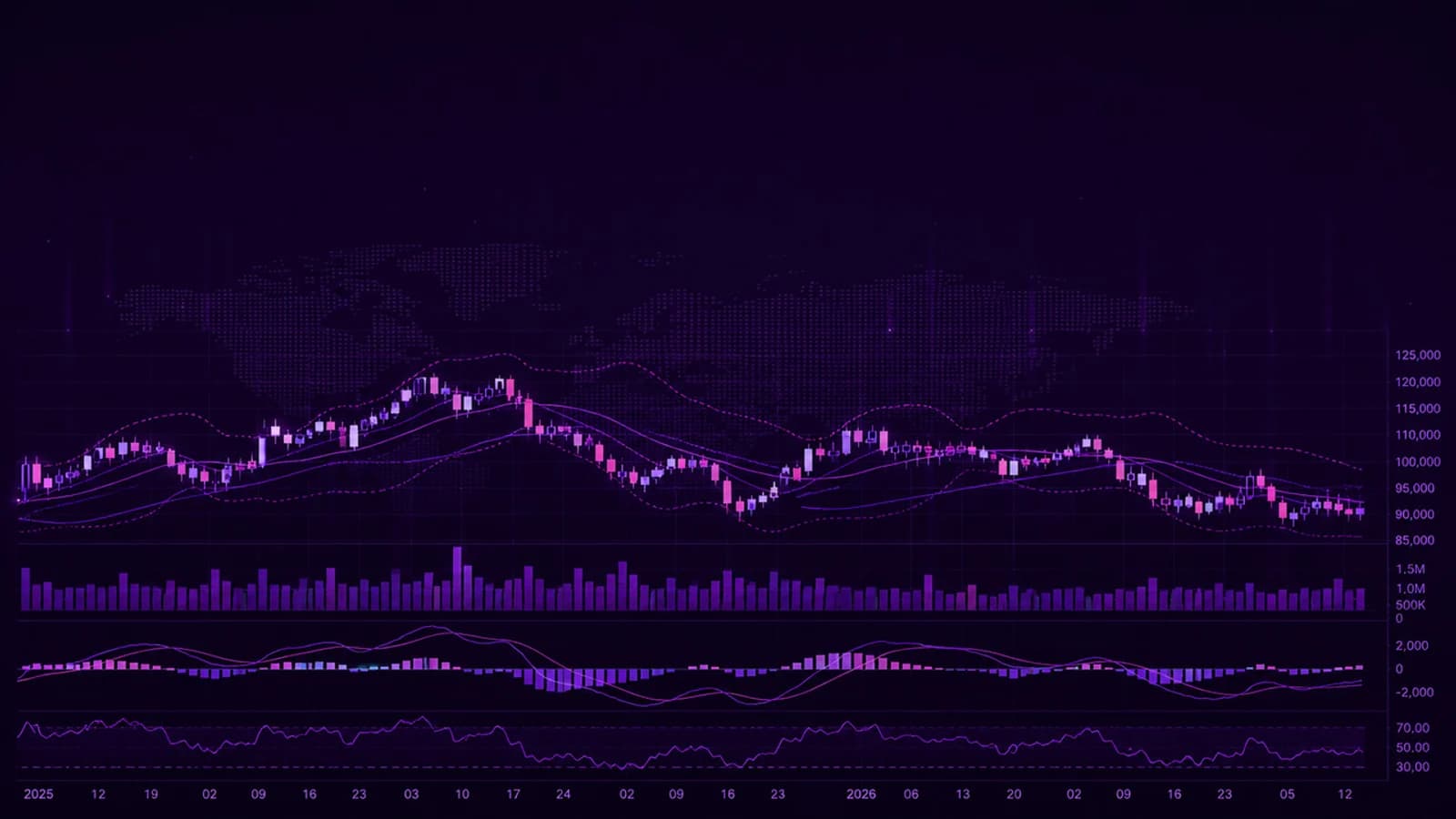
[Breaking] Nvidia Falls 2.01% in New York Markets Close... Philadelphia Semiconductor Index Plunges 3.43%
Semiconductor stocks showed notable weakness in the New York markets. Nvidia fell more than 2%, while the Philadelphia Semiconductor Index plunged 3.43%. **Closing Performance of the Three Major New York Indexes** On the New York Stock Exchange (NYSE), the Dow Jones Industrial Average closed at 52

Semiconductor stocks showed notable weakness in the New York markets. Nvidia fell more than 2%, while the Philadelphia Semiconductor Index plunged 3.43%.
Closing Performance of the Three Major New York Indexes
On the New York Stock Exchange (NYSE), the Dow Jones Industrial Average closed at 52,347.55, up 50.46 points (0.10%) from the previous session. In contrast, the tech-heavy Nasdaq Composite finished at 25,136.27, down 229.82 points (0.91%). The large-cap-focused S&P 500 also recorded 7,561.67, down 30.73 points (0.40%) from the prior session.
The indexes diverged. While the Dow closed higher, the Nasdaq and S&P 500 declined, indicating relatively strong selling pressure on technology stocks.
Concentrated Decline in Semiconductor Sector
The semiconductor sector's decline was particularly pronounced. The Philadelphia Semiconductor Index fell 3.43%, a larger drop than the Nasdaq.
Nvidia, the leading AI chipmaker, could not escape the weakness either. Nvidia's stock closed at $162.85, down $3.34 (2.01%) from the previous session.
It is also notable that the semiconductor index fell more than Nvidia itself, indicating broad weakness across the sector rather than being limited to a single stock.
Hard to Explain by Leadership Change Alone
Recently, Nvidia has drawn market attention over the resignation of CEO Jensen Huang and management restructuring. Following Huang's departure, the company's management stability and future business direction have emerged as major concerns.
Nvidia holds a central position in the AI semiconductor market. Therefore, the continuity of business strategy after the leadership change and how relationships with major customers will be maintained are key points to watch.
However, it is difficult to explain Nvidia's stock decline this day solely by the leadership change. Given the Philadelphia Semiconductor Index's 3.43% drop, selling pressure across the entire semiconductor sector must also be considered.
Attention on Impact on Korean Markets
The weakness of U.S. semiconductor stocks could become a major variable for the Korean market as well. Attention is expected to focus on the stock price movements of major Korean semiconductor names such as Samsung Electronics and SK Hynix.
That said, a decline in the U.S. semiconductor index does not necessarily lead to a parallel fall in Korean semiconductor stocks. Individual companies' earnings, foreign investor flows, and exchange rates also play a role.
Market attention is now focused on whether Nvidia can regain price stability and whether the Philadelphia Semiconductor Index can rebound in the next trading session.
[Some AI assistance was used in producing this article. This does not recommend buying or selling any specific stock; investment decisions and responsibilities rest with the investor.]
CBC Globe publishes verified stories with editorial review, source checks, and tenant-specific publication standards.
Related Articles

[Breaking] Cyberattack via Optimizely Exposes 178 Global Organizations... CNN, BBC, HSBC, and Ledger Also Affected

Nvidia Board Not Considering CEO Jensen Huang's Return... Reuters Reports Citing Three Sources
NVIDIA's Placement of Megaspeed on Sales Ban List Confirmed Through Joint Statement by U.S. Commerce and Justice Departments