Gold's Market Value of $26.4 Trillion Ranks No.1 Among Global Assets... 2.87 Times Apple and Nvidia Combined
The total market value of gold has far surpassed Apple and Nvidia, ranking first among major global assets, according to data. While the corporate valuations of U.S. technology companies leading the artificial intelligence (AI) industry are enormous, the total value of gold was found to be even larg
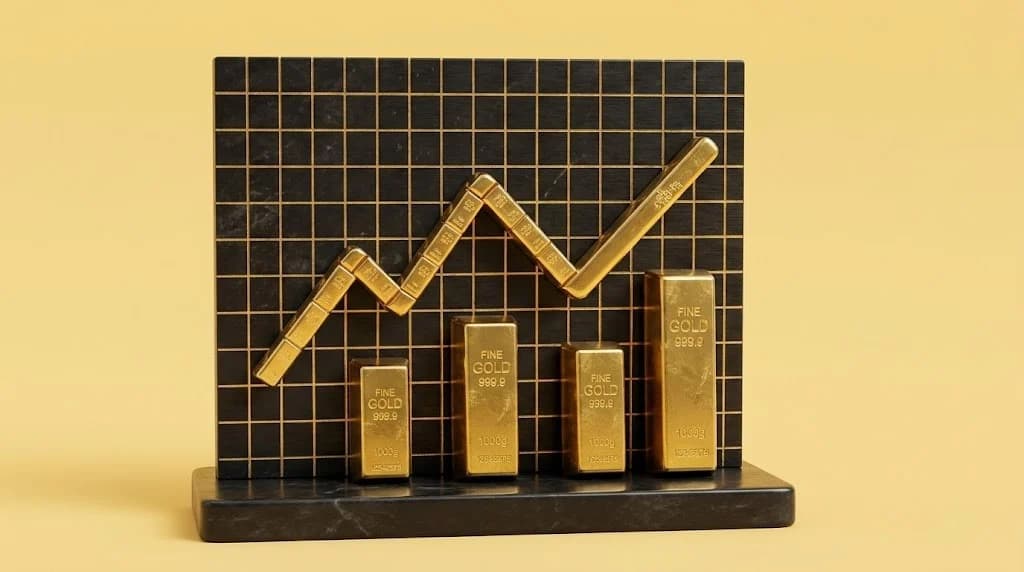
The total market value of gold has far surpassed Apple and Nvidia, ranking first among major global assets, according to data. While the corporate valuations of U.S. technology companies leading the artificial intelligence (AI) industry are enormous, the total value of gold was found to be even larger than the two companies combined.
■ Gold's market value of $26.4 trillion... 2.87 times Apple and Nvidia combined
According to CoinMarketCap's global asset ranking data on tokenized assets released on the 13th, gold's total market value was tallied at approximately $26.4 trillion. This is about 5.13 times that of second-place Apple (market capitalization of $5.15 trillion) and about 6.52 times that of third-place Nvidia ($4.05 trillion).
Compared with the combined market capitalization of Apple and Nvidia at $9.2 trillion, gold's market value is about 2.87 times larger. The difference between gold and the combined value of the two companies reaches $17.2 trillion.
The rest of the ranking is as follows: fourth place Microsoft at $3.86 trillion, fifth place Alphabet at $3.69 trillion, and sixth place Amazon at $2.9 trillion. Even these companies representing the global technology industry showed a considerable gap from gold in total market value. The gold price is based on $3,912.45 per ounce.
■ Different calculation method from market capitalization... simple comparisons require caution
However, gold's total market value and individual companies' market capitalizations are calculated differently. Gold's market value is calculated by applying the market price to the estimated amount of gold existing worldwide. In contrast, a listed company's market capitalization is based on the number of shares outstanding and the stock price. Therefore, gold ranking higher than Apple or Nvidia does not mean it is superior in terms of investment returns or business competitiveness.
Gold is an asset that does not generate operating income or dividends like companies do. In contrast, Apple and Nvidia generate revenue and profits through product sales and technology businesses.
■ Why gold draws attention vs. factors determining tech stock value
The reasons investors pay attention to gold also differ from corporate stocks. Gold has traditionally been used as an asset to hedge against inflation and financial market uncertainty. Central banks' gold holding policies, the value of the dollar, and U.S. interest rate outlooks are factors influencing gold prices. In contrast, the corporate values of Nvidia and Apple fluctuate depending on earnings forecasts, growth expectations, and the competitive environment of the technology industry.
What stands out in this ranking is that gold maintains an overwhelming market scale that exceeds individual global technology companies. However, the mere fact that its total market value is large does not allow one to predict future rises in gold prices. Gold can also fall in price depending on interest rates, exchange rates, and changes in investment demand.
The comparison between gold, Apple, and Nvidia should be interpreted as an indicator showing the difference in scale between physical safe assets and technology company stocks in the global financial market.
[Some AI assistance was used. This article does not recommend the purchase or sale of specific stocks, and investment decisions and responsibilities rest with the investor.]
CBC Globe publishes verified stories with editorial review, source checks, and tenant-specific publication standards.
Related Articles
Today's Gold Price (November 17): Pure Gold 1 Don at 724,000 Won... Where Are Gold Prices Headed Amid Dollar Strength?
Nvidia's Q3 Earnings Report Imminent... First Test Since Jensen Huang's Resignation — Can It Hit $108 Billion Revenue Forecast?

[Breaking] Evernos Holdings (XRPN) Flat at $7.45... Bitcoin at $64,922, Market on Alert Over Weakness in Leading Stock