
BTS: From Resistance to Mainstream... From 'No More Dream' to 'Map of the Soul,' the Evolution and Continuity of Youth Discourse
The most notable aspect of BTS's musical trajectory is the tension between resistance and mainstream success. Understanding this requires going back to their debut period. **Early Debut: Questions Posed to Society** 'No More Dream,' released in 2013, raised questions about the substance of the dre
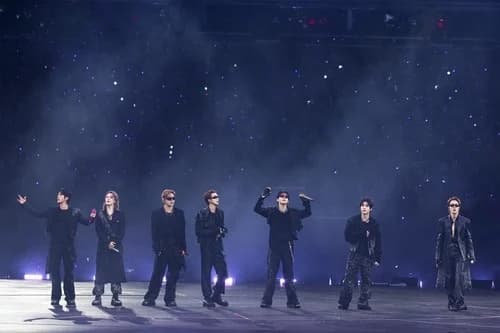
The most notable aspect of BTS's musical trajectory is the tension between resistance and mainstream success. Understanding this requires going back to their debut period.
Early Debut: Questions Posed to Society
'No More Dream,' released in 2013, raised questions about the substance of the dreams that society demands of young people. It questioned whether dreams are truly an individual's spontaneous desire or the result of internalizing standards of success set by society. In 'N.O,' released the same year, the group criticized the uniform education system and competition-centered society, questioning the reality in which attending a good school and getting a good job are accepted as preconditions for happiness.
These early works are significant in that they portrayed youth not as abstract 'future protagonists' but as concrete beings living through real contradictions. 'Silver Spoon (Baepsae)' from 2015 addressed intergenerational inequality and the gap in opportunity. It expressed in musical language the reality of being demanded to make the same efforts and achievements despite different starting lines, and challenged the social convention of explaining individual failure solely as a lack of personal ability, opening up room to view young people's frustration in a structural context. 'Go Go (Gomineun Go)' from 2017 can likewise be interpreted as a work crossing consumer culture with the economic realities of the younger generation, satirically depicting youths who choose present consumption when accumulating for the future is difficult.
BTS's resistance manifested not in grand political slogans but in capturing the contradictions of everyday life, bringing into the realm of music the problems young people actually experience: school, employment, economic inequality, and social expectations.
Resistance Extended Inward
However, their music did not stop at social criticism. The 'The Most Beautiful Moment in Life (Hwayangyeonhwa)' series dealt with the anxiety, wandering, loss, and imperfection of youth. While their early music posed questions to the external world surrounding young people, this period delved deeper into the fissures arising within their inner lives. The 'LOVE YOURSELF' series emphasized self-acceptance and the value of one's existence, bringing to the fore the issue of acknowledging oneself rather than confirming one's worth through social evaluation and the gaze of others.
This shift can be interpreted not as a weakening of resistance but as an expansion of its methods. Rejecting society's standards of success and forming a self not subordinate to external evaluation are not separate issues; the two concerns are connected in examining how social oppression operates within the individual's inner life.
In the 'MAP OF THE SOUL' series, self-exploration became more concrete. Through concepts such as 'Persona,' 'Shadow,' and 'Ego,' the group musically unraveled the complex issues of the social self, inner desires, and identity. In particular, 'Interlude: Shadow' is noteworthy for addressing together the desire for success and the fear that arises after achieving it. It reads as a work showing the paradox that reaching the top does not resolve all anxieties, which also connects to BTS's own changed social position.
The Paradox Created by Success
However, BTS's global success created another paradox. Those who once questioned existing standards of success have themselves become a representative model of success. Having entered the center of the global music market, the very group that once cracked mainstream culture now constitutes a new mainstream itself.
The fact that messages of resistance circulate as products of a massive cultural industry is also worth considering. As critical messages gain economic value across records, concerts, advertising, and branding, the relationship between resistance and capital has grown more complex. The cultural industry can transform even messages criticizing the existing order into objects of consumption, and if resistance becomes fixed as an image or brand, there is a possibility that the original critical awareness will weaken.
That said, commercial success itself cannot be equated with a loss of resistant spirit. The expansion of popular influence can broaden the reach of social messages. BTS's 2018 speech at the United Nations, urging young people to speak up with their own voices, is an example of a musical message expanding into the public sphere of international society. However, institutional recognition and the maintenance of a critical identity do not always harmonize, leaving the complex task of questioning mainstream values while using the language of the mainstream.
Messages Reconstructed Together with ARMY
The existence of ARMY is also indispensable to this discourse. The fandom does not remain a passive consumer of music; by interpreting and translating lyrics and connecting them to their own experiences, fans produce new discourse. The active process of reception is part of the background that allowed the youthful concerns in BTS's music to expand beyond national and linguistic boundaries. Messages that began with issues of education and competition in Korean society could be interpreted by young people in different social environments as their own problems. Through this process, BTS's resistance came to have the character of being reconstructed through the experiences of recipients, not limited to the creators' message.
The Evolution and Continuity of Youth Discourse
Youth discourse itself is also changing. Beyond employment difficulties and economic inequality, emotional isolation, identity confusion, unstable relationships, and uncertainty about the future are being raised as compound problems. The combination of social criticism and self-exploration seen in BTS's music intersects with this change. If early BTS asked 'what kind of society imposes things on youth,' later BTS can be said to have asked 'how can an individual live without losing themselves within such a society.' Although the direction of the question changed, there is continuity in the awareness that human value cannot be judged solely by external standards.
Ultimately, BTS's cultural value lies not in having completely resolved the contradiction between resistance and mainstream success, but rather in the fact that conflicting values—resistance and success, criticism and recognition, individuality and collectivity—coexist within a single musical subject. The discursive task remaining for BTS is not reaching the top, but whether they can continue to question the order of that place even after arriving there. Asking again about the meaning of success may be harder than singing about success itself.
The standard for judging whether BTS's narrative of resistance remains valid will not lie solely in global records or commercial achievements. It depends on whether they can discover the contradictions of the era from their changed position and express them in their own musical language. That is the core of the youth discourse connecting BTS's past and future, and the critical identity that must persist even after mainstream success.
[This article highlights stars nominated for the Netizens Awards. The Netizens Awards is an online fan voting platform that does not sell voting rights and provides equal voting opportunities to all users. Rankings are determined by fans' voluntary and continuous participation rather than capital, and the cumulative 80 million votes are a record of pure fan devotion built from each individual fan's choice. This article was partially assisted by AI.]
CBC Globe publishes verified stories with editorial review, source checks, and tenant-specific publication standards.
Related Articles

Girls' Generation's HyoRiSoo: Girl Group or Comedy Group?... Hyoyeon, Yuri, and Sooyoung's Wit on 'You Quiz' Sparks Buzz [Netizen Awards Second Half Finals]

[C Photo] aespa's Karina, Bright Smile at Chanel Holiday Pop-Up

[C Photo] aespa's Karina Says 'Fall Into My Eyes'... Attends Chanel Holiday Pop-Up Opening Event
