
KOSPI and KOSDAQ Fall as Government Prepares to Activate 10.76 Trillion Won Market Stabilization Fund; Samsung Electronics and SK Hynex Weaken Over 3%, First Activation in 18 Years Draws Attention
**KOSPI and KOSDAQ Fall Together... Semiconductor Stocks Weak Over 3%** As the KOSPI and KOSDAQ come under downward pressure, the government has begun preparations to activate a 10.76 trillion won securities market stabilization fund, emerging as a new variable in the stock market. With investment
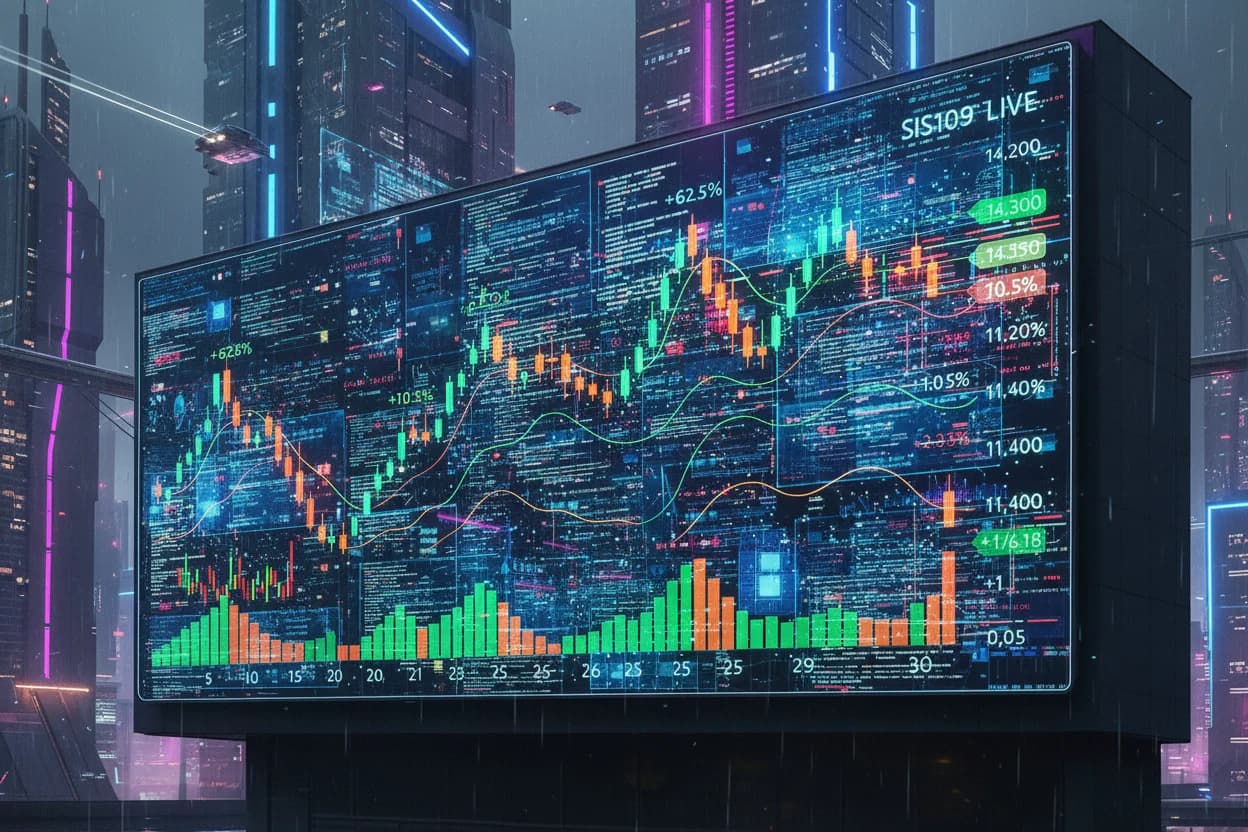
KOSPI and KOSDAQ Fall Together... Semiconductor Stocks Weak Over 3%
As the KOSPI and KOSDAQ come under downward pressure, the government has begun preparations to activate a 10.76 trillion won securities market stabilization fund, emerging as a new variable in the stock market. With investment sentiment sharply dampened as flagship domestic semiconductor stocks such as Samsung Electronics and SK Hynex fall more than 3%, attention is focused on whether the government's market stabilization measures can ease the downward trend.
On the 23rd, the domestic stock market faced downward pressure on both the KOSPI and KOSDAQ amid the fallout from a plunge in U.S. tech and semiconductor stocks. In particular, Samsung Electronics and SK Hynex, which carry heavy weight in the domestic market, both fell more than 3%, dampening investment sentiment across the semiconductor sector.
The epicenter of the plunge was the U.S. stock market. Growing concerns over the profitability of the artificial intelligence (AI) industry and the burden of massive investments triggered selling centered on tech stocks. On the 20th (local time), the Nasdaq Composite plunged more than 5% on the New York Stock Exchange, and the Philadelphia Semiconductor Index fell more than 10%. As the sharp correction in U.S. semiconductor stocks weighed on domestic semiconductor shares, the government moved to prepare market stabilization measures.
Deputy Prime Minister Hyung-il Lee Chairs Emergency Market Situation Check Meeting... 'Immediate Activation Depending on Circumstances'
On the 22nd, the government held an emergency market situation check meeting chaired by Deputy Prime Minister and Minister of Finance and Economy Hyung-il Lee, deciding to begin preparations so that the stabilization fund could be activated immediately depending on market conditions. Bank of Korea Governor Hyun-song Shin, Financial Services Commission Chairman Eok-won Lee, and Financial Supervisory Service Governor Chan-jin Lee attended the meeting.
The securities market stabilization fund is a mechanism designed to ease sharp market volatility by purchasing stocks with capital contributed by financial institutions and policy financial institutions when the stock market plunges. The fund's current committed size is 10.76 trillion won. The background for the activation preparations is the growing need to proactively respond to market anxiety as volatility in domestic and foreign markets has expanded.
However, preparing for activation does not immediately mean injecting actual funds. The government's policy is to review the trigger system and effectiveness of the fund so that capital can be swiftly deployed if necessary, depending on market conditions.
Possibility of Actual Deployment First Time in 18 Years Since 2008 Financial Crisis
The stabilization fund has been used in past periods of financial market turmoil. The last time actual funds were deployed was during the 2008 global financial crisis, when about 515 billion won was executed. If the fund is actually activated this time, it would mark the first injection of market stabilization funds in 18 years.
The fund's effect may come not only from the inflow of actual buying capital but also from signaling that the government is prepared to respond to sharp market anxiety. However, such psychological stabilization effects do not necessarily lead to a rebound in stock prices. If external headwinds persist or foreign investors' selling expands, policy responses alone may struggle to reverse the downward trend.
Eased Treasury Stock Purchase Limits and Intensive Monitoring of Illegal Short Selling in Parallel
Alongside the fund preparations, the government decided to ease restrictions on the volume limit for listed companies' buy orders of their own shares for three months starting on the 24th. The aim is to improve conditions for companies' share buybacks and stabilize supply and demand in the stock market.
Regarding illegal short selling, the Financial Supervisory Service and the Korea Exchange will conduct special intensive monitoring for three months. They plan to closely examine margin financing, uncovered trading, and forced liquidation trends, while also strengthening surveillance of unfair trading practices such as market manipulation using market anxiety or the spread of false information.
Variables That Will Determine Market Direction: Supply-Demand and U.S. Tech Stocks
The market is watching whether these measures can slow the decline of the KOSPI and KOSDAQ. In particular, the stock price movements of Samsung Electronics and SK Hynex are key variables in gauging the KOSPI's direction. If semiconductor sector weakness continues, market volatility could expand amid tension between expectations from the fund preparations and actual selling pressure. The KOSDAQ could also react sensitively to shrinking investment sentiment and changes in supply and demand, so the impact of the government's stabilization measures on the overall market remains to be seen.
Ultimately, whether the stabilization fund becomes a variable that changes the downward trend of the domestic stock market will depend on whether it is actually activated, the scale of funds injected, foreign investor supply and demand, and movements in U.S. tech stocks. With the government having begun preparations to activate the 10.76 trillion won fund, attention is focused on whether the KOSPI and KOSDAQ can escape downward pressure and whether large-cap semiconductor stocks such as Samsung Electronics and SK Hynex can regain stability.
[Some AI assistance was used in producing this article. This article was written based on the government's announcement at the emergency market situation check meeting and market-related reports. Whether the stabilization fund will actually be activated and its market stabilization effects are not confirmed, and investment decisions and responsibilities rest with the investor.]
CBC Globe publishes verified stories with editorial review, source checks, and tenant-specific publication standards.
Related Articles
[Breaking] NexaDynamics Signs 75.5 Billion Won AI Server Supply Contract, Equal to 580.19% of Last Year's Revenue

[Breaking] L&F Decides to Issue 20 Billion Won Worth of Convertible Bonds to Raise Funds for Cathode Materials Business Operations