
Subway Strike on the 25th: Lines 1–8 to Run at 100% During Morning Commute... Evening Commute a Variable, Daily Total at 81%, Buses Expanded by 3,519 Trips
The Seoul Metropolitan Government will activate emergency transportation measures in preparation for the subway strike announced for the 25th. Subway lines 1 through 8 will maintain a 100% operation rate during morning rush hour, while city buses will add a total of 3,519 extra trips. The city anno
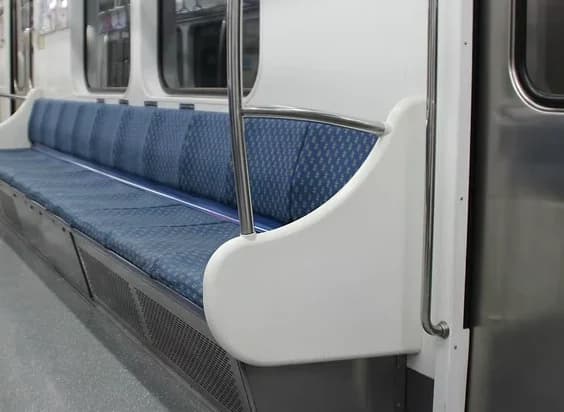
The Seoul Metropolitan Government will activate emergency transportation measures in preparation for the subway strike announced for the 25th. Subway lines 1 through 8 will maintain a 100% operation rate during morning rush hour, while city buses will add a total of 3,519 extra trips.
The city announced on the 24th that it has formed an emergency transportation countermeasures headquarters and prepared a phased emergency transport plan. Even if the Seoul Metro Labor Union goes on strike on the 25th, subway lines 1 through 8 will operate as usual from 7 a.m. to 9 a.m. However, operation rates on some lines will drop during the evening rush hour, and the overall daily operation rate is expected to reach only 81% of normal levels, so commuters are advised to take precautions.
■ Work-to-Rule Ahead of the Strike... Train Delays Possible
Ahead of the strike, the Seoul Metro Labor Union began a work-to-rule campaign on the 20th, continuing its labor action through measures such as strictly adhering to scheduled stopping times, following the two-person work principle, and refusing additional tasks.
Unlike a full suspension of train service, the work-to-rule action involves strictly complying with established work regulations and procedures, which may cause train delays depending on operating conditions.
■ Operation Rates Vary by Line and Time Slot... Transfer Wait Times May Increase
The subway strike calls for commuters' attention because operation rates differ between the morning and evening rush hours. From 6 p.m. to 8 p.m., Lines 2 and 5 through 8 will operate at 100% of normal levels. Meanwhile, Lines 1, 3, and 4 plan to maintain operation rates of 88% or higher, including trains operated by Korail. Line 9 is not participating in the strike and will operate normally.
Commuters traveling from the outer Seoul metropolitan area to downtown Seoul, or office workers using multiple lines, should be prepared for longer train waiting times during transfers. The city will prepare three standby train sets for Lines 2 and 4, where passenger traffic is expected to be concentrated, ready for immediate deployment during congestion periods.
■ Buses Expanded by 3,519 Trips... Intensive Dispatch Hours Extended
In response to the subway strike, the intensive bus dispatch schedule is also changing. Intensive dispatching will begin at 6 a.m., one hour earlier than usual. The morning rush hour intensive dispatch period, previously 7 to 9 a.m., will expand to 6 to 9 a.m., and the evening period will extend from 5 to 7 p.m. to 5 to 8 p.m.
The service expansion targets 344 regular city bus routes in Seoul, adding 1,873 trips during the morning rush hour and 1,646 trips during the evening rush hour, for a total of 3,519 additional trips. Citizens who plan to use buses instead of the subway should consider that crowds may gather at major stops and transfer centers due to increased bus ridership, as well as road traffic conditions and travel times.
■ Personnel Deployed at 31 Congested Stations... Daily Operation Rate of 81%
Personnel will also be secured to prevent crowding and safety accidents inside stations. The city plans to secure about 13,000 personnel—roughly 80% of normal levels—including non-striking employees and contractor staff, to maintain subway transport functions. In particular, 124 city government employees will be stationed at 31 major stations expected to see heavy passenger traffic to assist with passenger guidance and on-site safety management.
Meanwhile, the subway is designated as an essential public service. Even in the event of a strike, a system applies requiring personnel necessary for essential maintenance operations to remain and maintain a certain level of service.
However, a 100% operation rate during the morning rush hour does not mean normal service all day. The daily operation rate for subway lines 1 through 8, as prepared by the city, is 81% of normal levels. Citizens who need to visit hospitals, schools, airports, or train stations outside peak commute hours are advised to check train schedules in advance.
If the strike on the 25th becomes a reality, public attention is expected to focus on operation rates by line, train dispatch intervals, and congestion at transfer stations. While the city has prepared emergency transportation measures, the outcome of labor-management negotiations and whether the strike actually proceeds remain key variables.
[This article was written with partial assistance from artificial intelligence (AI).]
CBC Globe publishes verified stories with editorial review, source checks, and tenant-specific publication standards.
Related Articles

Yang Hong-won and Won Hyun-joo Divorce by Agreement One Month After Marriage... "Amicably Agreed, Procedures Nearly Complete"

JTBC's 'The Divine Bead' Releases 5th Teaser... Ahn Bo-hyun, Lee Sung-min, and Ha Yoon-kyung Foreshadow a Life-or-Death Escort Mission for the Gwaneum Bead

Tiger Bone Wine Banned in China for Over 30 Years... Evidence Found of Russian and North Korean Products in Circulation