
Lee Ju-wan: "Samsung Electronics Could Fall to 40,000 Won"... AI Bubble, Memory Price Decline, and U.S. Antitrust Suit Are Key Variables
A forecast has emerged that Samsung Electronics' share price could fall to the 40,000-won level. Industry analyst Lee Ju-wan, appearing on Edaily TV's 'Economy Anyway' program on the 27th, diagnosed that if the AI semiconductor market bubble, falling memory prices, and the ongoing price-fixing lawsu
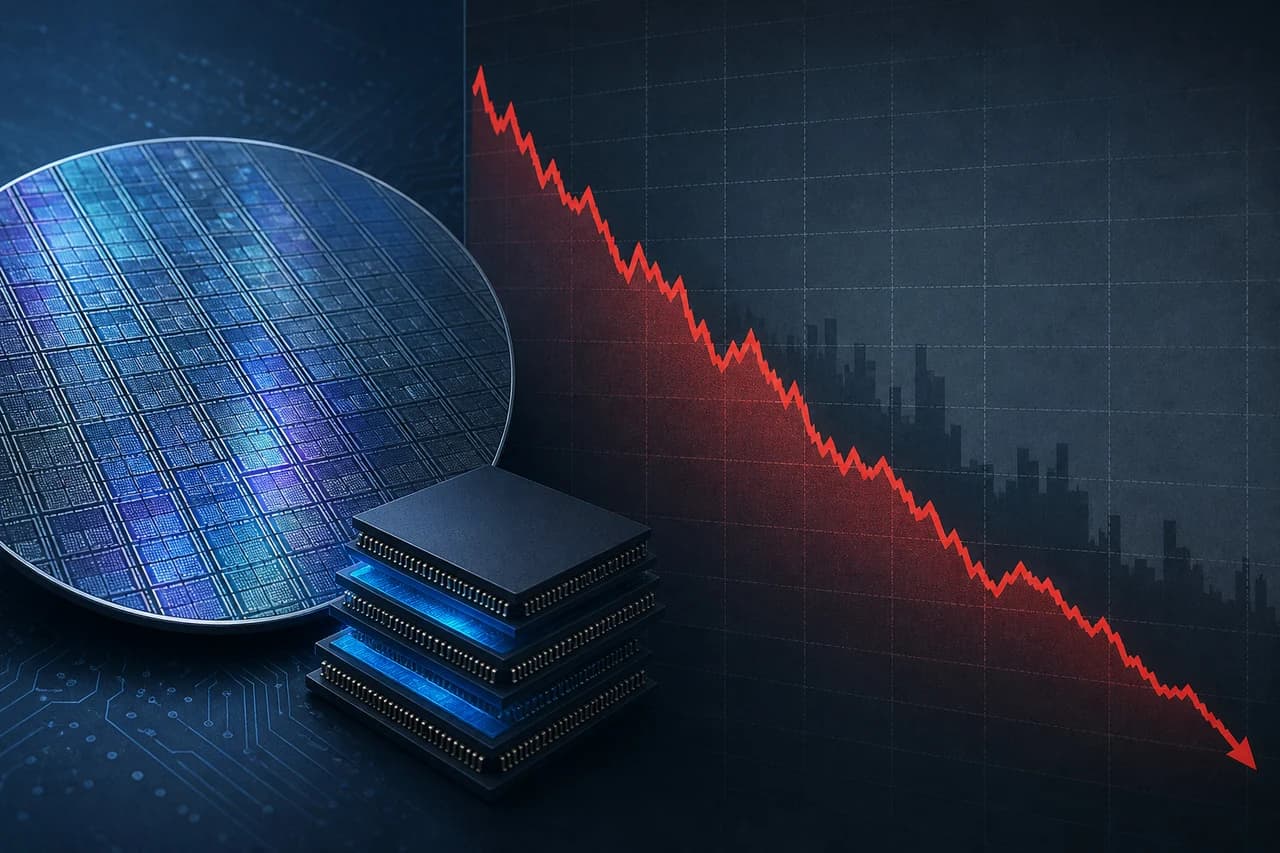
A forecast has emerged that Samsung Electronics' share price could fall to the 40,000-won level. Industry analyst Lee Ju-wan, appearing on Edaily TV's 'Economy Anyway' program on the 27th, diagnosed that if the AI semiconductor market bubble, falling memory prices, and the ongoing price-fixing lawsuit in the United States overlap, the semiconductor industry could face a major correction.
The analyst first pointed to the bubble in the AI market. He said, "It is certain that the AI market is currently in a bubble," and predicted, "The shock could be greater than the dot-com bubble." He added, "Every industry has substance. A bubble must inevitably burst at some point," and said, "The AI industry may enter a full-fledged growth stage after going through a chasm over several years."
His outlook on memory prices is also pessimistic. He stated, "The spot market has already started to decline, and I expect fixed contract prices will struggle to hold beyond the end of the year." His analysis is that since memory prices surged in a short period, the pace of decline could also accelerate beyond market expectations.
He set the stock price floor lower than the levels typically discussed in the market. He forecast, "Once the fear subsides to some degree, share prices will converge to fair value," and said, "The bottom for Samsung Electronics and SK Hynix stocks will likely be below 70,000 won and 200,000 won, respectively." He added, "The major downtrend will continue, but there could be several more box-range rebounds along the way."
He expressed skepticism about the target prices recently presented by Nomura Securities of 670,000 won for Samsung Electronics and 4.7 million won for SK Hynix. He said, "Analyses can differ from person to person, but those target prices are fantastical projections," cautioning against the market's optimism about the memory industry outlook.
He also cited the ongoing price-fixing lawsuit against Samsung Electronics and SK Hynix in the United States as a negative factor. The greater the uncertainty surrounding the lawsuit, the greater the downward pressure on share prices could become. He said, "If the lawsuit drags on for years and hundreds of trillions of won are paid out, it becomes a completely different story," and "Samsung Electronics could fall to 50,000 or even 40,000 won."
He also noted that growth in the AI industry will not immediately translate into strong earnings for semiconductor companies. He analyzed, "Price is most important for an industry to become mass-market," and "Right now, because it's a bubble period, people use it even though it's expensive, but once mass adoption begins, high-priced systems with GPUs and HBM could be shunned due to cost burdens." He further predicted, "Going forward, share prices will reflect next year's and the following year's earnings, and operating profit estimates could drop sharply in the first half of next year."
Meanwhile, on the KOSPI market on the 27th, Samsung Electronics closed at 179,100 won, up 4.55% from the previous session, and SK Hynix closed at 1.11 million won, up 5.41%. This article is based on Edaily TV's report on the 27th titled "40,000-won Electronics, Not 70,000?... An Expert's Warning on the Memory Industry." Details can be found in the original Edaily TV report. [※ This article is not intended to solicit investment.]
CBC Globe publishes verified stories with editorial review, source checks, and tenant-specific publication standards.
Related Articles

New York Stock Market Rises 5-7% Weekly... KOSPI Recovers 4,915; Where Will the New Week Head?
Nuclear Power Stocks Rise Across the Board... Doosan Enerbility and KEPCO E&C Up Around 9%; What's Next for the New Trading Week on the 30th?

Gold and Pure Gold Prices Fall on November 28... ECB's Further Tightening Emerges as Variable in Gold Outlook