
November 28 Gold Prices: Pure Gold, 18K, and 14K Rates Fall... What Is the Outlook for Gold with the Rise of the 'Chip Dollar'?
According to the Korea Gold Exchange on November 28, 2026, precious metals prices, including pure gold, 18K, and 14K gold, as well as platinum and silver, all fell together. ■ Gold prices (as of November 28) Pure gold (24K) was priced at 689,000 won per don (3.75g) when buying, down 2,000 won (0.2
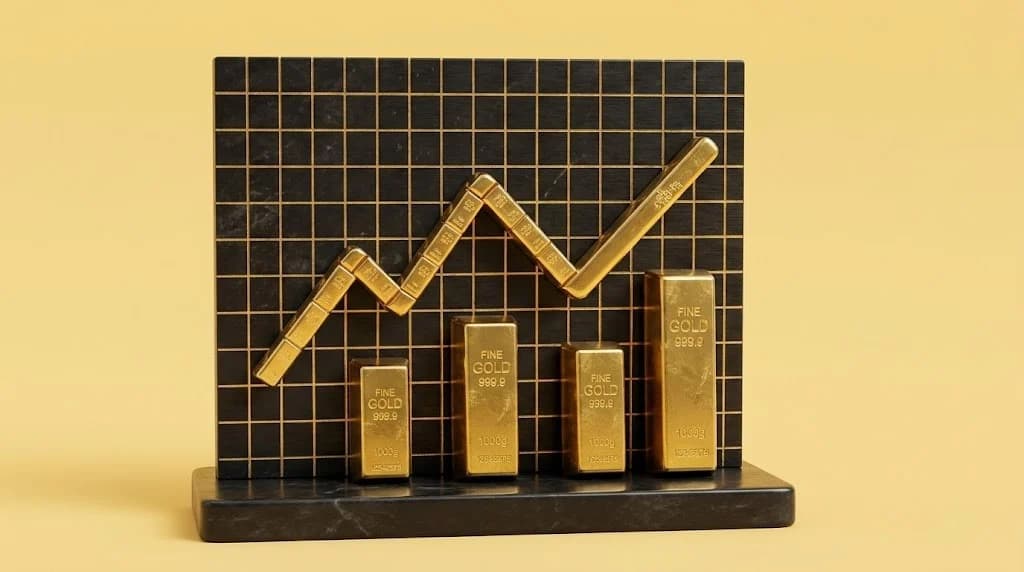
According to the Korea Gold Exchange on November 28, 2026, precious metals prices, including pure gold, 18K, and 14K gold, as well as platinum and silver, all fell together.
■ Gold prices (as of November 28)
Pure gold (24K) was priced at 689,000 won per don (3.75g) when buying, down 2,000 won (0.29%) from the previous posted price. The selling price was 593,000 won, down 2,000 won (0.34%).
The 18K gold price fell by 1,500 won (0.34%) to 435,900 won based on the selling price, while the 14K gold price dropped 1,100 won (0.33%) to 338,100 won based on the selling price.
■ Platinum and silver prices
Platinum was priced at 248,000 won when buying, down 5,000 won (2.02%), and 201,000 won when selling, down 4,000 won (1.99%). Silver was priced at 7,850 won when buying, down 100 won (1.27%), and 6,700 won when selling, down 90 won (1.34%).
■ From 'petrodollar' to 'chip dollar'... A new watchpoint for gold prices
Meanwhile, amid the rapid growth of the artificial intelligence (AI) industry, global semiconductor exports have surpassed oil and gas exports for the first time in history. As changes appear in the oil-centered trade order that has sustained the world economy for decades, a new factor to watch has emerged for international gold prices.
According to U.S. business broadcaster CNBC, Jim Reid, Global Head of Macro and Thematic Research at Deutsche Bank, stated in a report released this month that it is time to consider the 'chip dollar' beyond the existing 'petrodollar.'
According to the report, global semiconductor exports over the past year through the first quarter of this year totaled 1.61 trillion dollars, which is 80 billion dollars more than oil and gas exports (1.53 trillion dollars) over the same period. This is the first time global semiconductor exports have exceeded oil and gas exports.
This change shows that not only energy resources but also advanced technology and semiconductor supply chains are becoming strategically more important in the world economy.
■ What variables to watch for gold prices
In the outlook for gold prices, this industrial structural change is a variable to examine over the medium to long term. The petrodollar system, formed around oil trade in the past, was one of the elements supporting the international influence of the U.S. dollar. The growth of the semiconductor and AI industries could bring new changes to the structure of global trade and capital flows.
However, it is difficult to conclude that the existing dollar-centered international monetary order has weakened based solely on the fact that semiconductor exports have exceeded oil and gas exports. Gold prices are more directly influenced by U.S. benchmark and real interest rates, the dollar's value, central bank gold purchases, and geopolitical risks than by changes in industrial structure.
The direction depends on the scenario. If AI industry growth strengthens the competitiveness of the U.S. economy and the dollar shows strength, it could act as a burden on gold prices. On the other hand, if technological hegemony competition and trade conflicts among major countries surrounding semiconductors intensify, demand for gold as a safe asset could expand.
The movement of investment capital concentrated in the AI industry is also a variable. If the preference for risk assets centered on tech stocks strengthens, the relative investment appeal of gold could decline, but if concerns about overheating in tech stocks or financial market volatility expand, the opposite trend could appear.
■ For domestic gold prices, watch the exchange rate too
Domestic gold prices require watching not only international gold prices but also the won-dollar exchange rate. Even if international gold prices fall, a weaker won could limit the decline in domestic gold prices.
Ultimately, the possibility of a shift from the petrodollar to the chip dollar should be approached not as a direct rise or fall signal for gold prices, but as a medium- to long-term variable for examining structural changes in the world economy. Going forward, the direction of U.S. Federal Reserve monetary policy, dollar trends, gold purchase movements by major central banks, and international trade conflicts surrounding semiconductors are expected to be key watchpoints for the gold price outlook.
[※ This article is not intended to encourage investment, and investment decisions and responsibilities rest with the investor.]
CBC Globe publishes verified stories with editorial review, source checks, and tenant-specific publication standards.
Related Articles

Nasdaq Closes Up 2.31% on Tech Stock Rebound Despite Nvidia Shock; Dow Also Rises 1.18%

Dow Up 1.18%, S&P 500 Up 1.60%... M7 All Rise, SanDisk Soars 15.96% [US New York Stock Market]
Rainbow Robotics, Doosan Robotics and Other Robot Stocks All Rise; Zeus Surges 14.68% — Attention Turns to Monday's Market Direction