
Amid KOSPI 'Roller Coaster' Ride, Optical Communication and Optical Semiconductor Stocks Diverge... Selective Focus on 'Connectivity' Driven by AI Demand
Amid a 'roller coaster' market where the KOSPI repeatedly plunges and rebounds, optical communication and optical semiconductor-related stocks are showing disti
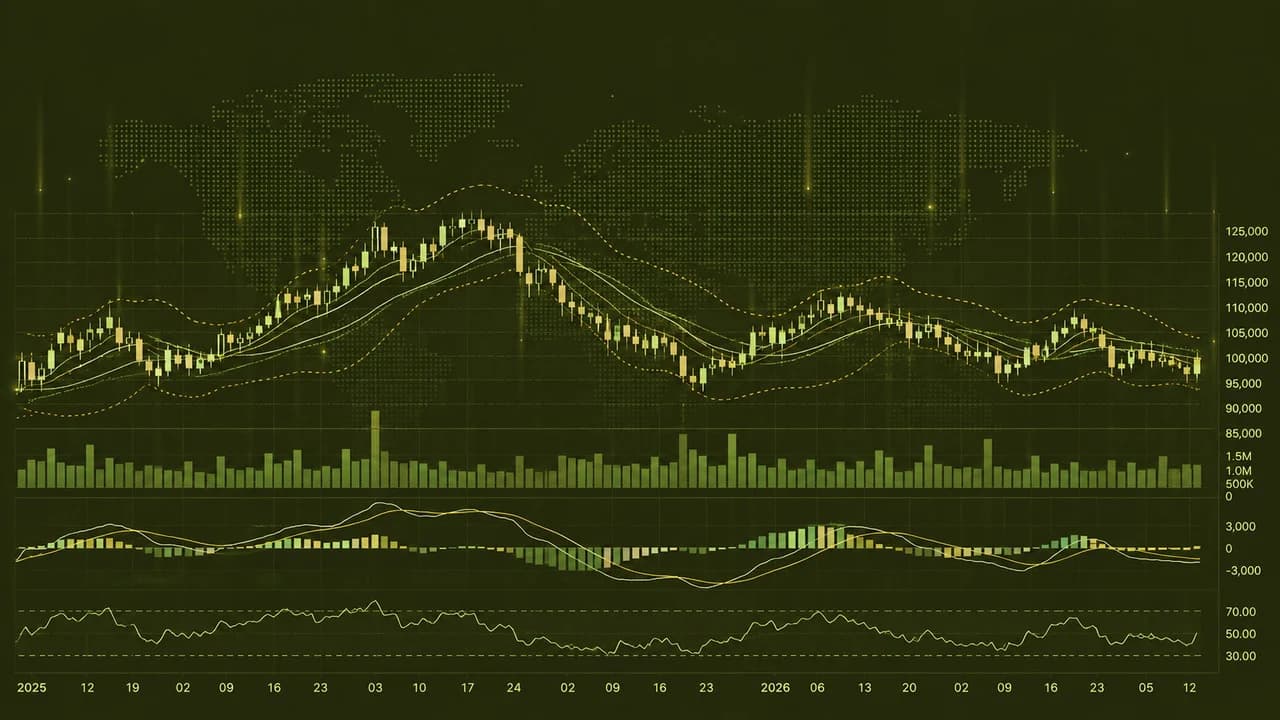
Amid a 'roller coaster' market where the KOSPI repeatedly plunges and rebounds, optical communication and optical semiconductor-related stocks are showing distinctly mixed trends on an individual basis. The demand for high-speed communication driven by the expansion of artificial intelligence (AI) data centers remains a medium- to long-term growth catalyst. However, as index volatility increases, a selective approach—carefully weighing supply and demand dynamics as well as valuation burdens—is strengthening, rather than bulk-buying thematic stocks.
A New Angle on AI Investment: From 'Compute' to 'Connectivity' The core of this market phase is not that AI investment demand has disappeared, but rather that market interest is expanding from 'compute semiconductors' to the 'connectivity (networks)' responsible for data movement, leading to differentiation. As investments in AI accelerators and high-bandwidth memory (HBM) expand, the importance of communication infrastructure that rapidly transmits massive amounts of data between servers, racks, and data centers grows simultaneously.
However, in a situation where the KOSPI fluctuates by large margins within a single day, it is difficult for the entire sector to rise together based solely on expectations of industrial growth. When the market's risk-averse sentiment strengthens, a sell-off can occur regardless of actual earnings or order bookings. Even during index rebounds, buying interest tends to flow only into specific stocks where trading is concentrated.
Intraday Trends in Optical Communication and Optical Semiconductor Stocks on the Morning of the 30th On the morning of the 30th, the gains and losses among related stocks were clearly divided.
- Rising Stocks: Bit Sssem Electronics was trading at 6,360 won, up 6.89% from the previous trading day. (Opening price: 5,800 won; intraday high: 6,640 won; volume: 178,395 shares). Jaram Technology traded at 15,540 won, up 2.24%. (Intraday high: 15,950 won; low: 14,600 won). Seoul Semiconductor rose 1.36% to 7,480 won, and Mercury recorded 2,625 won, up 0.77%.
- Falling Stocks: Daehan Optical Communication traded at 7,370 won, down 1.07% from the previous trading day, showing a high trading volume of 4,132,823 shares. (It rose to 7,680 won intraday but was pushed back down to 6,990 won at one point, widening its fluctuation range). Kwang Electronics (down 0.67%, 4,470 won), Bit Gwa Electronics (down 1.91%, 1,744 won), RF Materials (down 1.60%, 17,860 won), Woori Net (down 0.87%, 5,700 won), and Seoul Biosys (down 1.07%, 4,150 won) remained in negative territory.
- High Volatility Stocks: Lycom was trading at 3,045 won, down 2.87%, having risen to 3,145 won intraday before falling back to 2,950 won. FiberPro also recorded 10,150 won, down 1.17%, exhibiting volatility by moving between 9,300 won and 10,480 won during the session.
Increased Trading Volume Does Not Always Mean a Rise The fact that there are relatively more declining stocks proves that the market did not bulk-buy the optical communication and optical semiconductor theme. While some stocks showed strength, a significant number of representative stocks remained weak. Rather than the common catalyst of AI data centers, individual stocks' short-term supply and demand dynamics, previous gain magnitudes, and trading volumes dictated their price directions.
As particularly evident in the case of Daehan Optical Communication, an increase in trading volume does not immediately translate into a stock price rise. It is the result of a strong clash between buying pressure and profit-taking volumes between intraday highs and lows. While Bit Sssem Electronics surged over 6%, the decline of similarly named stocks like Bit Gwa Electronics, Kwang Electronics, RF Materials, Lycom, and FiberPro presents a different landscape from the early market phase where thematic stocks were bought as a group.
Extreme KOSPI Volatility: Risk Management is Key The aftermath of the 28th, when the KOSPI plunged so severely that it broke the 6,000 mark intraday and major semiconductor stocks like Samsung Electronics and SK Hynix recorded double-digit declines, still lingers. In a market where the index moves by around 10% in a single day, immediate cash securing and risk management impact stock prices far more than long-term prospects for growth industries.
Subsequently, major semiconductor stocks rebounded, allowing the KOSPI to recoup some of its losses, but anxiety has not been fully alleviated. During the rebound process following the index plunge, investors tend to prioritize buying key bellwether stocks with concentrated trading volume over the entire sector. Even if the logic of industrial growth holds, as long as concerns about an index crash persist, the continuity of buying in small- and mid-cap tech stocks will inevitably weaken.
AI Infrastructure Expanding to Network Equipment and Optical Components Conversely, if the KOSPI stabilizes and risk appetite toward AI-related stocks recovers, the optical communication and optical semiconductor sector is cited as a likely candidate for subsequent rotational buying. This is because AI infrastructure investment is expanding beyond accelerators and memory to communication equipment, optical components, optical semiconductors, and network equipment.
Currently, in global AI data centers, data movement speed and power efficiency have emerged as core challenges, on par with compute performance. While multiple accelerators and servers must be connected like a single system to train large-scale AI models, the surge in data transmission volumes means that existing electrical signal-based connectivity faces limitations in terms of power consumption, heat generation, and transmission distance.
[This article was written with the assistance of AI. It was written for informational purposes and does not constitute investment advice or a recommendation to buy or sell any specific stock. Stocks may exhibit high volatility due to changes in supply and demand. The final judgment and responsibility for investments lie with the investor.]
CBC Globe publishes verified stories with editorial review, source checks, and tenant-specific publication standards.
Related Articles
![[Breaking] Hanwha Vision Records Q2 2026 Revenue of 542.3 Billion Won and Operating Profit of 65.6 Billion Won... Up 197% Quarter-on-Quarter](/_next/image?url=https%3A%2F%2Fmedia.cbcglobe.com%2Ftenants%2Fcbc00000-0000-4000-8000-000000000001%2Fmedia%2Fcbc%2F2026%2F07%2F587624%2F92a22c34058cf1b1%2Fvariants%2Fhero.webp&w=1920&q=75)
[Breaking] Hanwha Vision Records Q2 2026 Revenue of 542.3 Billion Won and Operating Profit of 65.6 Billion Won... Up 197% Quarter-on-Quarter
![[Breaking] JW Shinyak Surges After 6-Day Decline... Up 15%, Recovering to 1,800-Won Range](/_next/image?url=https%3A%2F%2Fmedia.cbcglobe.com%2Ftenants%2Fcbc00000-0000-4000-8000-000000000001%2Fmedia%2Fcbc%2F2026%2F07%2F587622%2F8e1f864f4ae0d6ac%2Fvariants%2Fhero.webp&w=1920&q=75)
[Breaking] JW Shinyak Surges After 6-Day Decline... Up 15%, Recovering to 1,800-Won Range

Kolon TissueGene Plunges 10%... All Eyes on Whether It Can Defend 10,000-Won Psychological Support Line