
Samsung Electronics Posts Record Q2 Earnings... AI Memory 'Super Boom' vs. Finished Products 'Deficit Quagmire'
Samsung Electronics recorded consolidated revenue of 171.5 trillion won and operating profit of 89.5 trillion won in the second quarter of 2026, renewing its al
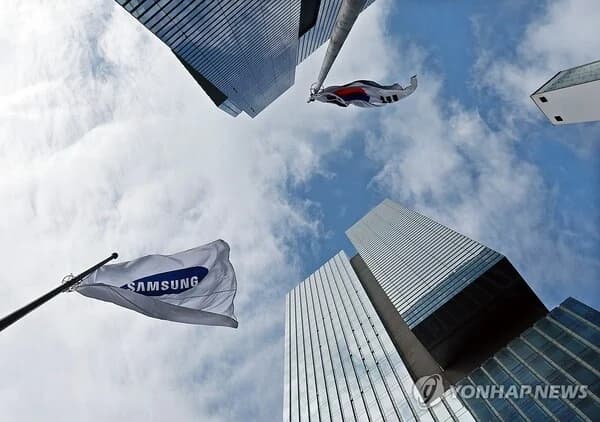
Samsung Electronics recorded consolidated revenue of 171.5 trillion won and operating profit of 89.5 trillion won in the second quarter of 2026, renewing its all-time highest quarterly performance. This represents a 28% increase in revenue and a 56% increase in operating profit compared to the previous quarter. However, behind the company's record-breaking overall performance lies a stark contrast in fortunes between its business divisions. This is the result of changes in the same AI market acting as a double-edged sword—expanding profits for the semiconductor business (DS) while creating cost burdens for the finished products business (DX).
Semiconductor (DS) Business Driven by AI Memory
The key driver of the earnings increase was the DS division, which oversees semiconductors. The DS division recorded revenue of 127.5 trillion won and an operating profit of 89.2 trillion won, generating the vast majority of the company's total operating profit. Driven by a surge in demand for server products following the spread of agentic AI, sales volumes for DRAM and NAND also reached their highest levels.
In particular, the company accelerated efforts to strengthen its competitiveness in next-generation high bandwidth memory (HBM) by expanding the supply of HBM4 and shipping HBM4E samples. Samsung Electronics projected that its third-quarter HBM4 revenue would more than triple compared to the previous quarter. As the market's center of gravity shifts from HBM3E to HBM4 going forward, how quickly Samsung Electronics can increase shipment volumes after passing customer qualifications is cited as the key variable for its competitiveness.
The foundry business also showed an earnings improvement trend, with revenue increasing due to growing demand centered on HBM base dies and North American customers. While the expansion of 2nm process orders and product design progress by large AI high-performance computing (HPC) clients are positive signals, a specific timeline for turning a profit has not yet been provided.
Finished Products (DX) Business Under Pressure from Rising Costs
The DX division, responsible for smartphones, TVs, and home appliances, was overshadowed by the semiconductor boom. This was the result of rising component costs strongly pressuring profitability. The DX division recorded revenue of 48 trillion won but posted an operating loss of 800 billion won. Despite expanded sales of premium and AI products, it failed to overcome the cost burden.
In detail, the MX division, overseeing smartphones, recorded an operating loss of 700 billion won, while the Visual Display and Digital Appliances businesses also unable to avoid posting deficits. The rise in memory prices driven by server memory demand propelled profits for the DS division, but it was directly passed on as a cost burden for the finished products business, which uses these as major components.
Key Variables to Determine Future Performance
Investments to secure Samsung Electronics' future competitiveness are also ongoing. R&D expenses for this quarter reached a record high of 16 trillion won, with investments concentrated on AI and next-generation semiconductor technologies.
Although Samsung Electronics' overall performance has improved significantly, several variables must be monitored to determine future sustainability. First and foremost is whether the expansion of HBM4 supply translates into an actual customer base and increased shipment volumes. In addition, the timing of the foundry's profitability recovery and whether the DX division's component cost burdens will be alleviated are crucial. Even if the growth trend of the AI memory market is maintained, narrowing the profitability gap between the semiconductor and finished product businesses will be the key factor in fundamentally improving Samsung Electronics' earnings structure.
[※ This article covers corporate business and market trends and does not recommend the purchase or sale of any specific stock. Investment decisions and responsibilities lie solely with the investor. This article was written with AI assistance.]
CBC Globe publishes verified stories with editorial review, source checks, and tenant-specific publication standards.
Related Articles

Samsung Heavy Industries Extends FLNG Technology to Floating Data Centers... Evolution into Marine Infrastructure Platform
Hanmi Semiconductor Surges 27.98% to Close July... Recovers 210,000 Won Level on HBM and AI Benefit Expectations

What's the Gold Price Today?... U.S.-Iran War of Words Continues